











Why the Small Business Cash Flow Squeeze Lands in January
Ask an owner when cash is tightest and most say December. Look at the bank statements and it is usually January. December has the big pay run and the Christmas orders, but it also has the year's last good trading weeks. January has the wages for people coming back, the rent for the weeks you were shut, and invoices from mid December that customers will pay when they are back at their desks.
That is a timing problem, not a profit problem, which is good news, because timing is something you can change. business.gov.au's guide to improving cash flow frames it the same way: increase cash in, reduce cash out, and adjust when you spend and receive money. The four levers below follow that order.
7
business days after payday for super to reach the fund, from 1 July 2026.
11.51%
ATO general interest charge, October to December 2026. Not deductible.
4.60%
RBA cash rate since the 29 September 2026 decision.
The Dates That Move Your Cash, October to February
| Date | What happens | What to do now |
|---|---|---|
| 28 October | July to September quarterly BAS due. Some online lodgers get up to two weeks more. | Lodge on time even if you cannot pay it all. |
| Every payday | Super must reach employees' funds within 7 business days. | Budget super into each pay run, not the quarter. |
| 3 November | RBA announces its decision after the 2 to 3 November meeting. | Check any variable rate loan or overdraft repayment. |
| 30 November | The ATO's first announced end date for credit cards. No longer applies. | Nothing yet. Plan a new method before 30 June 2027. |
| 21 December | November BAS due for monthly lodgers. | Put it in the December forecast. |
| 25 December to early January | Most customers closed. Few invoices get paid. | Collect what you can before mid December. |
| 28 January | Used to be the due date for October to December super. Not any more. | Do not count on the old float. |
| 28 February | October to December quarterly BAS due. | Set GST and PAYG aside weekly from now. |
The sources for each line: the ATO's BAS due dates, the ATO's About Payday Super page, which also lists the old quarterly due dates, the RBA's 29 September statement and 2026 meeting schedule, and the credit card announcements covered under Lever 4.
The 28 January row is the one most owners have not priced in. Under the old system, super on October to December wages could sit in the business account until late January. On an illustrative $60,000 of December wages, that was $7,200 of super still in the bank over Christmas. Under Payday Super it goes with each pay. The rate is unchanged at 12%. Only the timing moved.
Rates are covered in our rate rise bill audit, and the end of surcharging on 1 October, confirmed in the RBA's review conclusions, in how to reprice after the surcharge ban. The short version for cash flow: card fees now come out of your margin, so a price review belongs on the December list too.
Lever 1: Bring Cash In Sooner
Money already owed to you is the cheapest cash you can raise. No interest, no application, and the customer has already agreed to pay it. The guide to what to do when you haven't been paid on business.gov.au starts with a friendly reminder and a conversation about a new date, because many late payments are oversights.
Sort the list before you chase it
Run your aged debtors report and split it four ways: current, 31 to 60 days, 61 to 90 days, and older. Ignore current invoices for now. Everything past 30 days gets a phone call this week, oldest first.
Call first, email second
Another reminder email is easy to leave unread. A phone call is not. It gets you a date, or a reason, or the invoice query nobody mentioned, or the name of the person who approves payments. A short structure that works:
- Open plainly: "Hi, it is Jo from Hartley Electrical. I am calling about invoice 2217 for the switchboard upgrade, which was due on 30 September."
- Ask, then wait: "Is there anything holding it up?" Then stop talking.
- Get a date: "Can we lock in a date for payment? Would Friday work?" A specific day, not "soon".
- Offer a split if needed: "If the full amount is hard before Christmas, could you do half this week and the rest on the 11th?"
- Close with the text: "I will send you a quick text now with the amount and the bank details."
Then the text, from the business number
Send it while you are still on the call screen, from the same number the customer just answered: "Hi Mel, thanks for the chat. Invoice 2217, $3,480, to be paid by Friday 30 October. Bank details are on the invoice, or reply here if you need them again. Jo, Hartley Electrical." It confirms the promise in writing, it comes from a number the customer recognises, and the reply lands back with your business rather than on someone's personal phone. Our guide to business SMS from your phone system covers setup.
Stop creating your own delays
Invoice on the day the job finishes. A job done on 2 December and invoiced on 31 December may not be paid until February. Ask for deposits on December work, and state shorter terms on December quotes. business.gov.au's payment terms page notes that terms form part of the contract, so tell customers before the job, not on the invoice.
If your debtors are individual consumers rather than businesses, read the ACCC and ASIC debt collection guideline before you increase how often you call or text.
An Electrician's Debtor List (Illustrative)
Hartley Electrical is a made-up four-person contractor, used to show the arithmetic. On 22 October its customers owe it $46,500.
| Age | Amount | Accounts | Action this week |
|---|---|---|---|
| Current | $22,000 | 14 | None yet. Text a reminder on the due date. |
| 31 to 60 days | $15,300 | 7 | Call, agree a date, confirm by text. |
| 61 to 90 days | $6,400 | 3 | Call, offer a split, confirm by text. |
| Over 90 days | $2,800 | 2 | Call. If no reply in a week, a letter of demand. |
| Total | $46,500 | 26 | 12 calls, about two hours |
The over-30 group is $24,500 across twelve accounts. If the calls bring in half of it before mid December, that is $12,250 in the account over the break instead of in February. Two hours on the phone is a better return than most cost cuts. The numbers are made up. The shape, where a small number of old invoices hold a large share of the cash, is common, and the only way to know yours is to run the report.
Lever 2: Move Cash Out Later, Honestly
The goal here is to line payments up with receipts, not to stop paying people. Suppliers are small businesses too, heading into the same summer.
- Ask before you need it. Ring your main suppliers in November and ask what terms they offer on the Christmas order. A request made early is a conversation. A missed payment is a problem.
- Buy stock for the January you expect. business.gov.au puts it bluntly: the more unsold stock you have, the less money you have. Check last year's leftovers before you reorder.
- Match big orders to big receipts. If a large customer pays on the 15th, have the supplier account fall due after it, not before.
- If you will be late, say so first. Call before the due date with a new date you can keep.
Lever 3: Stop Paying for What You Do Not Use
Cost cuts free cash more slowly than collections, but they repeat every month. Print three months of bank and card statements and highlight every recurring charge. Most businesses find software seats for people who have left, a subscription bought for one project, and a phone or internet bill that has crept up since it was signed.
For the phone and internet lines, our 30 minute bill audit walks through it, and why the quote and the bill differ shows which lines to check. As a reference point, VOCPhone's published pricing is $84.90 a month including three users on a 36-month term, then $30 a month for each extra user, or $104.90 a month on month-to-month. Setup and porting are $0, and we price match. A five-person team on the 36-month term works out at $144.90 a month. If you pay noticeably more for the same team, it is worth a quote. If you do not, keep what you have and move on to the next line.
If internet sits on a separate bill, putting phone and NBN with one provider explains when that saves money, and our NBN plans are published.
Lever 4: Manage the Tax Bill Early
The interest is now a full cost
The ATO confirmed that general interest charge incurred from 1 July 2025 is not tax deductible, whatever year the debt relates to. The rate for October to December 2026 is 11.51% a year, compounding daily. On an illustrative $12,000 BAS left unpaid for 90 days, that is about $345 of interest if the rate stayed the same, and none of it comes back at tax time.
Lodge, then plan
Lodge on time even if you cannot pay. The ATO's payment plan page says businesses that owe $200,000 or less may be able to set up a plan in Online services for business, under Accounts and payments. Activity statement and income tax debts need separate plans. The ATO also warns that GIC keeps accruing on a plan and that new tax debts must be paid on time or the plan can default. Use the forecast to choose the shortest plan you can actually keep.
The credit card question
On 1 October 2026 the ATO announced it would stop accepting credit cards after 30 November 2026, following the Reserve Bank's surcharging review. On 9 October the government said it would fund the ATO to keep accepting credit cards until 30 June 2027. After that, the release says, cards can still be used through third parties, and debit card and bank transfer remain. So putting the BAS on a card is still possible this summer. Just do not build next year's plan on it, and if a payment plan is linked to a credit card, change it before the deadline.
Where a Phone System Actually Helps
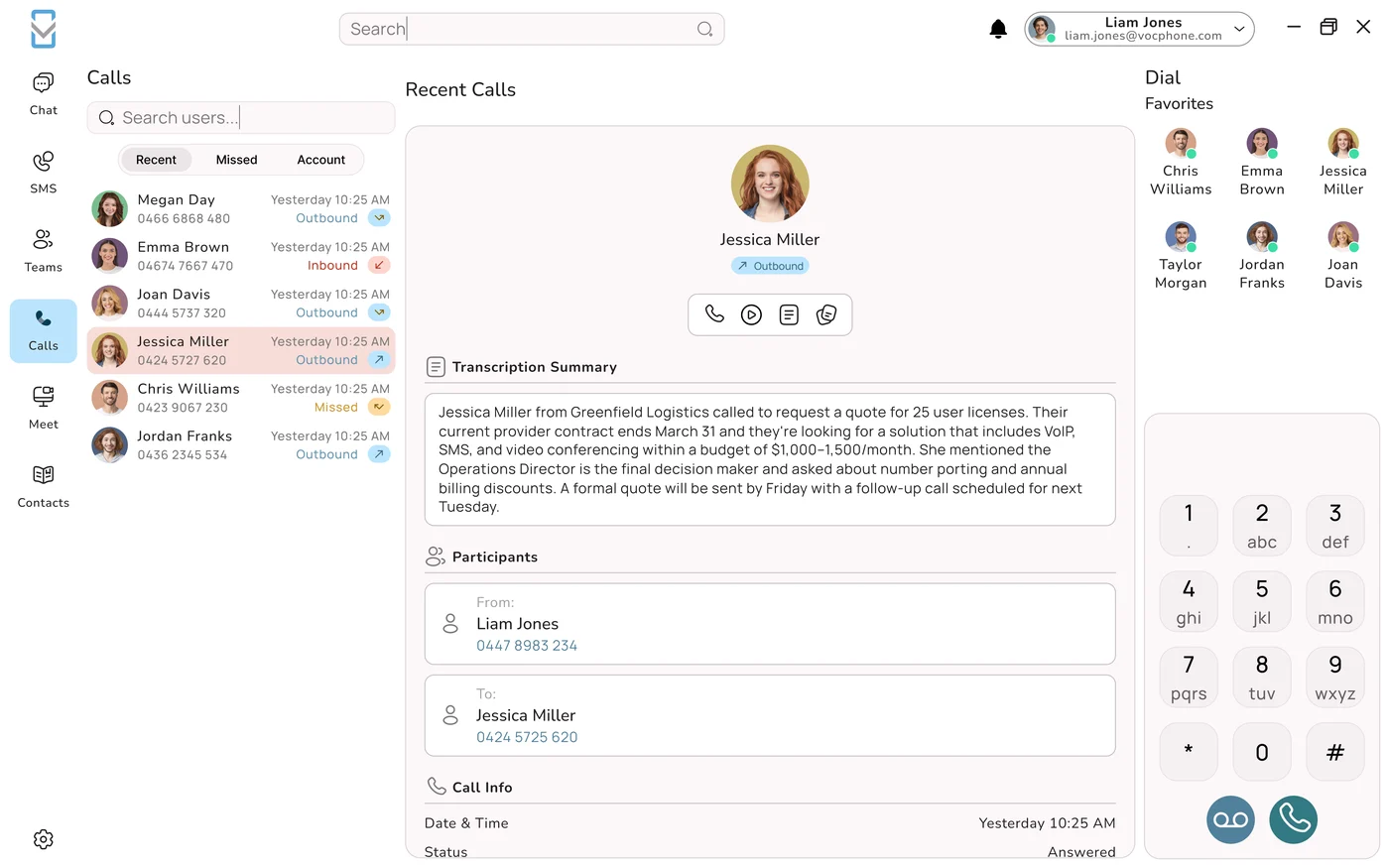
A phone system will not fix a cash flow problem. It can make Lever 1 faster and Lever 3 cheaper. On VOCPhone, calls and texts go out from your business number on the mobile and desktop apps, so a collections call made from a ute shows your business, and the customer's reply comes back to the business. Calls, chat, SMS and AI call summaries sit in one window, so when someone else rings that customer next week they can see what was agreed. And the monthly cost is published, with $0 setup and porting.
We own and operate our own network rather than reselling someone else's, with 99.99% uptime, and our local team takes your call during business hours, with our AI agent picking up after hours. Before you close for Christmas, our guide to holiday trading hours on your business phone makes sure January enquiries are not lost.
Before You Act
General information, not financial advice
This article summarises public rules and common practice as at 22 October 2026. It is not financial, tax or legal advice and does not consider your circumstances. Rates and deadlines change, so check ato.gov.au and business.gov.au, and speak to your accountant or registered tax agent before you make decisions about tax debt or finance.
For the wider picture, read what the businesses that came out ahead in past downturns did.
Frequently Asked Questions
How can a small business free up cash quickly?
Start with money already owed to you, because it costs nothing to collect. Run your aged debtors report, ring every customer more than 30 days overdue, oldest first, and ask for a specific payment date. Confirm the date and amount by text from your business number straight after the call. Then remove the delays you create: invoice on the day a job finishes, ask for deposits on new work, and state shorter terms on quotes. After that, look at timing on the way out, such as asking suppliers about terms before a big order, and at recurring costs like unused subscriptions and phone and internet bills. Collections usually move cash within days. Cost cuts take a month or two to show.
How does Payday Super affect cash flow over Christmas?
From 1 July 2026, the ATO requires super guarantee contributions to reach employees' funds within 7 business days after each payday, instead of being paid quarterly. Under the old rules, super on October to December wages was due on 28 January, so that money often sat in the business account over the Christmas break. Now it leaves with each pay run, including the large one before the shutdown. The rate is still 12% and the amount is the same. What has changed is when it leaves, so build super into the cost of each pay run in your forecast rather than treating it as a quarterly bill.
What is the general interest charge rate in 2026?
The ATO sets the general interest charge each quarter. For October to December 2026 it is 11.51% a year, or 0.03153425% a day, and it compounds daily. For July to September 2026 it was 11.43%. Since 1 July 2025, general interest charge incurred is no longer tax deductible, even when the underlying debt is from an earlier year, so the after-tax cost of a late BAS is higher than it used to be. You can still ask the ATO to remit interest, as that law did not change. Check the ATO's general interest charge rates page for the current quarter before you rely on a figure.
Is the ATO still accepting credit card payments?
Yes. The ATO announced on 1 October 2026 that it would stop accepting credit cards after 30 November 2026, citing the Reserve Bank's review of card surcharging. On 9 October 2026 the government announced transitional funding so the ATO can continue accepting credit cards until 30 June 2027. After that date, the government says, credit card payments can still be made through third parties, and debit card and bank transfer will remain available. If you use a credit card to pay tax, or have a payment plan linked to one, use the extra time to move to another method.
Should I call or email customers about overdue invoices?
Call first. An email reminder is easy to ignore, and by the third one it is usually being ignored. A phone call gets you an answer: a payment date, a reason, an invoice query nobody raised, or the name of the person who approves payments. Keep it short and polite, ask whether anything is holding the payment up, and agree a specific date, or a split if the full amount is hard. Then send a text from your business number confirming the amount, the date and how to pay, so you both have it in writing. Use email for the invoice itself and for formal steps such as a letter of demand.
Can I set up an ATO payment plan online?
If your business owes $200,000 or less, the ATO says you may be able to set up a payment plan yourself in Online services for business, under Accounts and payments, then Payment plans, or through the ATO's self-help phone line. Your tax or BAS agent can also do it for you. Activity statement and income tax debts need separate plans. You will need to phone the ATO if you owe more, if the online request is not accepted, or if you need longer than two years. Interest keeps accruing on a plan, and new tax debts must be paid on time or the plan can default, so choose the shortest plan you can keep.