











The First Five Seconds
When someone rings a business, they are checking two things before they say a word about why they called: did I get the right place, and is this person going to help me? A good greeting answers both questions in one breath. A poor one, a flat "Hello?" or a rushed "Yep", makes the caller ask "Is this the plumber?", and the call starts on the back foot.
Professional phone etiquette for business comes down to a few habits that take seconds:
- Pick up by the third ring. Much later and the caller starts wondering whether to hang up and try the next business on the list. If you cannot answer that fast, the phone system should send the call somewhere that can (more on that below).
- Finish what you were doing before you lift the handset, not while you are talking. Swallow the coffee, stop typing, turn away from the conversation behind you. The first words should be the greeting, not the end of something else.
- Say three things: a welcome, the business name and your first name. The welcome gives the caller a moment to tune in to your voice, so they actually hear the name that follows.
- Slow down on the business name. You have said it ten thousand times. The caller is hearing it once, often on a mobile in a noisy car.
- Smile when you say it. It sounds like a cliché, but a smile changes the shape of your mouth and callers can hear it.
The basic pattern is: "Good morning, [Business], this is [Name]." You can add "How can I help?" at the end, but keep the whole thing under about four seconds. Long greetings with slogans in them are for the on hold message, not the person.
Why your first name matters
Giving your name turns "the business" into a person the caller can ask for again. It also makes people noticeably more polite, because they are now talking to Mia rather than to a company. And when they ring back, "I spoke to Mia this morning" saves everyone five minutes.
Greeting Scripts by Business Type
The core pattern stays the same, but the right tone changes with the business. These professional phone greetings are starting points. Read them aloud, change anything that does not sound like you, and then make sure everyone uses the same version.
| Business | Greeting | Why it works |
|---|---|---|
| Trades | "Morning, Coastline Electrical, Jack speaking." | Short and friendly. It tells the caller they reached a real tradie, not a call centre. |
| Medical, dental or allied health | "Good morning, Harbour Physio, this is Mia. Are you calling to make a booking?" | Most calls are bookings, so the question gets straight to it. A caller with something else will say so. |
| Professional office | "Good afternoon, Patel and Co Accountants, Sarah speaking. How can I help?" | Full name of the firm, measured pace. Matches what clients expect from someone looking after their money. |
| Retail | "Hi, thanks for calling Bayside Bikes, it's Tom." | Warm and quick. Shop calls are usually about stock or hours, so get to the question fast. |
| Hospitality | "Good evening, The Grain Store, this is Priya. Is this about a booking?" | During service the line is busy and noisy. Steering to bookings keeps the call short. |
| Direct line or extension | "Accounts, Sarah speaking." | The caller already chose the business. Tell them which part of it they reached. |
One business, one greeting. If three people answer the phone three different ways, regular callers notice, and it makes a small team sound disorganised. Write the greeting down and put it on the call card at the end of this article.
If calls arrive through a phone menu first, the person who picks up no longer needs to say the business name with quite as much care, because the menu already did. "Bookings, this is Mia" is fine. Our guide to auditing your call flow covers how to keep the menu itself short.
Putting Someone on Hold Without Losing Them
Hold is where most callers give up. Not because waiting is unbearable, but because waiting in silence with no idea how long it will be feels like being forgotten. Three rules fix most of it.
1. Ask, then wait for the answer
"Would you mind holding for a moment while I check that for you?" Then actually wait for them to say yes. Some callers are driving or about to walk into a meeting and would much rather be called back. Asking first gives them the choice.
2. Say why and roughly how long
"I'll just pull up your booking, it should take about a minute." People wait patiently for a reason and a time. They hang up on "Hold on."
3. Come back every 30 to 45 seconds
If it is taking longer, pick the call back up: "Thanks for waiting, Mr Nguyen. I'm still checking with the workshop. Are you okay to hold another minute, or would you like me to call you back?" Offering the call back is the important bit. A promised call back that happens is far better than three more minutes of music.
When you come back, thank them, use their name, and give them the answer straight away. Do not make them repeat the question.
Use the hold button, not the mute button or your hand
Mute leaves the caller hearing nothing, so they think the call dropped. A hand over the mouthpiece lets them hear everything you say to the person next to you. The hold button plays your hold music or message and makes it obvious the call is still alive.
Warm or Blind: Transferring a Call
There are two ways to pass a call to someone else, and choosing the right one is the difference between a caller who feels looked after and one who has to tell their story three times.
| Blind transfer | Warm transfer | |
|---|---|---|
| What happens | You send the call straight to the colleague's phone and hang up. | You put the caller on hold, speak to the colleague first, then connect them. |
| Use it for | Routine calls the colleague is expecting: "Can I speak to Dave?" when Dave is free. | Complaints, quotes, anything with background, anything the caller has already explained once. |
| Risk | The colleague does not answer and the caller lands in someone else's voicemail. | Takes 20 to 30 seconds longer. |
A warm transfer has a simple script on both sides:
- To the caller: "Sarah looks after invoices, so she's the best person for this. I'll just let her know what it's about and put you through. One moment."
- To the colleague: "Sarah, I've got Linda from Coastline Electrical on the line. She's been charged twice for the October invoice and would like it refunded. Can you take her?"
- If they can't: go back to the caller, not to the colleague's voicemail. "Sarah's on another call. Can I take your number and have her call you back before 3 o'clock?"
The colleague then opens with "Hi Linda, it's Sarah. I understand you've been charged twice for October." That one sentence tells the caller they will not have to start again, which is usually what they were dreading.
Taking a Message That Gets Actioned
"Someone called for you" on a sticky note is not a message. A message is only useful if the person who gets it can act on it without ringing the caller to ask what they wanted. That takes five things:
- Name, spelled if it is unusual, and the business they are from.
- Number, read back to them. "So that's 0412 345 678?" Wrong numbers are the most common reason a call back fails.
- What it is about, in a sentence. Quote reference, invoice number, job address.
- How urgent it is, in their words. "Water through the ceiling" and "whenever suits" need different handling.
- What you promised. If you said "before 3 o'clock", write it down, because that is now a commitment the business has made.
Close with "I'll make sure Dave gets this now, and he'll call you before 3." Then send it to Dave straight away, by the channel he actually reads, rather than leaving it on his desk.
Writing while you listen is hard and slows the call down. Call summaries help here: on a cloud phone system that writes up each call automatically, the person answering can concentrate on the caller and check the summary afterwards. Our article on AI notes while you talk explains how that works.
Handling an Angry Caller
Most angry callers are not angry at you. They are angry at a late delivery, a wrong bill or the third time they have had to ring. Your job is to be the person who finally gets it sorted. This five step method works for most of them.
- 1. Let them finish. Do not interrupt, even to correct them. People who are cut off start again from the beginning, louder. Short sounds like "mm" and "right" tell them you are still listening.
- 2. Acknowledge, without arguing about fault. "That's really frustrating, especially after you were promised Tuesday." You are agreeing the situation is bad, not admitting anything.
- 3. Ask what would fix it. "What would be the best outcome for you today?" Often it is smaller than you expect.
- 4. Say exactly what happens next. "I'm going to speak to the warehouse now and call you back by 2 with a delivery time." A specific action and a specific time.
- 5. Do it, and call back even if there is no news. A call at 2 saying "still chasing, next update at 4" keeps the trust you just earned. Silence loses it.
Keep your voice lower and slower than theirs. It tends to bring the other person down to your pace. Avoid "calm down", "that's our policy" and "there's nothing I can do", which almost always make things worse.
When it crosses the line
Frustration is fine. Abuse is not. Give staff a line they are allowed to use: "I want to help you sort this out, but I can't continue if you speak to me like that. I'm going to end the call now and you're welcome to call back." Then back them when they use it. A clear rule protects your team and is usually enough to reset the call.
Ending the Call Properly
The end of a call is what the caller remembers, so do not let it fizzle out. A good close has three parts:
- Recap the next step. "So I've booked you in for Thursday at 10, and you'll get a text reminder the day before."
- Check there is nothing else. "Is there anything else I can help with?" Ask it once, and mean it.
- Thank them by name, and let them hang up first. Hanging up while they are mid "thanks, bye" feels abrupt, even when it is not meant to.
If you promised a text or email, send it before you pick up the next call. That is the moment it is most likely to be forgotten.
Answering Business Calls on Your Mobile
For a sole trader or a small crew, the business phone is usually a mobile in a pocket on a job site, and that brings two problems: you cannot tell whether a call is a customer or your mate, and you answer a quote request with "Yeah, g'day" from the top of a ladder.
- Know which hat to wear before you answer. If your business number rings through a business phone app on your mobile, the screen shows it is a business call, so you answer with the business greeting. Our guide to putting your business number on your mobile covers the setup.
- Do not answer if you cannot talk. A rushed call from a noisy site makes a worse impression than a voicemail you return in an hour. Let it go through to voicemail, and return it at a planned time, such as smoko and the end of the day.
- Make the voicemail do the work. Say when you will call back: "I'm on a job and will call you back before 5." Voicemail to email means you can read or listen to the message between jobs.
- Call back from the business number, not your personal one, so the customer recognises you and saves the right number.
- Move away from the noise before you pick up, even ten steps. Wind and machinery carry badly on a mobile.
If calls going to voicemail is losing you work, an AI agent can answer while you are on the tools, take the job details and send them to you. Our piece on missed calls costing tradies runs the numbers.
The One Page Call Card for New Staff
The fastest way to make a business sound consistent is to write all of this down on a single page and stick it next to every phone, or pin it in the team chat. A new starter can read it in two minutes and use it on their first call. Here is a template to copy.
| Moment | What we say |
|---|---|
| Greeting | "Good morning, [Business], this is [Name]." Within three rings. |
| Hold | "Would you mind holding for a moment while I [reason]?" Back every 30 to 45 seconds. Offer a call back. |
| Transfer | Warm for anything non routine: tell the colleague who and why first. If they can't take it, come back to the caller. |
| Message | Name, number read back, what about, how urgent, what we promised. Send it now. |
| Upset caller | Let them finish. Acknowledge. Ask what would fix it. Say what happens next and when. Do it. |
| Close | Recap the next step. "Anything else?" Thank by name. Let them hang up first. |
| Who handles what | Bookings: [name, ext]. Quotes: [name, ext]. Accounts: [name, ext]. Urgent after hours: [rule]. |
| Never say | "Hello?" "Calm down." "That's not my department." "I don't know" (say "Let me find out"). |
The "who handles what" row matters as much as the scripts. Most bad transfers happen because a new person does not know who looks after what. Fill it in, and update it when people change roles.
For the first fortnight, sit with new staff for a few calls, then swap: they answer, you listen, and you talk it through afterwards. If you record calls, choose one good call a week and play it at the team meeting. Hearing a colleague handle a tricky caller well teaches more than any script, but tell callers when calls are recorded, and check the rules that apply in your state before you start.
What Your Phone System Should Do for You
Good phone manners are a people skill. The phone system decides whether your people get a fair chance to use them. Before blaming the person on reception, check that the system does these things:
- Shows which number was called, so staff know whether to answer as the business, a department or a second brand.
- Sends unanswered calls somewhere useful after a set number of rings, such as a second phone, a queue or an AI agent, rather than ringing out.
- Queues callers with a message instead of an engaged tone when everyone is busy.
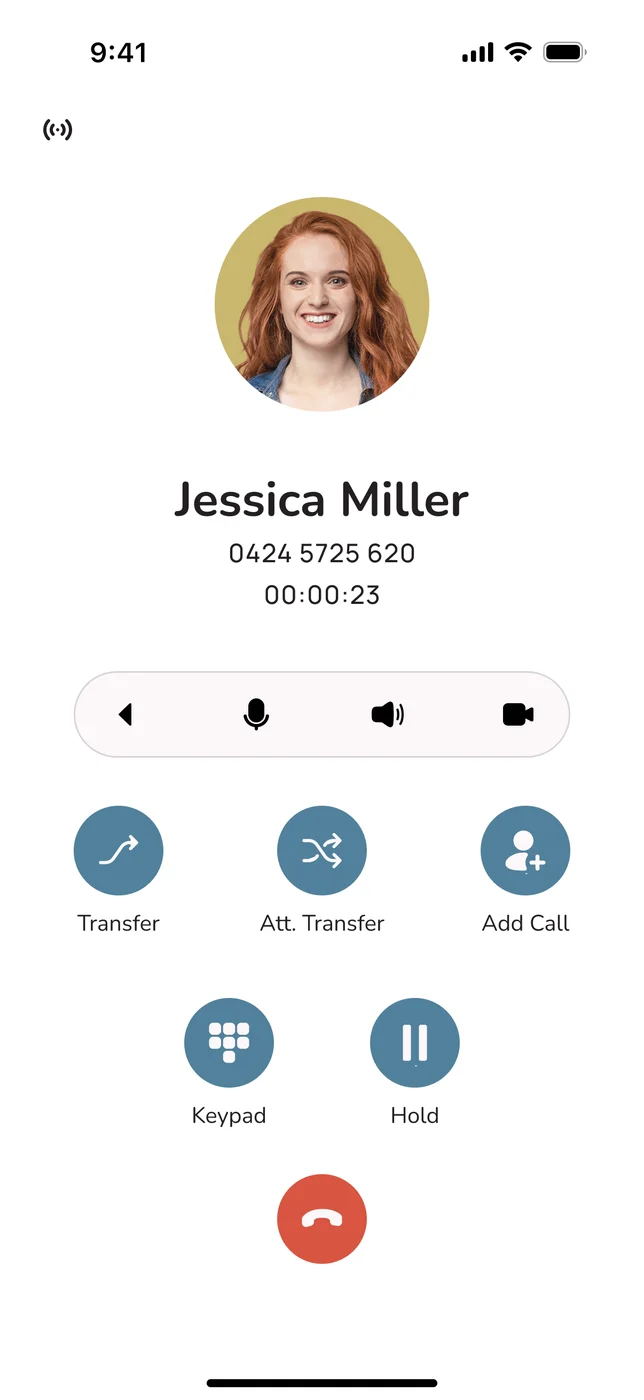
- Makes warm transfers easy from the desk phone, the desktop app and the mobile app, so a transfer is not a skill only one person has.
- Gets voicemail to the right person quickly, by email with the audio and a transcript.
- Writes up the call, so messages and promises are captured even when the person answering was busy talking.
If yours does not, a look at why answer rates fall for reasons that have nothing to do with your script is a useful next read.
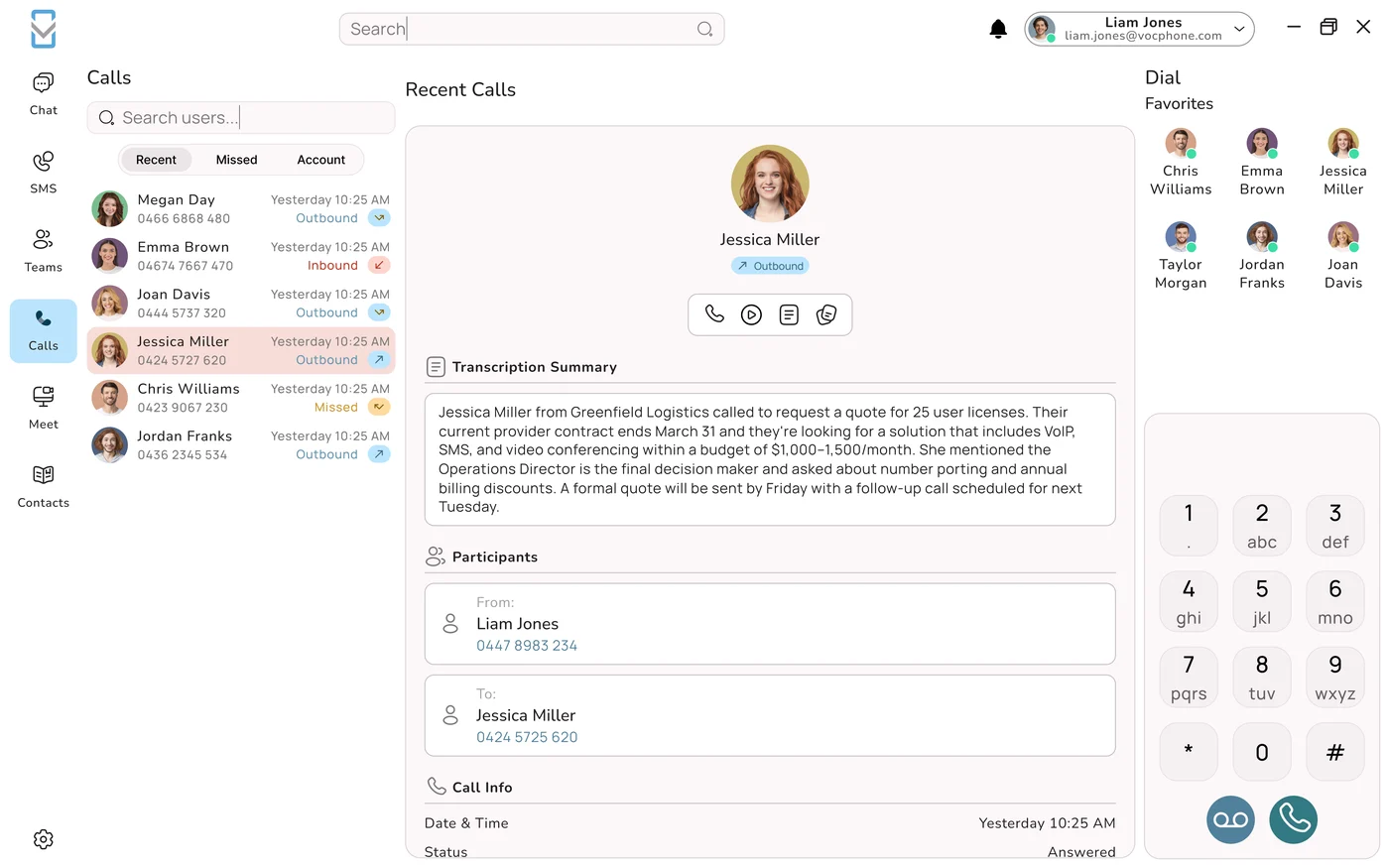
On VOCPhone, every user gets the desktop and mobile apps and a local number, so the business line rings on the phone in your pocket as well as the one on the desk. Smart routing, phone menus and queues are included, voicemail arrives by email with the audio and a transcription, and call summaries and transcripts appear in the app. Call recording is an add-on from $10 a month for 10 hours. For the calls nobody can get to, AI Phone Agents with natural Aussie-accent voices start from $49 a month for 200 AI calls. We are Australian owned and operated, run our own network hosted in Australia, and have been in the Australian market for more than 15 years. Our local team takes your call during business hours, and our AI agent picks up after hours.
Plans are $84.90 a month including three users on a 36-month term, then $30 a month per extra user, or $104.90 a month month to month, with $0 setup, $0 porting and a price match. See pricing for the details.
Frequently Asked Questions
How do you answer a business phone call professionally?
Answer within three rings and say three things: a short welcome, the business name and your first name, for example "Good morning, Harbour Physio, this is Mia." Finish what you were doing before you pick up, slow down on the business name, and sound like you are glad they called. Keep the greeting under about four seconds. Then listen to the whole request before you start answering, ask before putting anyone on hold, and end the call by recapping the next step and thanking the caller by name.
What is a good professional phone greeting?
The most reliable pattern is welcome, business name, your name: "Good afternoon, Patel and Co Accountants, Sarah speaking." You can add "How can I help?" or a question that matches most calls, such as "Are you calling to make a booking?" for a clinic. Avoid slogans and long greetings, which belong in the on hold message. Whatever you choose, make sure everyone in the business uses the same version so regular callers hear a consistent business.
How long should you leave someone on hold?
Ask first, give a reason and a rough time, and come back every 30 to 45 seconds if it is taking longer. When you come back, thank the caller and offer a choice: keep holding or get a call back by a specific time. Most callers are happy to wait a minute for a reason they understand, but a long silence with no updates feels like being forgotten, and that is when people hang up.
What is the difference between a warm transfer and a blind transfer?
In a blind transfer you send the call straight to a colleague and hang up. In a warm transfer you put the caller on hold, tell the colleague who is calling and why, and then connect them. Use blind transfers for routine calls the colleague is expecting. Use warm transfers for complaints, quotes and anything the caller has already explained, so they do not have to repeat themselves. If the colleague cannot take the call, go back to the caller and offer a call back rather than dropping them into voicemail.
What should a phone message include?
Five things: the caller's name and business, their number read back to confirm it, what the call is about in a sentence (with any reference or invoice number), how urgent it is in the caller's words, and anything you promised, such as a call back before 3pm. Then send it to the right person straight away by the channel they actually check. A message missing any of these usually means a second call to find out what the first one was about.
How should you deal with an angry customer on the phone?
Let them finish without interrupting, acknowledge that the situation is frustrating without arguing about fault, ask what would fix it, and then say exactly what you will do and by when. Then do it, and call back at the time you promised even if you only have a progress update. Keep your voice lower and slower than theirs, and avoid phrases like "calm down" or "that's our policy". If a caller becomes abusive, staff should have an agreed line they can use to end the call politely.
How can a sole trader answer business calls professionally on a mobile?
Use a business phone app so business calls show as business calls on your mobile, which tells you to answer with the business greeting. Do not answer if you cannot talk properly: let the call go to a voicemail that says when you will call back, and return calls at set times during the day. Always call back from the business number so customers recognise you. If missed calls are costing you work, an AI agent can answer while you are on the tools and send you the details.