









How Your Personal Number Became the Business Number
Nobody chose this. It is the product of one setting that was never available to be set.
- You start out using your own mobile, because that is the phone you have and there is no business yet to buy another one for.
- You ring customers from it, hundreds of times, and every one of those calls advertises the personal number to somebody who saves it.
- You get a proper business number and divert it to the same handset. This feels like the fix, and inbound now works, but outbound is unchanged, so the advertising continues.
- Customers keep using the saved number, because it worked last time. Within a year a large share of your inbound arrives on a number with no hours, no backup, no records and no way to be shared.
- The number becomes the business, and it lives in one pocket. Which is fine, right up until the day it is not.
The problem is not that the business number diverts to a mobile. It is that the calls you make do not come from the business number, and that is the half nobody configures.
Where this actually starts
Four Ways to Fix It
1. A cloud phone system app
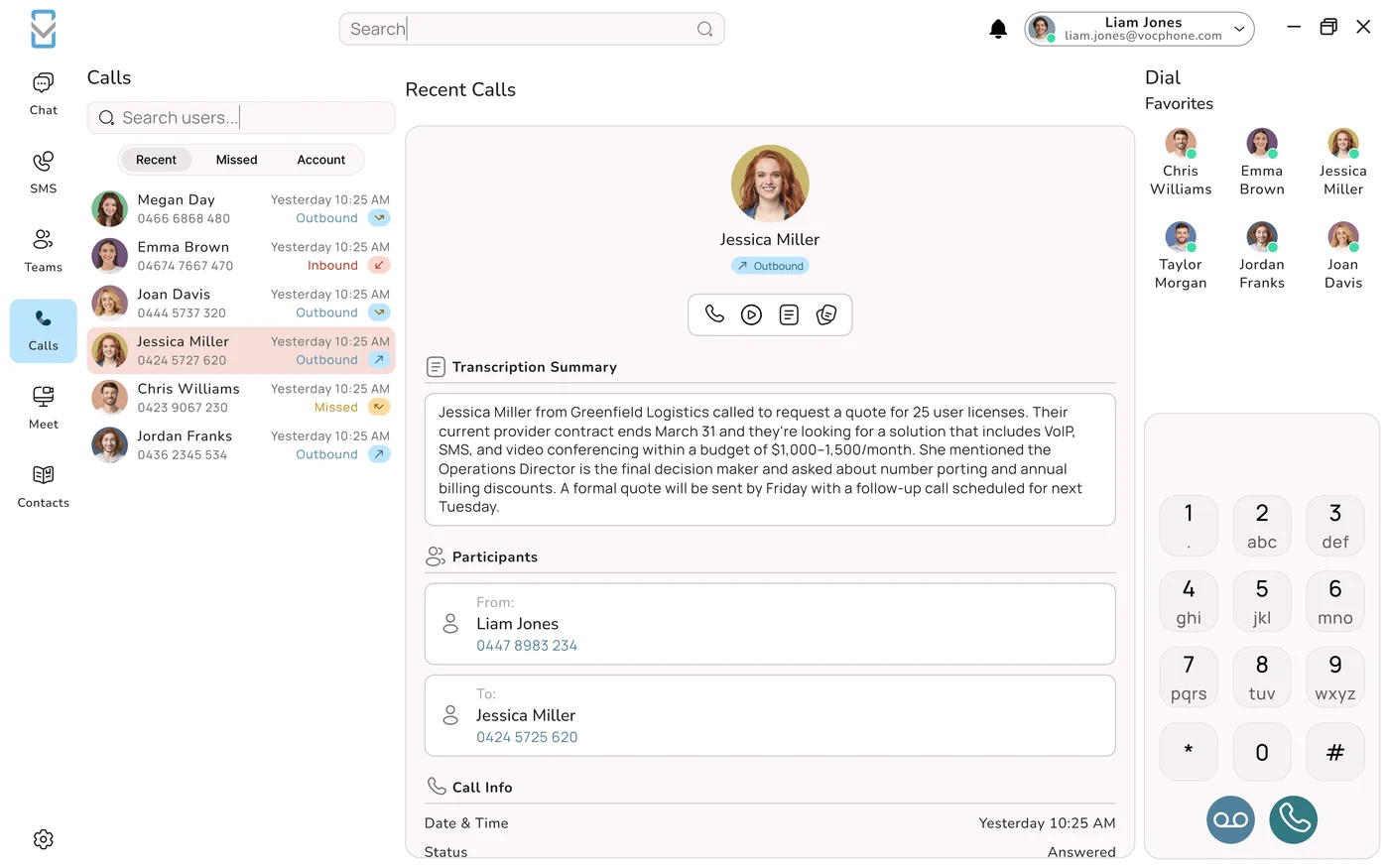
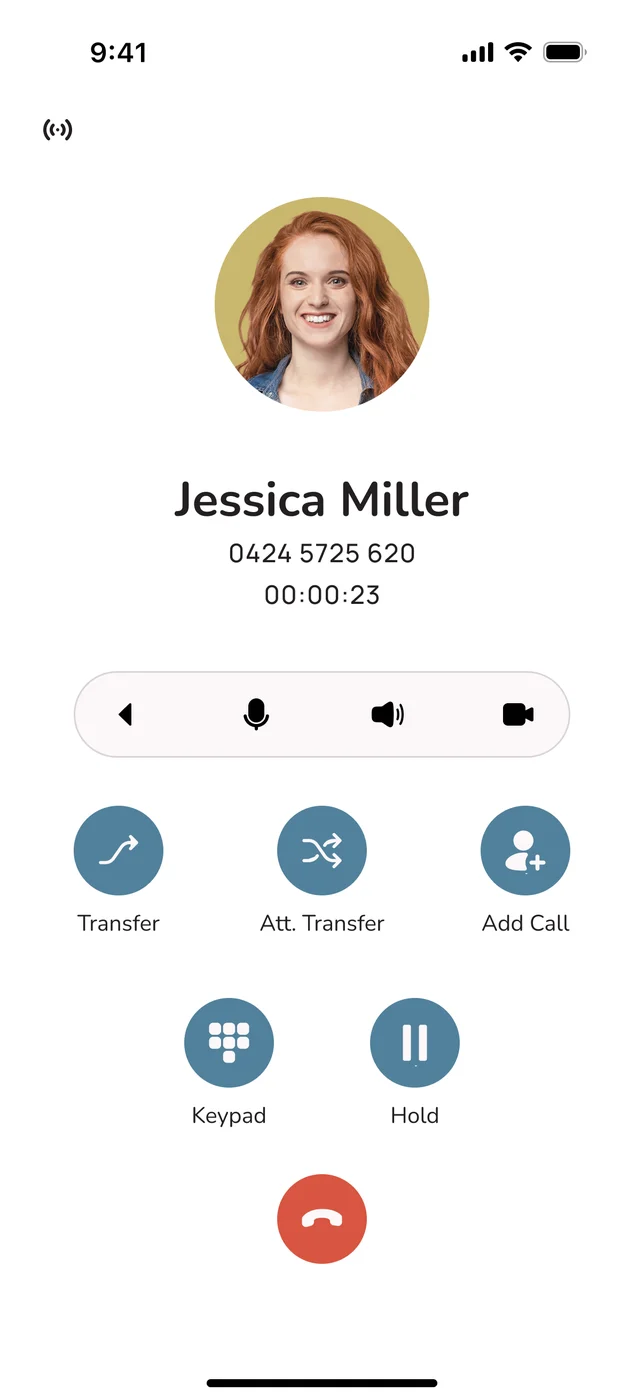
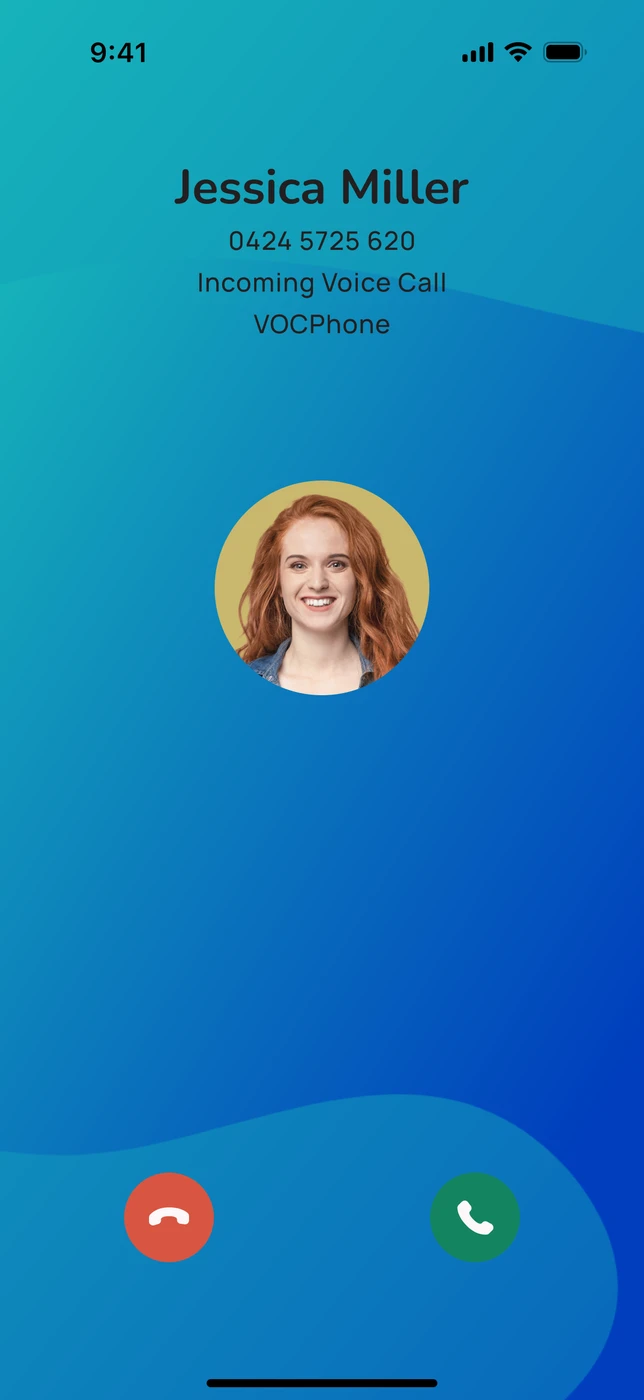
The business number lives in a system and your mobile is one of its endpoints. Calls to the business number ring the app; calls from the app present the business number. The app is the business phone: the handset is just the hardware carrying it. Works on a laptop too.
2. A carrier second number
Your mobile carrier adds a second number to the same service, usually with a different ringtone. It runs on the carrier voice network so it works in weak data coverage, but it is tied to that handset and that person, with no routing, no hours and no records behind it.
3. Dual SIM or eSIM
Two genuine mobile services on one handset. Clean separation, two real numbers, both on the carrier network, and two mobile bills, no routing intelligence, and the business number still sitting in exactly one pocket.
4. Call diversion
The published number simply forwards to a mobile. Free or nearly so, universally used, and the one option that does not fix outbound, which is the part that caused the problem in the first place.
What Each One Leaves You With
| System app | Carrier 2nd number | Dual SIM | Diversion | |
|---|---|---|---|---|
| Business number shows on outbound | Yes | Yes | Yes | No |
| You know it is work before answering | Yes | Usually | Yes | No |
| Rings two people | Yes | No | No | No |
| Opening hours and after-hours path | Yes | No | No | No |
| Record of every call, answered or not | Yes | No | No | No |
| Transcripts and summaries | Yes | No | No | No |
| Business SMS | Yes | Yes | Yes | No |
| Fine in weak data coverage | With native fallback | Yes | Yes | Yes |
| Survives the person leaving | Yes | No | Depends on the account holder | Number yes, relationships no |
| Also works on a computer | Yes | No | No | No |
The short version
If you are one person who only wants separation and never expects anyone else to answer, a dual SIM or a carrier second number is perfectly reasonable and simple. If there is any chance a second person will ever need to help, or you want the phone to know what time it is, the app is the only one of the four that gets you there, and it usually costs about the same as the carrier option while doing considerably more.
The Twenty-Minute Setup
Twenty minutes for the first person, ten for each one after. In this order.
- Sort the number first. Port your published business number into the system, or take a new one and port in the background. Never cancel the old service before the port completes: that is the one action that can genuinely lose a number.
- Install the app and sign in with your own account. Not a shared login. Shared logins wreck call records and make it impossible to revoke one person's access later.
- Allow notifications properly, including on the lock screen, with sound, and time-sensitive or critical alerts where the platform offers them.
- Exempt the app from battery optimisation and from any manufacturer power-saving mode on Android. These are aggressive, and they often reset after an operating system update.
- Grant microphone permission and allow background data, or you get calls that ring and then connect with no audio.
- Set outbound caller ID to the business number, and verify it, which is the next section.
- Put two names in the ring group, in an order, with something defined for when neither answers.
- Set real hours, including Saturday if you work Saturdays, plus twelve months of public holidays.
- Register the service address for emergency calls, and tell everyone what to use.
- Make four test calls: in from another mobile, out to a phone you can physically look at, one after hours, and one with the app closed and the phone locked. That last one is the test that finds the notification problem.
The Setting That Matters Most
Inbound gets tested, because it is obvious. Outbound is what actually decides whether the business owns its own phone identity, and it gets checked far less.
Check it
Ring a phone you can physically look at and read what appears on the screen. Never assume the setting took effect.
Main number
Present the main business number for most people, not a direct line, so the system decides who the return call reaches.
Callable
Whatever shows must be a number that can actually be rung back. A number nobody can return is a callback you never get.
Why the main number beats a direct line
Giving everyone a direct number and presenting it feels helpful and creates a single point of failure per person. A customer who saves a direct line has tied themselves to one individual's availability, so when that person is on a job, on leave, or gone from the business, the call reaches nothing useful and the customer concludes you are unreachable. Present the main number and let the system route it. Direct lines are worth it for a small number of roles where the relationship genuinely is with the individual, and they should be a deliberate exception. One further reason to get this right: business calls are increasingly screened or labelled on mobiles, and a consistent, callable presented number is part of what protects your answer rate. Our note on why answer rates fall covers the mechanics.
Why It Says It Is Not Ringing
Somewhere between a third and a half of all reported problems with mobile business phone apps are one of these five, and none of them are the app.
| What you see | What it usually is | Fix |
|---|---|---|
| Calls arrive late, or as a missed call | Android battery optimisation or a manufacturer power saver suspending the app. | Exempt the app from both. Re-check after OS updates. |
| No sound or banner at all | Notifications never allowed, or silenced on the lock screen. | Allow fully, including lock screen, sound and time-sensitive alerts. |
| Rings, but silence when answered | Microphone permission missing, or background data restricted. | Grant microphone access and allow background data. |
| Fine on wi-fi, not on mobile data | Data saver or a per-app data restriction. | Exclude the app. Voice uses very little data: latency is what matters, not volume. |
| Worked for a week, then stopped | Signed out by an update or an app cleaner. | Sign back in and remove it from any automatic cleaner. |
Test with a call, never with a question
Do not ask somebody whether they set up the app. Ring their business number and confirm you hear it ring with the app closed and the phone locked. That is the only test that proves the notification path works. It takes thirty seconds per person, and it prevents both a fortnight of complaints and, more importantly, the belief that the new system is unreliable, which is much harder to undo than the setting.
Getting an Off Switch
The real reason people hesitate to put the business number on their own phone is not technical. It is a well-founded suspicion that it means never being off. Set up properly, it is the opposite: it is the first arrangement where the off switch is not your willpower.
Real hours, honestly set
The hours you actually work, including Saturday if you work Saturdays, plus public holidays. Outside them the app is quiet and the caller still gets something useful. A diversion cannot do this; it behaves the same at 2am as at 2pm.
Something better than voicemail
An AI answer that takes the details, answers the questions you get twenty times a week and books a time converts far better than a recorded message, and it removes the guilt that keeps people answering at 9pm, because the customer has genuinely been dealt with.
A real definition of urgent
If some calls truly are urgent, define them with a specific question the caller answers, and run an actual rotation naming who is on this week. Vagueness about what counts as urgent is what makes everybody feel permanently on call.
Right to disconnect
Australian employees can refuse unreasonable contact outside working hours. That is far easier to make real when the system has genuine hours and a named rotation than when it depends on individuals choosing not to answer a ringing phone.
If after-hours expectations are a live argument in your business, and in trades and services they usually are, our guide to the right to disconnect for on-call staff covers how to set expectations that actually hold.
When There Is More Than One of You
| Decision | Do this | Because |
|---|---|---|
| Who rings first | A group of two, never one | A flat battery, a ladder or another call should not end an enquiry. |
| If neither answers | Overflow, then a defined answer | An unbounded ring is a caller ringing your competitor within a minute. |
| Logins | One account each, always | Shared logins destroy records and make access impossible to revoke individually. |
| Direct numbers | Sparingly and deliberately | Every published direct number is a future dead end when that person is away. |
| Who can hear recordings | Set roles explicitly | Customer call recordings are not general staff reading material. |
| Recording notification | One standard, every line | Recording law is state-based, so notify on every recorded call including the after-hours path. One standard is simpler and errs correctly. |
When Somebody Leaves
Most small Australian businesses run this on personal handsets, which works fine provided four things are settled in advance rather than during a resignation.
The number belongs to the business
Held in the system, not on the handset. Someone leaving takes their phone; the number, the call history and the customer context stay exactly where they were.
Access is revoked centrally
Disable the account and the app stops working immediately, on any device, without needing the handset back or relying on anybody to delete anything. This is the strongest practical argument for the app over a carrier second number.
The history does not walk out
Transcripts, summaries and call records live in the system rather than in a handset's call log, so a departure does not remove three years of who-agreed-what along with the person.
Write down who pays for what
Whether the business contributes to the handset or the mobile plan, and what happens to the device at termination. One paragraph, agreed at the start, prevents an awkward conversation later.
A tech spends three years giving customers their personal mobile, because outbound was never set to the business number. They leave. Every one of those customers now has a direct line to a competitor, saved under your business name.
The scenario that makes outbound caller ID worth ten minutes
Emergency Calls From an App
Three things to settle, and to say out loud
Register a service address and keep it current. A cloud service can be used from anywhere, which is exactly why the address held against your service matters: update it the week you move, not at the next review. A business phone app is not the same as the handset's own dialler for an emergency call. Tell people which to use rather than leaving them to work it out under pressure; it is a thirty-second conversation at setup and an unpleasant discovery if it is never had. Have an outage plan. A mobile's own dialler works independently of your phone system and your internet, and everybody on site should know that. Put all three in your induction notes and repeat them whenever someone starts. Our guide to Triple Zero and cloud phone systems gives wording you can use directly.
Coverage, Data and the Fallback
The one real technical trade-off of app calling, with a mitigation many people never switch on.
| Situation | What happens | What to do |
|---|---|---|
| Good data or wi-fi | Works well. Voice uses very little bandwidth. | Nothing. This is the normal case. |
| One bar or congested data | Audio degrades in a way a carrier call would not, because voice is latency-sensitive rather than bandwidth-hungry. | Turn on native dialling fallback so the system rings the handset's own mobile number instead of the app. |
| No coverage at all | Nothing works, including a normal call. | Route to the next person, and let the after-hours or AI path capture the caller. |
| Overseas | App calling over wi-fi works normally and avoids roaming charges. | Set hours that reflect where the person actually is. |
| Regional and remote | Coverage varies more than the maps suggest. | Enable fallback, and test where people actually work rather than in the office. |
If your work regularly takes you outside reliable coverage, our note on business phones outside the coverage map covers the options.
Six Things That Break
The personal number still goes out
Somebody is dialling from the handset's own dialler out of habit. Put the app on the home screen and in the dock, and re-check outbound on a real call at the thirty-day mark. Habits outlast settings.
"It doesn't ring"
Notifications or battery optimisation, about nine times in ten. Test with the app closed and the phone locked, and re-check after major operating system updates, which routinely reset these.
Only one person ever rings
A one-person ring group: the most common configuration mistake there is. Adding a second name takes a minute and is the cheapest reliability improvement available anywhere in the system.
Still answering at 9pm
Hours were never set, so there is nothing to fall back on and answering feels compulsory. Set real hours, give the caller something better than voicemail, and the habit resolves itself within a fortnight.
Two people, one login
Records become meaningless, transcripts get attributed to the wrong person, and you cannot cut off one person's access without cutting off both. One account each.
Nobody looks at the missed calls
The point of having a system is that unanswered calls become visible. Read the list once a week for the first month: the volume and the times of day usually surprise people, and that is the information you bought.
What We Set Up
Apps on the phones you already carry
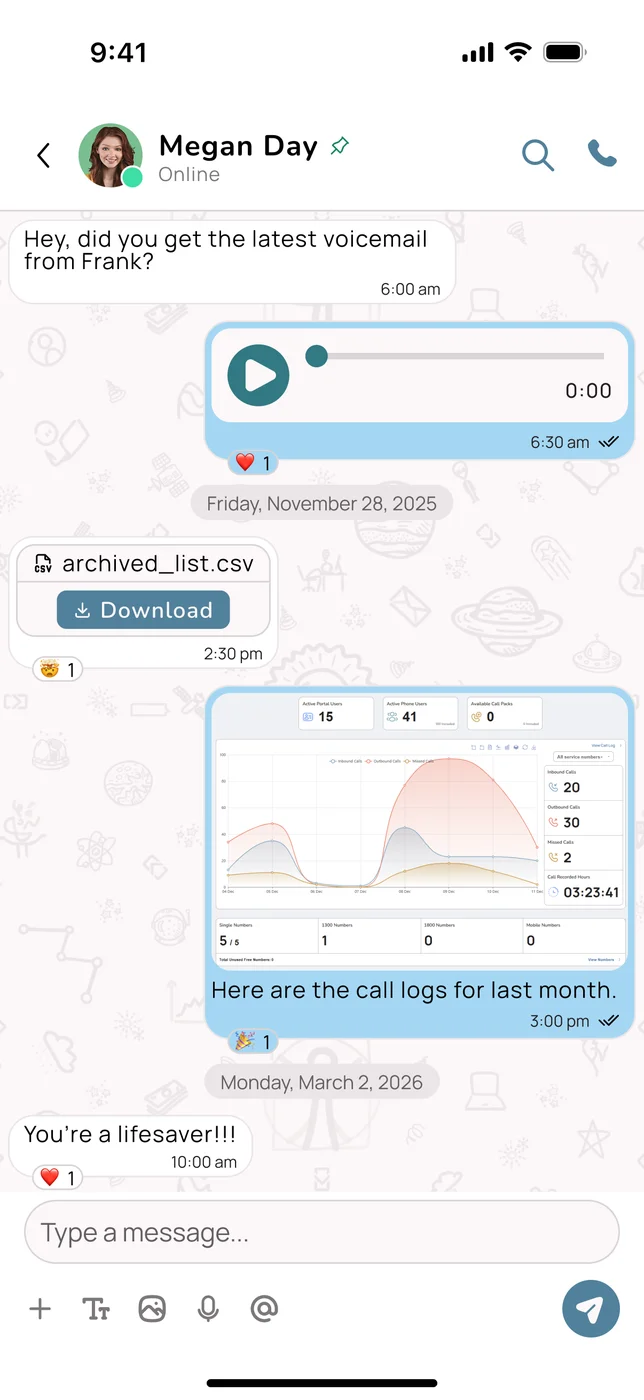
Mobile and desktop apps for calls, video, SMS and messaging, with your business number presented on every outbound call: configured and then verified on a real call rather than assumed.
We check the settings that actually break
Notifications, battery optimisation, background data and microphone permission, tested with the app closed and the phone locked on each handset, and we tell you which ones to re-check after an OS update.
Hours, and an answer instead of a mailbox
Real hours and public holidays, with an AI answer in an Australian voice outside them that takes details, handles your common questions and books a time, so the phone can genuinely switch off without the business going quiet.
The number stays with the business
Held in the system rather than in a handset, with access revoked centrally when somebody leaves and the call history staying where it belongs. VOCPhone owns and operates its own network: Australian owned, Australian hosted, Australian support.
Frequently Asked Questions
How do I put my business phone number on my personal mobile?
Four methods exist and only one fixes the whole problem. A cloud phone system app puts the business number into a system and makes your mobile one of its endpoints, so the business number rings the app and, critically, calls you make from the app present the business number rather than your personal one. A carrier second number adds another number to the same mobile service, which works in weak data coverage but is tied to that handset and that person with no routing, hours or records. Dual SIM or eSIM gives you two genuine mobile services on one phone, which is clean separation but two bills and still one pocket. Call diversion simply forwards the published number to your mobile, which is what most Australian businesses do and is the one option that leaves outbound unchanged. To set up the app method: port your published number in and never cancel the old service before the port completes; install and sign in with your own account rather than a shared one; allow notifications fully including lock screen, sound and time-sensitive alerts; exempt the app from battery optimisation and any manufacturer power saver; grant microphone permission and background data; set outbound caller ID to the business number and verify it by ringing a phone you can look at; put two names in the ring group; set real hours with a defined after-hours path; register the service address for emergency calls; and make four test calls including one with the app closed and the phone locked.
Why do customers keep ringing my personal number instead of my business number?
Because you rang them from it first, and the fix is a setting most people never get the chance to change. When a business number is simply diverted to a mobile, inbound works but outbound is untouched: every call you make still advertises your personal number to somebody who then saves it. Do that a few hundred times and, within a year, a large share of your inbound calls arrive on a number that has no opening hours, no backup person, no records and no way to be handed to anybody else. Publishing the business number more prominently afterwards does not undo it, because the customer already has a number that worked last time and they are going to use it. The consequences compound in three directions. It rings at 6:40 on a Sunday, because the number has no concept of time. It cannot be shared, so an apprentice or an office person cannot help even when they are free. And if it is a staff member's mobile rather than yours, three years of customer relationships are stored under their name on a handset that leaves when they do. The fix is not a different phone or a different carrier: it is a system app configured to present the business number on outbound, which takes about ten minutes and is one of the more valuable protections a small business can put in place.
Is a business phone app better than call forwarding to my mobile?
For anything beyond a single person who never expects help, yes, and the difference shows in seven places. Only the app presents the business number on the calls you make, which is the setting that caused the whole problem. Only the app lets you tell a work call from a personal one before you answer. Only the app can ring two people in an order, so a flat battery, a ladder or another call does not end an enquiry. Only the app understands opening hours and public holidays and can behave differently outside them, whereas a diversion behaves identically at 2am and 2pm and turning it off at night is a habit that survives about a fortnight. Only the app keeps a record of every call whether or not it was answered, along with transcripts and summaries, so what was agreed survives the drive home. Only the app sends and receives SMS from the business number. And only the app keeps the business identity in the business rather than in a handset, so access can be revoked centrally when somebody leaves. Diversion has exactly two advantages: it is free or nearly so, and it works on the carrier voice network in poor data coverage, and the second of those is matched by enabling native dialling fallback on a system app.
Why isn't my business phone app ringing on my mobile?
Nine times out of ten it is one of five settings and none of them are the app itself. Calls arriving late or showing up as missed calls is usually Android battery optimisation or a manufacturer power-saving mode suspending the app in the background, so exempt it from both and re-check after operating system updates, which routinely reset these. No sound or banner at all is usually notifications never allowed, or allowed but silenced on the lock screen, so allow them fully including lock screen, sound and time-sensitive or critical alerts where offered. A call that rings but goes silent when answered is typically a missing microphone permission or background data restricted on a metered connection. Working on wi-fi but not on mobile data is data saver or a per-app data restriction: worth excluding the app from, since voice uses very little data and it is latency that matters rather than volume. And an app that worked for a week then stopped has usually been signed out by an update or an aggressive app cleaner. The important part is how you test it: never ask somebody whether they set the app up. Ring their business number and confirm you hear it ring with the app closed and the phone locked. That is the only test that proves the notification path works, and it takes thirty seconds.
Does putting the business number on my phone mean I can never switch off?
Only if you set it up badly. Configured properly it is the first arrangement where the off switch is not your own willpower, and four things make that real. Set the hours you actually work, including Saturday if you work Saturdays, plus twelve months of public holidays: outside those hours the app stays quiet, which is something a plain diversion can never do because it behaves the same at 2am as at 2pm. Give callers something better than a mailbox: an AI answer that takes the details, handles the questions you get asked twenty times a week and books a time converts far better than a recorded message, and it removes the guilt that keeps people answering at 9pm, because the customer has genuinely been dealt with rather than left hanging. If some calls really are urgent, define urgent with a specific question the caller answers and run an actual rotation naming who is on this week, because vagueness about what counts as urgent is exactly what makes everyone feel permanently on duty. And note that Australian employees have a right to refuse unreasonable contact outside working hours, which is much easier to make workable when the system has genuine hours and a named on-call rotation than when it relies on individuals deciding not to answer a phone that is ringing in their pocket.
What happens to the business number if a staff member leaves?
With a cloud phone system app, nothing, and that is the strongest practical reason to choose it over a carrier second number or a dual SIM. The number belongs to the business and lives in the system rather than on the handset, so someone leaving takes their phone and leaves the number, the call history, the transcripts and the customer context exactly where they were. Access is disabled centrally, which stops the app working immediately on any device without needing the handset returned or relying on anybody to delete anything. The scenario worth preventing is the one that follows from never configuring outbound caller identity: a technician or salesperson spends three years giving customers their personal mobile, because that is what showed on every call they made, and when they leave, every one of those customers has a direct line to a competitor saved in their contacts under your business's name. This is neither hypothetical nor rare. Four things are worth agreeing at the start rather than during a resignation: that the business number belongs to the business, how access is revoked, where the call history lives, and who pays for the handset and the mobile plan including what happens to the device at termination. A single written paragraph prevents a difficult conversation later.
Will business calls work on my mobile in areas with poor reception?
This is the one genuine trade-off with app calling, and it has a simple mitigation that many people never enable. With good mobile data or wi-fi, app calling works well and uses very little bandwidth. On one bar or congested data, audio degrades in a way a carrier voice call would not, because voice is latency-sensitive rather than bandwidth-hungry, which is why a connection that streams video adequately can still produce choppy calls. The fix is native dialling fallback: configure the system to ring the handset's own mobile number rather than the app when data is weak, so the call travels over the carrier voice network while still presenting your business number and still being logged and recorded by the system. Enable it for anyone who works in variable coverage, and test it in the places people actually work rather than in the office, because real coverage varies more than published maps suggest. Where there is no coverage at all, nothing works including a normal carrier call, so the answer there is routing: let the call ring the next person in the group and let the after-hours or AI path capture the caller so the enquiry is not lost. Overseas, app calling over wi-fi works normally and avoids roaming charges, which is a real advantage over a diversion.