











Start Here: This Is the On-Call Deep-Dive
If you want the plain-English overview of the right to disconnect (what it is, who it covers and how a cloud phone system keeps you compliant) start with our main explainer, The Right to Disconnect Is Now Law. This article is the companion piece for one specific, awkward situation that broad guide can't fully cover: the trades and field teams where someone genuinely has to be reachable after dark.
A burst pipe at midnight, a walk-in freezer failing at a pub on a Saturday, a security gate stuck open, a switchboard tripping in a heatwave: these aren't hypotheticals for a plumber, sparkie, refrigeration tech or locksmith. Someone has to answer. The new law doesn't stop that. What it does is force you to be deliberate about how you stay reachable, so a genuine emergency call doesn't turn into an every-night expectation that lands a worker in breach territory. That's the whole focus here.
General information, not legal advice
This article explains how the right to disconnect tends to play out for on-call and field work, and the phone setup that helps. It is not legal advice. For your own roster, awards and contracts, check the Fair Work Ombudsman guidance or get advice specific to your business.
What Actually Changed on 26 August 2025
The right to disconnect first applied to larger employers, then extended to small business employers, those with fewer than 15 employees, from 26 August 2025. That single date brought around 5.4 million more Australian employees under the rule, and it swept in exactly the kind of business this article is about: the four-van plumbing outfit, the family electrical firm, the two-person locksmith operation.
It sits in the Fair Work Act, with guidance from the Fair Work Ombudsman. In short, an employee can refuse to monitor, read or respond to work contact, calls, texts, emails, outside their working hours, unless that refusal is unreasonable. If you run a small trades or field business and you've been quietly relying on staff answering the mobile whenever it rings, this is the change that says you can no longer assume they will.
26 Aug 2025
Date the rule extended to small business (under 15 staff)
5.4m
Additional employees now covered by the right to disconnect
<15
Headcount that now brings a small employer into scope
24/7
Hours an AI Phone Agent can cover so a person doesn't have to
It's Not a Ban, and Emergencies Are Excluded
This is the part that gets mangled in the smoko-room retelling, so let's be precise. The right to disconnect is not a ban on after-hours contact. You are allowed to ring a worker at night. What changed is that they now have a protected right to not respond, unless refusing would be unreasonable. Contact for a genuine emergency, and contact that is otherwise reasonable, sits outside what an employee can reasonably refuse.
For the trades, that emergency carve-out matters enormously, but it is not a free pass. "Emergency" means the burst main and the failing freezer, not "can you quote this job tonight" or "the client emailed and wants an answer by breakfast". If every after-hours call gets dressed up as an emergency, the reasonableness test stops protecting you. The cleaner approach is to build a system that can actually tell the difference, which is where the call flow later in this piece earns its keep.
The distinction that keeps you safe
A true emergency (danger to people, property or safety, or a fault that can't wait until morning) is legitimate after-hours contact. A routine enquiry, a quote request or a non-urgent booking is not. Your after-hours setup should be built to sort one from the other automatically, so a person is only ever pulled out of their evening for the real thing.
What "Reasonable" Means for On-Call Work
Whether a refusal is unreasonable isn't a coin toss. The Fair Work framework weighs a set of factors, and a handful of them bear directly on field and on-call work:
The employee's role
A designated on-call technician rostered for the night is in a very different position to an apprentice who happened to answer once. Roles with genuine on-call responsibility carry a higher expectation of being reachable.
The reason for contact
A safety emergency or a fault that can't wait weighs heavily toward reasonable. "Just checking" or a routine enquiry does not.
How contact is made
A single, targeted call to the rostered on-call person for a real emergency is very different to blasting the whole crew's mobiles for something that could wait. Method and disruption count.
Level of compensation
If a worker is paid an on-call allowance or penalty for being available, that weighs toward it being reasonable to expect a response. Unpaid, unrostered contact is harder to justify.
Notice the theme: reasonableness rewards a business that is deliberate and documented, a defined on-call role, a real emergency, a targeted contact method, and compensation where it's due. An ad-hoc "everyone answers all the time" arrangement is exactly what the law is now pushing back on.
The Real Problem: The Business Number on a Personal Mobile
Here's the setup that quietly gets most small trades businesses into trouble. The business number is diverted to the owner's mobile, or the crew's mobiles, around the clock. It worked for years. But under the new rule it does two damaging things at once: it makes every after-hours ring an implicit demand on a personal phone, and it gives you no way to separate the freezer emergency from the tyre-kicker who found your number at 10pm.
The worker can't tell which is which without answering, so they either answer everything (and their protected right becomes meaningless in practice) or they start ignoring the phone (and you miss the genuine emergency). Neither is where you want to be. The fix isn't to make people work harder: it's to put a system between the incoming call and the human, so the human is only involved when they genuinely need to be. That's the same missed-call problem the trades have always had, now with a compliance edge; we dig into the money side of it in Missed Calls Cost Tradies $342k a Year.
The Compliant After-Hours Call Flow
A cloud phone system lets you define exactly what happens to a call based on the time of day, so your after-hours behaviour is a designed thing rather than an accident. A sound flow for a trades or field business looks like this:
Business hours ring the team as normal
During your set hours, calls behave the way they always have, ring the office, the crew, a queue, whatever suits. Nothing about the law changes daytime.
After hours, the AI Phone Agent answers first
Once you close, calls hit an after-hours flow instead of a personal mobile. An AI Phone Agent picks up in a natural Australian accent and starts triaging: no human involved yet.
Routine calls are captured, not escalated
Quotes, non-urgent bookings and general enquiries are logged, the caller is told when you'll be back, and the details land in your inbox or CRM for the morning. Nobody's evening is interrupted.
Genuine emergencies reach the on-call person only
When the agent confirms a real emergency, it, and only then, contacts the rostered on-call technician: a call transfer or an SMS with the details, targeted at one person, for a legitimate reason.
Everything is recorded and time-stamped
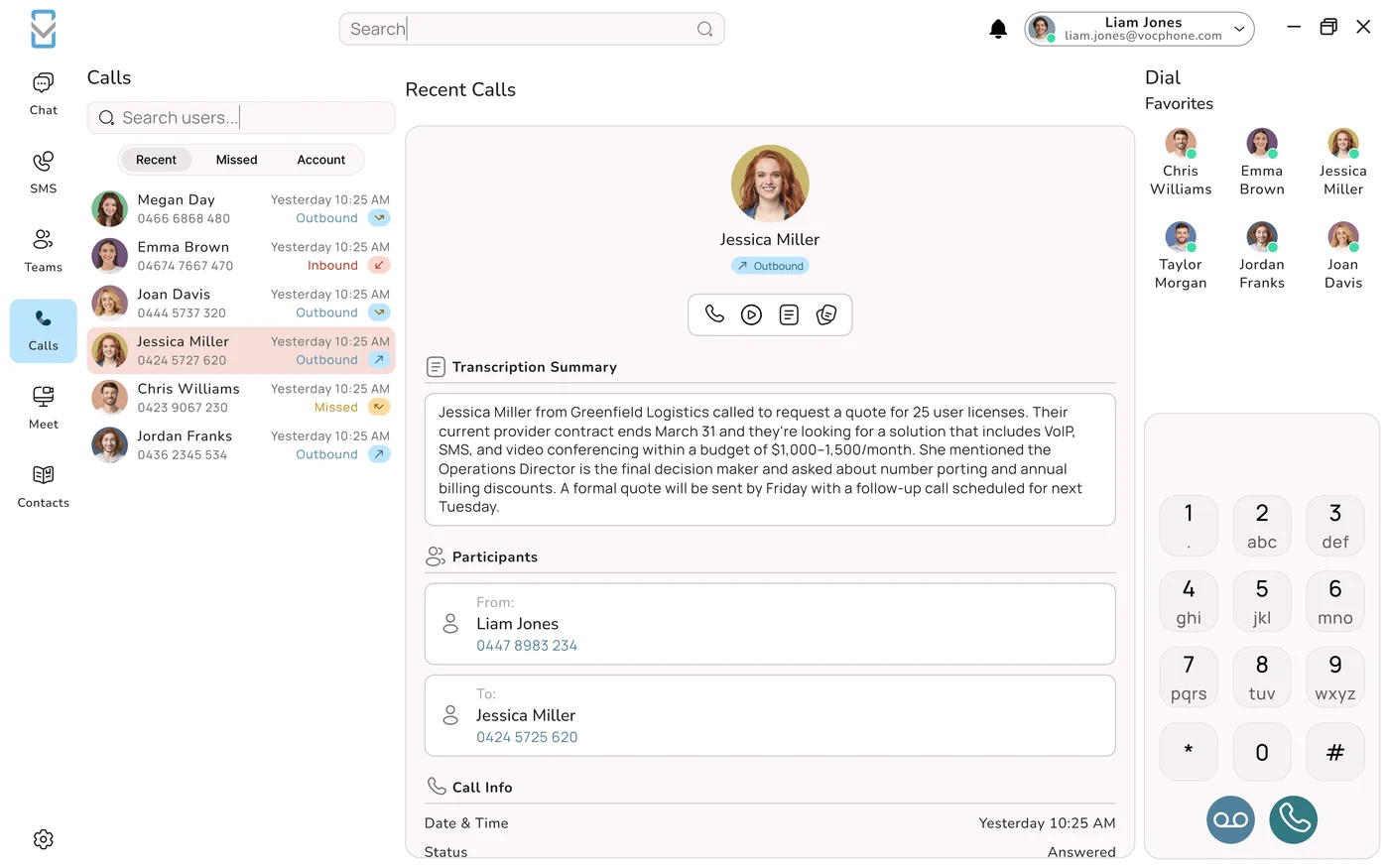
Every call, transcript and escalation is logged automatically, giving you a clean record of what came in, how it was handled and who was contacted.
The important shift is that the human at the bottom of that flow is protected by everything above them. They're not monitoring a phone all night; a system is, and it only pulls them in for the real thing: targeted, justified and logged.
Using an AI Phone Agent to Triage Emergencies
The heart of a compliant after-hours setup is triage, deciding whether a call is a genuine emergency before a person is dragged into it. That is exactly the kind of structured, repeatable conversation an AI Phone Agent handles well. Picture a call to a refrigeration business at 11pm:
It answers instantly in an Australian voice
No voicemail, no "press 1". The agent picks up and asks what's happened, so the caller feels heard rather than fobbed off.
It asks the questions that define an emergency
Is anyone at risk? Is stock or property being lost right now? Can it safely wait until morning? A failing commercial freezer full of stock is flagged urgent; a dripping tap is not.
Routine calls get handled without waking anyone
For non-urgent matters it takes the details, gives your return time, and files everything for the day team: the caller is looked after and no on-call worker is disturbed.
Real emergencies escalate to the rostered person
Only a confirmed emergency triggers a transfer or SMS to tonight's on-call technician: one targeted contact, for a legitimate reason, exactly what the reasonableness test looks for.
Done this way, the AI does the monitoring the law now discourages a human from doing, and the human is reserved for the calls that genuinely warrant it. For how these agents work more broadly, and what they cost, see our AI voice agent cost and ROI breakdown.
Why this is the win-win for trades
You don't lose the emergency job, because the phone is always answered. You don't breach the law, because a person is only contacted for a genuine emergency, on a roster, with a record. And your crew actually get their evenings back, which, on a tight labour market, is worth more than most owners realise.
Fair Rotation and On-Call Rosters
Even with the phone doing the heavy lifting, someone still has to be the person the AI escalates to. The fairest and safest way to handle that is a defined, rotating on-call roster rather than a default of "the boss, or whoever picks up".
- Name who's on call, and when. A clear roster means one identified person carries the after-hours escalation for a set period, not the whole crew, all the time. That targeting is exactly what the reasonableness factors reward.
- Rotate it fairly. Spreading on-call across the team stops one person carrying every night, which is both fairer and far more sustainable for retention.
- Compensate the on-call shift. Where an allowance or penalty applies, pay it. Compensation is one of the factors that makes expecting a response reasonable, and it's the right thing to do.
- Point the escalation at the roster, not the mobiles. Your phone system escalates to whoever is rostered, so changing tonight's on-call person is a setting, not a scramble to re-divert numbers.
The roster and the call flow work as a pair: the flow decides whether to escalate, the roster decides who to escalate to. Together they turn a vague, always-on expectation into a defined, defensible arrangement.
Logging: Your Proof It Was Reasonable
If a dispute ever arises about after-hours contact, memory won't help you: records will. A cloud phone system logs this automatically, which quietly turns compliance from a worry into a paper trail:
What came in
Every after-hours call, with time-stamp, transcript and the agent's triage outcome, so you can show a call really was an emergency, or really wasn't.
Who was contacted
A record of which on-call person was escalated to, when, and why: evidence that contact was targeted and justified, not a scattergun.
What was left for morning
Routine calls captured and queued for the day team, showing the after-hours human wasn't expected to deal with non-urgent work.
Held onshore
On VOCPhone that call data stays in Australia, in line with the Privacy Act 1988, not routed through an overseas data centre.
None of this requires anyone to fill in a form. The system records it as it goes, so the evidence that your after-hours contact was reasonable exists whether or not you ever need it.
Your After-Hours Compliance Checklist
Pulling it together, here's the setup that lets a trades or field business stay reachable for genuine emergencies while staying on the right side of the right to disconnect:
| Step | Old habit | Compliant setup |
|---|---|---|
| Where after-hours calls go | ✗ Straight to personal mobiles | ✓ After-hours AI Phone Agent first |
| Emergency vs routine | ✗ Human has to answer to find out | ✓ Triaged automatically before escalation |
| Who gets contacted | ✗ Whole crew, any time | ✓ One rostered on-call person |
| On-call rotation | ~ Ad-hoc, usually the boss | ✓ Fair, rostered, compensated |
| The business number | ✗ Living on personal phones | ✓ Kept off personal devices |
| Record of contact | ✗ Nothing but memory | ✓ Logged, transcribed, time-stamped |
Get those six right and the after-hours question largely answers itself: the phone is always answered, a person is only ever involved for a genuine emergency, and you have the records to prove it. For a business with tools and vans rather than a comms cupboard, that's the practical shape of compliance. Our phone system guide for tradies covers the day-to-day features that sit alongside it.
Frequently Asked Questions
Does the right to disconnect stop me calling my tradies after hours in an emergency?
No. The right to disconnect is not a ban on after-hours contact, and genuine emergencies are excluded from what an employee can reasonably refuse. You can contact a worker for a real emergency. What the law protects is a worker's right not to respond to contact that is unreasonable: such as routine, non-urgent matters outside their hours. The safest approach is a system that only escalates to a person when a call is a genuine emergency. This is general information, not legal advice.
When did the right to disconnect start applying to small businesses?
The right to disconnect extended to small business employers, those with fewer than 15 employees, from 26 August 2025. That brought around 5.4 million additional Australian employees under the rule, including many small trades and field-service businesses. It sits within the Fair Work Act, with guidance available from the Fair Work Ombudsman.
How do I know if contacting a worker after hours is "reasonable"?
Reasonableness is judged on several factors, including the employee's role and level of responsibility, the reason for the contact, how the contact is made, and whether the employee is compensated for being available. A single, targeted call to a rostered, paid on-call technician for a genuine emergency weighs strongly toward reasonable. Contacting the whole crew for a non-urgent enquiry does not. For your specific situation, check Fair Work Ombudsman guidance or seek advice.
How can an AI phone agent help me stay compliant?
An after-hours AI Phone Agent answers every call, asks the questions that separate a genuine emergency from a routine enquiry, and only escalates real emergencies to your rostered on-call person. Routine calls are captured and left for the morning, so no worker is pulled out of their evening for something that can wait. It effectively does the after-hours monitoring the law discourages a person from doing, and logs everything as evidence that contact was reasonable.
How do I keep the business number off my staff's personal mobiles?
With a cloud phone system, the business number lives on the platform rather than on any individual's device. After-hours calls hit a defined call flow (an AI Phone Agent, then a rostered escalation) instead of being diverted to personal mobiles. Staff use an app that respects their working hours, and changing who is on call is a setting rather than a re-diversion of numbers, so the business number never has to sit permanently on a personal phone.
What's the difference between this and your main right-to-disconnect article?
Our main explainer, The Right to Disconnect Is Now Law, gives the broad overview: what the law is, who it covers, and how a compliant phone system works for any business. This article is the deep-dive companion for one harder scenario: tradies, field teams and on-call rosters that genuinely need someone reachable for emergencies. It focuses on triaging real emergencies, fair rotation, keeping the number off personal devices and logging. Read the main explainer first for the fundamentals, then this one for the on-call specifics.