











What Changed on 26 August 2025
The right to disconnect arrived for larger employers first. From 26 August 2025, it extended to small business employers: those with fewer than 15 employees. That single date pulled roughly 5.4 million small-business employees into scope, which means most Australian businesses reading this are now covered whether they realised it or not.
The right sits within the Fair Work Act, and the Fair Work Ombudsman publishes the practical guidance. If you run a café, a trades crew, a clinic or a two-person office, this is no longer a big-business problem you can file under “not us”. The rules are the same for a team of five as they are for a team of five hundred.
General information, not legal advice
This article explains the right to disconnect in plain English and shows how a cloud phone system can be set up to reduce your exposure. It is general information only and is not legal advice. For advice on your specific circumstances, check the Fair Work Ombudsman's guidance and speak to a qualified adviser.
What the Right to Disconnect Actually Means
Strip away the headlines and the right is narrower than most people assume. An employee may refuse to monitor, read or respond to work contact, calls, texts, emails, outside their working hours, unless that refusal is unreasonable. That's it. It is a right to not answer, not a right to be left permanently alone.
Three things are worth nailing down, because getting them wrong causes needless panic:
It is not a ban
You are not prohibited from contacting staff after hours. The law governs an employee's right to refuse to respond: it does not make sending the message an offence.
Emergencies are excluded
Genuine emergencies and genuinely reasonable contact fall outside the right. A real crisis is not a right-to-disconnect problem.
Reasonableness is the test
Whether a refusal is unreasonable depends on the employee's role, the reason for the contact, how the contact is made, and whether they're compensated for being available.
So the law is not asking you to go dark at 5pm. It is asking you to be deliberate: if you expect someone to be reachable after hours, that expectation needs to be reasonable and, ideally, compensated, not just assumed because their mobile happens to ring.
Why Your Phone System Is the Hidden Risk
For most small businesses the real exposure isn't email. It's the phone. Somewhere along the way the business number got forwarded to an owner's or a staff member's personal mobile so calls wouldn't be missed after hours. It felt like good service. Under the right to disconnect it quietly became something else: an open-ended, uncompensated expectation that a particular person will pick up whenever the phone rings, on their own device, on their own time.
That arrangement creates two problems at once. First, it puts the individual in an awkward spot: answer and resent it, or decline and wonder whether they're in breach of some unwritten rule. Second, it puts you in a weak spot: there's no roster, no record of who agreed to what, and no way to show the after-hours load was reasonable or shared fairly.
The forwarded-mobile trap
“Just divert the office phone to my mobile after five” is the single most common after-hours setup in Australian small business, and the one most likely to sit awkwardly against the right to disconnect. It ties the business's reachability to one person's personal device, with no roster, no compensation and no log of what happened. Fix the plumbing and the problem largely disappears.
The good news: this is a systems problem, and systems problems have clean solutions. You do not have to choose between “stay reachable” and “protect our people”. The right phone setup gives you both.
The Fix: Take the Business Number Off Personal Phones
The principle is simple. The business number belongs to the business, not to any one person's handset. A cloud phone system lets you define exactly what happens to a call based on the time of day, so nobody is silently on the hook after hours. Here is what that looks like in practice.
Business-hours call flows
Define your open hours once. During them, calls ring the team as normal. Outside them, the system takes over automatically: no one has to remember to “put the phones on night mode”.
An after-hours AI Phone Agent
Instead of ringing a personal mobile, after-hours calls go to an AI Phone Agent in a natural Australian accent. It answers, captures the details, books what it can and only escalates genuine emergencies.
Voicemail-to-email
Callers who'd rather leave a message get a professional greeting; the voicemail lands as an email (and transcript) the team picks up next business day, not a message trapped on someone's private phone.
A proper on-call roster
If you genuinely need after-hours cover, roster it. The system routes emergencies to whoever is on that night: a documented, shared, compensable arrangement, not a permanent expectation on one person.
Number off personal devices
Staff use the VOCPhone app for work calls, so the business number never gets tied to a personal SIM. When they're off, the app is off, and the business line still behaves correctly.
Everything logged
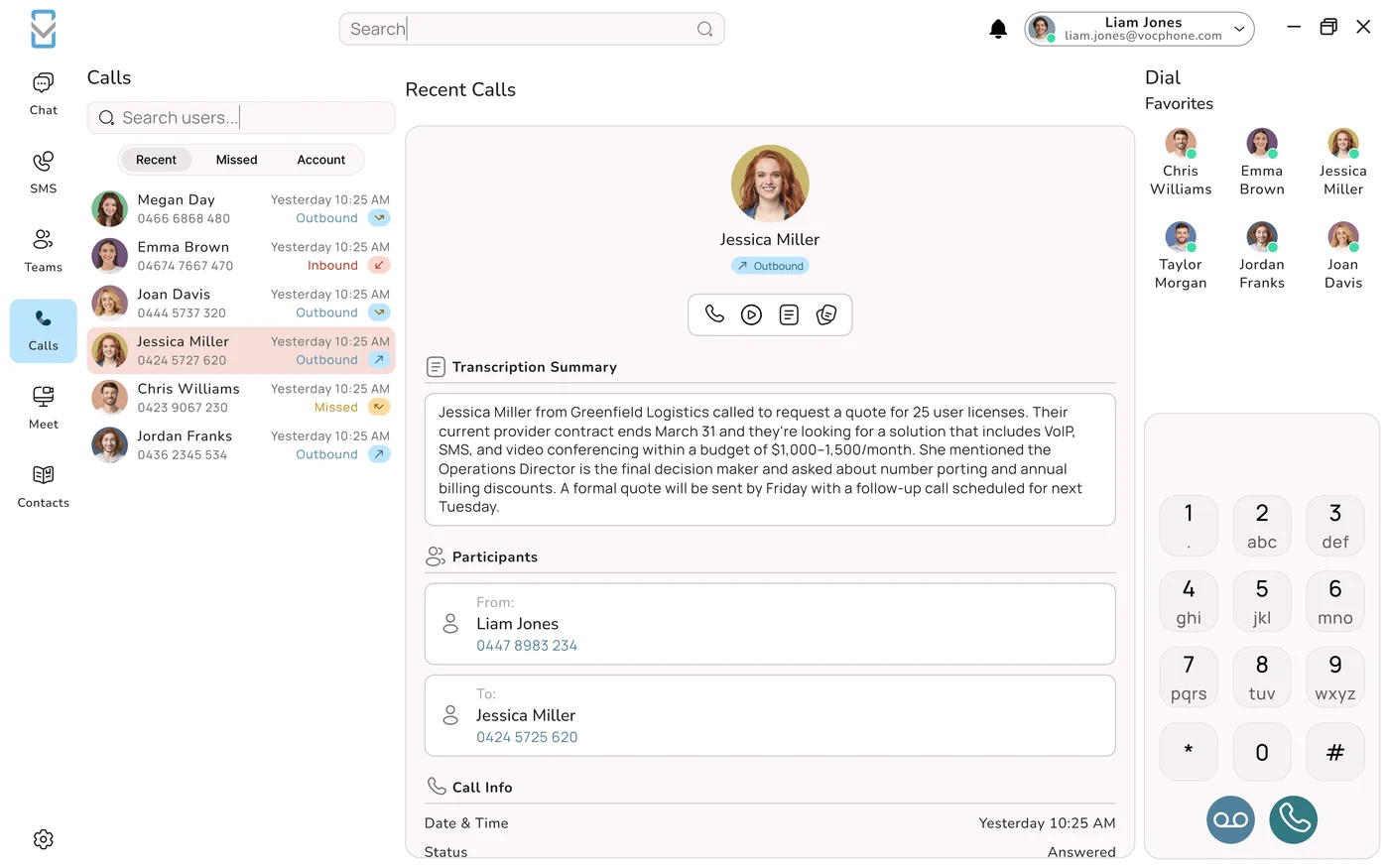
Every call, who handled it, when, and the transcript: all recorded centrally. If you ever need to show the after-hours load was reasonable and shared, the evidence is already there.
The result is a business that stays reachable around the clock while no individual is quietly expected to be on call on their own phone. The AI handles the routine after-hours volume, voicemail-to-email catches the rest, and a rostered person deals only with genuine emergencies, which the law excludes anyway. If you want the full picture of how after-hours answering plugs the revenue leak as well as the compliance gap, our piece on how missed after-hours calls cost tradies walks through the numbers.
How to Set It Up, Step by Step
Moving from “forward it to my mobile” to a proper compliant setup is not a big project. On a cloud platform it's an afternoon's configuration, and no downtime while you do it.
Define your working hours
Set your open hours in the system, including different hours per day or per department if you need them. This single schedule drives everything that follows, so calls automatically behave one way during hours and another outside them.
Build the business-hours flow
Decide how in-hours calls ring (a team, a queue, or specific people) and where overflow goes when everyone's busy. This is your normal daytime experience; the after-hours flow is the important change.
Point after-hours calls at the AI Phone Agent and voicemail
Replace the personal-mobile divert with an after-hours destination: an AI Phone Agent that answers, captures details and books appointments, backed by voicemail-to-email for anyone who prefers to leave a message. No call touches a private handset.
Set up an on-call roster for genuine emergencies only
If your business really does need someone contactable after hours, build a roster so the AI escalates true emergencies to whoever is on call that night. Rotate it, document it, and compensate it, so the expectation is reasonable and shared, not permanent and personal.
Move staff onto the app and reclaim the number
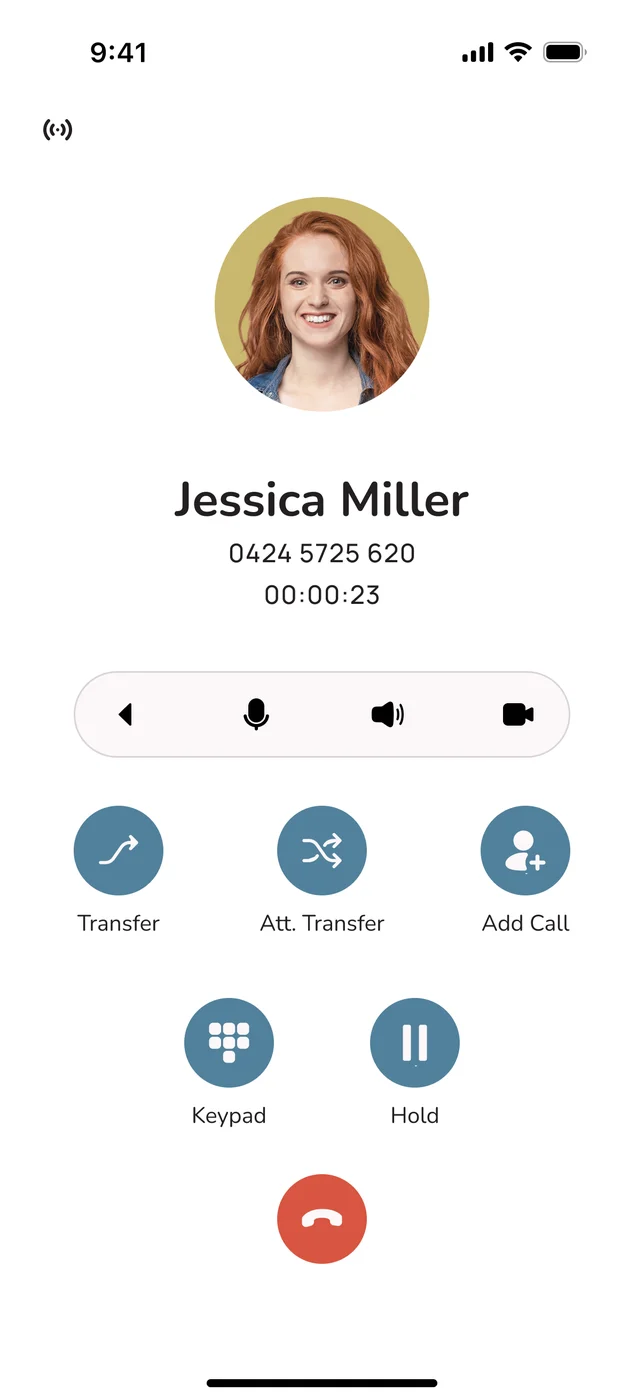
Have the team make and take work calls through the VOCPhone desktop and mobile apps. The business number lives in the platform, not on anyone's SIM, so when someone finishes for the day, the business line still works correctly and they're genuinely off.
Turn on logging and review it
Enable call logging, recording and transcription so every after-hours interaction is captured centrally. Review it periodically to confirm the load is reasonable and that emergencies, not routine calls, are the only things reaching your on-call person.
Because the intelligence lives in the cloud, none of this depends on a box in your office or a particular phone being switched on. You configure it once and it runs itself, every night, weekend and public holiday. For the wider mechanics of how this kind of setup works, see our plain-English guide to what a cloud phone system is.
The Features That Keep You Reachable and Compliant
The setup above leans on a handful of platform features. Here's how each one earns its place, and why doing this on a cloud phone system beats a forwarded mobile or a legacy PBX.
Time-based routing
The engine of the whole thing. Calls follow your schedule automatically, so the business never relies on someone remembering to switch modes at 5pm on a Friday.
AI Phone Agent, included
Answers after-hours calls in a natural Australian accent, books appointments, handles FAQs and qualifies leads: standard with the platform, not a paid add-on.
Voicemail-to-email & transcription
After-hours messages arrive as email with a transcript, so nothing sits unheard on a personal phone and the team picks it up on the next shift.
Softphone apps for work calls
Desktop and mobile apps mean staff use the business number without it being tied to their personal SIM, and can be genuinely offline when off.
Call recording & logging
A central, timestamped record of who handled what and when: the documentation that shows any after-hours contact was reasonable and shared.
CRM sync
Every captured call writes itself to your CRM, so an after-hours enquiry becomes a follow-up task for the morning rather than a note on someone's fridge.
Recording and transcribing calls also has an obvious upside beyond compliance: nothing gets lost. If you want to see how that plays out day to day, read up on AI call transcription, summaries and CRM notes.
Staying on the Right Side of “Reasonable”
The word the whole law turns on is reasonable. An employee's refusal to respond after hours is only overridden when that refusal would be unreasonable, and reasonableness is judged on the specifics: the person's role and level of responsibility, the reason for the contact, how it's made, and whether they're compensated for being available.
You can't remove that judgement entirely, but a well-configured phone system stacks the deck in your favour. When after-hours calls go to an AI agent and voicemail rather than a person, there's simply less contact to be unreasonable about. When emergencies route to a rostered, paid on-call person, the contact that does happen is easy to defend as reasonable. And when everything is logged, you can actually show it, rather than argue about who was expected to answer what.
A simple test for any after-hours setup
Ask: if this person doesn't pick up tonight, does the business still cope? If the answer is “yes: the AI captures it, voicemail catches it, and only a real emergency reaches a rostered person,” you're in good shape. If the answer is “no: we'd miss the call because it only rings their personal mobile,” that's the setup to change first.
Where VOCPhone Fits
Plenty of platforms can route a call by time of day. What makes VOCPhone a natural fit for getting right-to-disconnect compliance right is the combination underneath.
Australian to the core
Australian-owned, Australian-hosted and Australian-supported, with 15+ years in the local market and onshore data under the Privacy Act 1988.
AI Phone Agent as standard
An after-hours agent in a natural Australian accent comes with the platform, ready to answer, book and escalate, not an upsell.
Flows built for you
Business-hours routing, voicemail-to-email, on-call rosters and logging configured to match how your business actually runs.
Its own network
Not a reseller. Owning the network backs 99.99% uptime, so your after-hours cover is actually there when a call comes in.
Transparent pricing
Per-seat, unlimited calls, price guarantee, no minimum users, and full number portability so you keep your existing line, including 1300/1800.
Real 24/7 local support
A local human answers in your time zone whenever you need to adjust a flow or a roster: no ticket queue in another hemisphere.
"Knowing our phones always connect customers with the right person has streamlined how we engage. Having features usually reserved for big companies, in a cost-effective way, is excellent, and I can stay connected from the mobile app when I'm out of the office."
Marie-Claire, Owner, Coco's Wealth of Health
Frequently Asked Questions
What is the right to disconnect?
The right to disconnect is a workplace right under the Fair Work Act that lets an employee refuse to monitor, read or respond to work contact (calls, texts or emails) outside their working hours, unless that refusal is unreasonable. It is a right not to have to respond, not a ban on employers making contact. The Fair Work Ombudsman publishes guidance on how it works. This is general information, not legal advice.
Does the right to disconnect apply to small businesses?
Yes. From 26 August 2025 the right to disconnect extended to small business employers with fewer than 15 employees, bringing about 5.4 million small-business employees into scope. It had previously applied to larger employers. If you employ staff, it very likely applies to you regardless of how small your team is.
Is after-hours contact now banned?
No. The right to disconnect is not a ban on contacting staff outside working hours. It governs an employee's right to refuse to respond, and only where that refusal would not be unreasonable. Genuine emergencies and genuinely reasonable contact are excluded. The practical goal is to make sure any after-hours expectation is reasonable, deliberate and, where appropriate, compensated, rather than assumed.
Can my business still handle after-hours calls without breaching the law?
Absolutely, and that's the point of getting the phone setup right. Instead of forwarding the business number to a staff member's personal mobile, you route after-hours calls to an AI Phone Agent, voicemail-to-email and, for genuine emergencies, a rostered on-call person. The business stays reachable around the clock while no individual is silently expected to be on call on their own device.
What counts as “reasonable” after-hours contact?
Whether an employee's refusal to respond is unreasonable depends on the circumstances, including the employee's role and responsibility, the reason for the contact, how the contact is made, and whether they are compensated for being available. A genuine emergency is treated differently from a routine query. Because reasonableness is fact-specific, check the Fair Work Ombudsman's guidance and seek advice for your situation.
Why is forwarding the business number to a personal mobile a risk?
Diverting the office phone to someone's personal mobile after hours effectively asks that one person to be on call, on their own device, on their own time, usually without a roster or compensation and with no record of what happened. That sits awkwardly against the right to disconnect. Moving to time-based call flows, an AI Phone Agent and central logging removes the personal exposure while keeping the business reachable.