










Where We Are in October 2026
The short version: slow, not broken. The Australian Bureau of Statistics national accounts showed real GDP grew 0.4% in the June quarter 2026. That only kept pace with population growth, so output per person was flat after slipping in the March quarter. Two falls in a row would have meant a per capita recession, and Australia missed it by a whisker.
Then the Reserve Bank lifted the cash rate to 4.60% on 29 September, its fourth rise of 2026 and the highest setting in almost fifteen years, because inflation "remains elevated". The Board said it would do what is needed, "including increasing the cash rate target further if needed". CommBank Economics expects growth of around 1.5% for the rest of the year, unemployment of 4.5% and household spending growth slowing toward 1.1% by the December quarter. Put simply, customers have less to spend, borrowing costs more, and nobody is forecasting a quick rebound.
That is uncomfortable, but it is not new. Australian businesses have lived through much harder periods, and there is good evidence about what separated the ones that came out ahead from the ones that did not.
Australia Has Been Here Before
Three downturns are still in living memory for most business owners, and each one tested small businesses in a different way.
1990 to 1992. The last full recession before COVID followed a period of very high interest rates, with the official cash rate above 17% in early 1990. Unemployment rose from under 6% at the end of 1989 to a peak of 11.2% in December 1992. Businesses carrying heavy debt were hit hardest. The lesson most owners took from it was about cash and borrowing: the businesses that survived were the ones that could keep paying their bills while revenue fell.
2008. During the global financial crisis Australia recorded one quarter of falling GDP at the end of 2008 but avoided a technical recession, helped by rate cuts, government stimulus and demand from China. For many small businesses the hit was confidence rather than collapse. Customers delayed decisions, and the businesses that kept following up won the work when those decisions were eventually made.
2020. COVID produced the sharpest fall on record, with GDP down 7% in the June quarter 2020 and Australia's first recession in 29 years. It was a different kind of downturn, but it rewarded the same thing: businesses that changed how customers could reach them, moving to phone and online ordering, taking calls on mobiles from home and staying in contact with regulars, recovered faster than those that waited for things to go back to normal.
2026 looks more like a slow squeeze than any of those three. That makes the lessons more useful, not less, because a slow squeeze rewards steady good habits rather than one big decision.
What the Research Says About Winners
The most useful study on this is "Roaring Out of Recession", published in the Harvard Business Review in 2010 by Ranjay Gulati, Nitin Nohria and Franz Wohlgezogen. They looked at 4,700 public companies across three US recessions, in the early 1980s, 1990 to 1991 and 2000 to 2002, and tracked what happened to them afterwards.
The findings were sobering. About 17% of the companies went bankrupt, were acquired or went private. Of those that did, around 80% had not returned to their pre-recession growth rates for sales and profits three years later. Only about 9% flourished, outperforming competitors by at least 10% in sales and profit growth after the downturn.
What the 9% did is the useful part. They were not the companies that cut hardest, and they were not the ones that carried on spending as though nothing had happened. They cut cost mainly by becoming more efficient in how they operated, while continuing to invest in marketing, in their customers and in the things that would help them grow once conditions improved. Companies that relied on deep cuts alone tended to come out of the recession smaller and slower.
These were large American companies, and a local café or plumbing business is not a listed corporation. But the principle travels well. The question is not whether to cut. It is whether you cut the things customers notice or the things they do not.
Four Habits of Businesses That Came Out Ahead
Put the research and Australia's own experience together and four habits stand out. None of them needs a big budget.
Cut waste, not reach. Go through every regular payment and ask whether a customer would notice if it stopped. Unused software licences, duplicate subscriptions and several separate bills for phones, internet and messaging are waste. The way customers find you, contact you and get served is reach. Our article on saving money with one provider covers where communications costs usually hide.
Stay visible. When competitors pull their advertising, being noticed gets cheaper. You do not need to spend more, but you should spend where you can see results. A separate tracking number on each campaign shows exactly which one makes the phone ring.
Stay close to the customers you have. In a slow market, existing customers are the most valuable asset most small businesses have. Call them, check in, fix problems quickly and give them a reason to stay rather than a reason to shop around.
Be the easiest business to contact. This is the habit that matters most in a downturn and the one most often overlooked, so it gets its own section.
Why the Phone Matters More in a Downturn
When money is tight, customers compare. Someone who would have rung one plumber, one physio or one accountant last year now rings two or three and goes with whoever answers, sounds helpful and can get to them soonest. The phone becomes a race, and a missed call is a race you did not know you had entered.
Here is how that plays out in an ordinary week. This is an illustrative example, but it will be familiar to most service businesses.
| Caller | Business A (misses the call) | Business B (answers) |
|---|---|---|
| New customer ringing around at 12.30pm | Voicemail. The caller does not leave a message. | An AI agent answers, takes the details and books a quote visit. |
| Regular customer with an urgent problem | Rings back twice, then tries someone else "just this once". | Reaches a person who can see their history and sorts it. |
| Customer who got a quote last week | Nobody followed up, so the cheaper competitor wins. | A follow-up call answers a question and wins the job. |
| After-hours enquiry at 7pm | Hears "we are closed" and moves on. | The AI agent answers, captures the job and sends a summary. |
Business A did nothing wrong in the usual sense. It was just harder to reach, and in a downturn that is enough to lose work to someone else. The fix is rarely a new hire. It is setting up the phone system so calls never dead-end: ring groups instead of one desk, the app on everyone's mobile, a missed-call text, and an AI agent that answers when no one is free and hands anything important to a person.
If you want to see where your calls are going now, our guide to the five numbers your phone system should report shows what to look at, and can AI answer my business calls explains how AI answering works in practice.
Six Mistakes That Make a Downturn Worse
Most of these come from sensible instincts applied too broadly.
Cutting across the board
A flat 10% cut to everything treats marketing and customer service the same as unused software. They are not the same.
Going quiet
Stopping all marketing and contact tells customers and competitors you are struggling, and hands your share to whoever stays visible.
Discounting for everyone
Blanket price cuts shrink the margin on work you would have won anyway. Reward loyalty instead.
Letting the phone slide
Fewer staff answering means more voicemail, at exactly the moment customers are ringing around.
Buying on price alone
The cheapest supplier is not cheap if nobody answers when something breaks and you lose a day of calls.
Waiting to see
The businesses that recovered fastest in 2020 were the ones that changed early, not the ones that waited for certainty.
A 30 Day Plan
You do not need a strategy document. You need four weeks of steady, specific work. Here is a plan most small and medium businesses can follow alongside their normal workload.
| Week | Focus | What to do |
|---|---|---|
| Week 1 | Costs | List every regular payment. Mark each one "customer would notice" or "customer would not notice". Cancel or combine the second list first. |
| Week 2 | Calls | Pull a month of call reports. How many calls were missed, and when? Fix the gaps with ring groups, mobile apps, missed-call SMS and AI answering. |
| Week 3 | Customers | Call your top twenty customers. Ask how business is going and what is coming up. Follow up every open quote. |
| Week 4 | Cash | Invoice on the day, set SMS payment reminders, ring overdue accounts and talk to your accountant about the next six months. |
If cash is already tight
Get help early. The free Small Business Debt Helpline (1800 413 828) and the Australian Small Business and Family Enterprise Ombudsman can help you work through options confidentially. It is far easier to fix a cash problem in October than in February.
If you are also looking at internet costs, bundling can help. VOCPhone currently offers 50% off any nbn plan for the first three months when you add a Voice plan on a 12 month contract. The details are on our nbn plans page.
How VOCPhone Helps You Stay Reachable for Less
VOCPhone is an Australian owned cloud phone system that runs on its own network rather than reselling someone else's, which is why it can offer 99.99% network uptime and support from a team in Australia that can see the whole path your calls take. It has been serving Australian businesses for more than fifteen years.
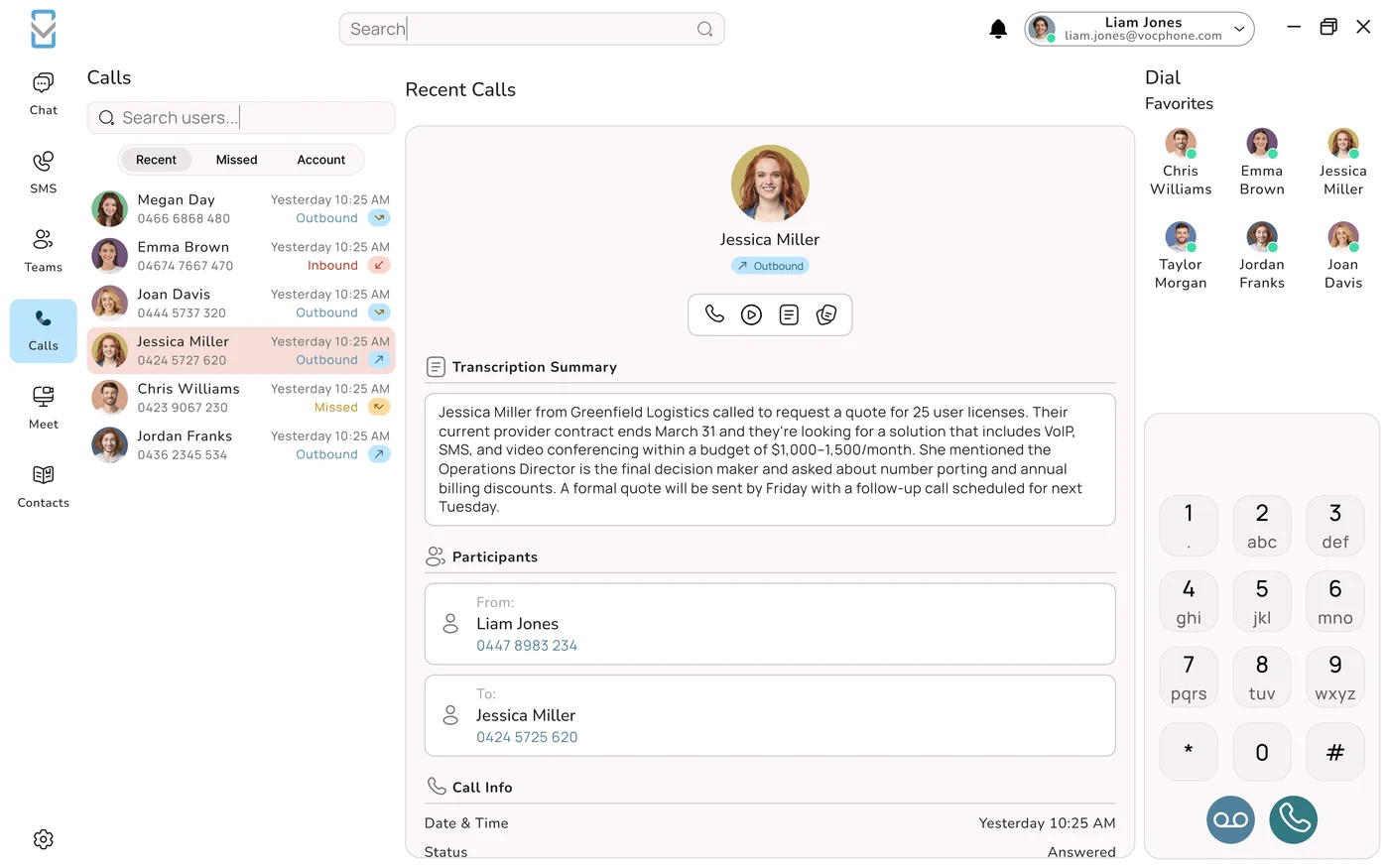
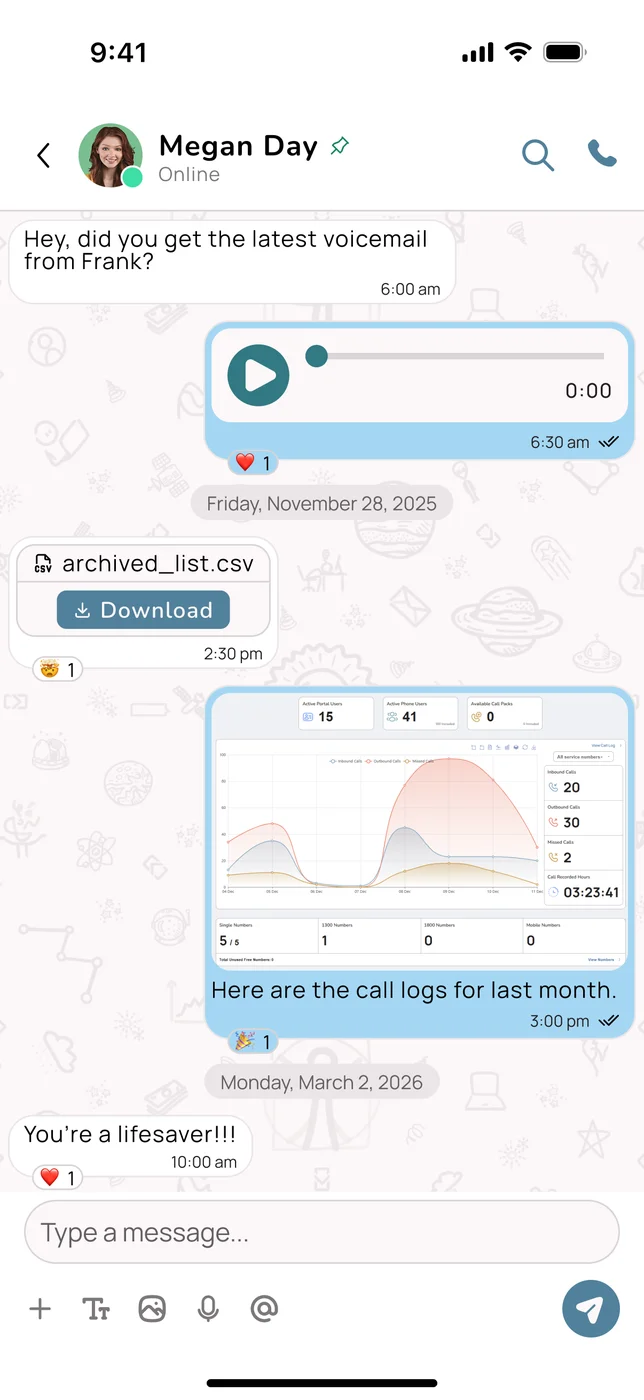
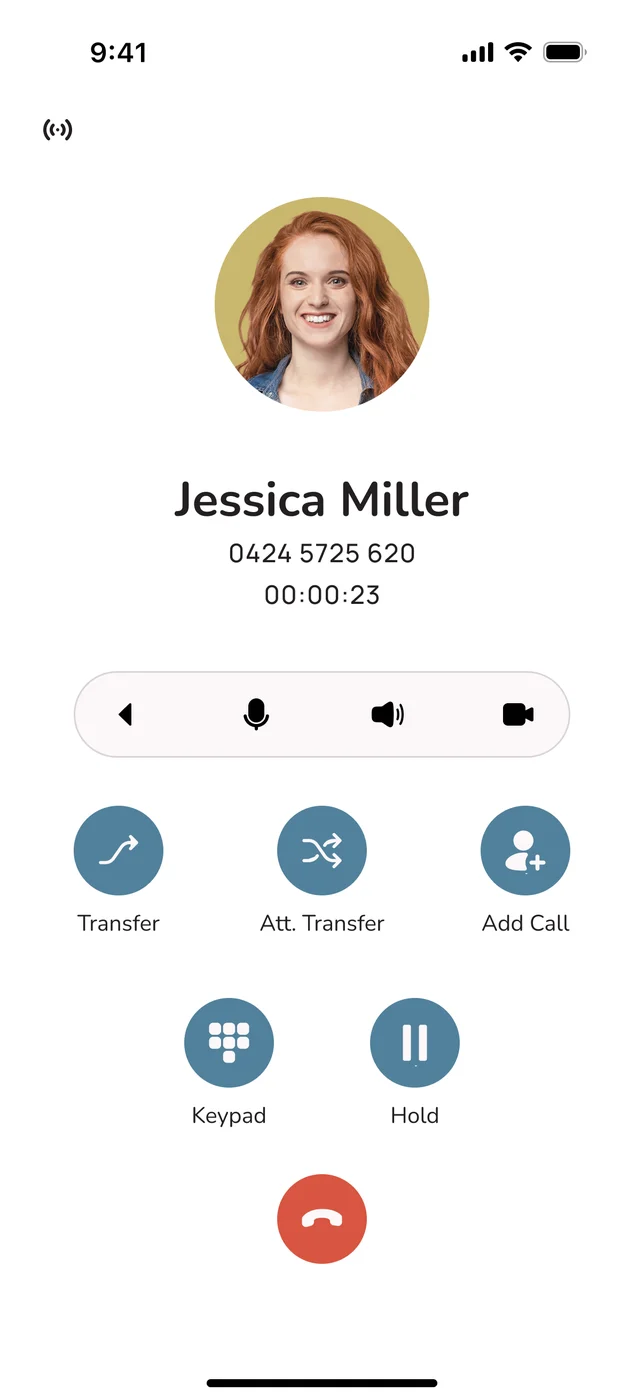
Everything in this article is built in: ring groups and call queues, desktop and mobile apps so your business number rings wherever you are, AI phone agents with natural Australian voices that answer when nobody is free, book jobs and send you a summary, business SMS from your own number, call recording and AI call summaries, and reports that show exactly where calls are being missed. It connects with CRM and business tools so whoever answers can see who is calling. And because phone, internet and messaging can all come from one provider, it is often a way to cut several bills at once without cutting how customers reach you.
Frequently Asked Questions
Is Australia heading for a recession in 2026?
Australia is not in recession, but growth has slowed sharply. Real GDP grew 0.4% in the June quarter 2026, which only matched population growth, so output per person was flat after falling slightly in the March quarter. That means a per capita recession was narrowly avoided. The Reserve Bank lifted the cash rate to 4.60% on 29 September 2026 because inflation remains elevated, and CommBank economists expect growth of around 1.5% for the rest of 2026 with household spending slowing. Most forecasts point to a slow period rather than a sharp contraction, but it will feel tight for many households and businesses.
What do businesses that do well in a recession have in common?
Research across several recessions points to a consistent pattern. A Harvard Business Review study of 4,700 public companies across three recessions found that the roughly 9% which flourished afterwards cut costs mainly by becoming more efficient in how they operated, while continuing to invest in marketing, customers and future growth. Companies that relied on deep cuts alone tended to come out smaller. For small businesses, that translates into four habits: cut waste rather than the things customers notice, stay visible, stay close to existing customers, and be the easiest business in your market to contact.
What happened to businesses in Australia's 1991 recession?
The early 1990s recession followed a period of very high interest rates, with the official cash rate above 17% in early 1990. Unemployment rose from under 6% at the end of 1989 to a peak of 11.2% in December 1992. Businesses carrying heavy debt were hit hardest, and many that failed were profitable on paper but ran out of cash. The main lesson most owners took from it was to watch cash flow and borrowing closely, keep costs flexible and avoid being locked into commitments that cannot be changed if revenue falls.
Should I cut costs or invest during a downturn?
Both, but in different places. Cut costs that customers never notice, such as unused software, duplicate subscriptions, separate bills that could be combined and long contracts that limit your options. Protect or invest in the things customers do notice: how easily they can reach you, how quickly you respond, how well you look after existing customers and marketing that measurably brings in work. The research on past recessions suggests businesses that do both at once, running leaner while staying visible and reachable, recover faster than those that simply cut everything.
Why do missed calls matter more in a recession?
Because customers compare more when money is tight. Someone who would have called one business now calls two or three and goes with whoever answers and can help soonest. A missed call in that situation is not a delay, it is often a lost job, and it never shows up in your accounts because you do not know it happened. Check your phone system reports for missed and abandoned calls by time of day, then close the gaps with ring groups, mobile apps, a missed-call text message and an AI agent that answers when nobody is free.
Can AI phone agents help a small business get through a downturn?
They can help a business stay reachable without adding staff, which is exactly the pressure point in a downturn. An AI phone agent can answer calls at lunchtime, after hours and when everyone is busy, take the caller's details and reason for calling, answer common questions, book appointments and send a summary to the team. Anything urgent or complex is passed to a person. For many small businesses, catching even a few extra jobs a month that would otherwise have gone to voicemail covers the cost, and it avoids hiring during an uncertain period.
How can VOCPhone help my business in a slow economy?
VOCPhone is an Australian owned cloud phone system that runs on its own network, with 99.99% network uptime and support from a team in Australia. It includes ring groups, call queues, desktop and mobile apps, AI phone agents that answer when nobody is free, business SMS, call recording, AI call summaries, CRM integrations and reports that show where calls are being missed. Phone, internet and messaging can come from one provider, which often reduces the number of bills a business pays. Call 1300 663 222 or book a demo to see how your calls are handled today.