











Why Your Comms Bill Is Bigger Than Your Comms
Nobody sets out to run seven communications vendors. It happens one reasonable decision at a time. You get a phone system. A year on, the team needs video, so you add Zoom. Then a chat app, because email is too slow for quick questions. Then an SMS service for reminders. Then a recording add-on for compliance. Then, through 2025 and 2026, an AI receptionist to catch the calls you keep missing. Every purchase made sense on the day. Stacked up, they quietly became one of your least-managed and most-overlapping costs.
The problem is not that any single subscription is expensive. It is that fragmentation carries a cost of its own that never appears as a line item. You pay for the same capability more than once because the tools overlap. You pay third parties to bolt those tools together. You pay in the hours someone spends reconciling six invoices on six billing cycles. And you pay, in lost time and lost calls, every time two vendors blame each other for a fault while your phones stay down.
This guide is about finding that hidden cost and removing it. The mechanism is old and simple: consolidation. Move the whole stack onto one platform, on one bill, from one provider. Done properly, you keep every capability you actually use, drop the ones you were paying for twice, and cut both the visible subscription spend and the invisible admin drag. If you want the primer on why these channels increasingly live together, start with our guide to what UCaaS (unified communications) actually is.
6-7
separate vendors in a typical fragmented comms stack
1
predictable per-seat bill after consolidating
$0
extra for AI Phone Agents, included as standard
99.99%
uptime on the network VOCPhone owns and runs
The core idea
Fragmentation is a tax you pay for convenient decisions made years apart. Consolidation is how you get the convenience back and stop paying the tax. The aim is not fewer features, it is the same or more features, on one bill, from one provider, with one number to call when something needs fixing.
Count the Logins: The Vendors Hiding in Your Stack
Before you can cut a cost you have to see it. Here is the stack most Australian small and mid-sized businesses accumulate. You may not have every one, but if you count four or more, consolidation is almost certainly worth modelling.
Phone / VoIP Service
Your core calling, whether a legacy line, a hosted PBX or a basic VoIP plan. Often billed per line or per seat, sometimes with call rates on top.
Mobile Plans
Separate mobile services for staff working away from the desk, usually disconnected from the business number, so calls and texts land on personal numbers.
Video Conferencing
A Zoom, Teams or Meet licence for client and internal meetings, billed per host and often on a higher tier than you actually use.
Team Chat
A Slack or similar subscription for internal messaging, billed per active user, with paid tiers just to keep message history and add integrations.
SMS Gateway
A standalone texting service for reminders and confirmations, billed per message or in bundles, with its own sender ID and portal to manage.
Call Recording
A recording and storage add-on for training or compliance, often an extra per-seat charge on the phone plan, with separate storage fees.
AI / Virtual Receptionist
A newer line: a standalone AI answering service or human message-taking service, billed per minute, per call or per seat, to catch missed calls.
Integration / Middleware
The glue: a Zapier plan or paid connector pushing call and message data into your CRM or accounting tool, because the other tools do not talk natively.
CRM Telephony Add-Ons
Per-seat "voice" or "dialer" upgrades inside your CRM that duplicate what your phone system already does, quietly paid for a second time.
Read that list again and watch the overlaps surface. Your phone system, your mobile plan and your CRM dialer can all place calls. Your chat app, your SMS gateway and your phone system can all send messages. Your AI receptionist and your phone system both answer calls. You are not just paying seven bills, you are paying for the same three or four capabilities several times over, split across vendors who each take a margin. That duplication is the first and easiest saving to capture. For how these figures build up, our guide on how much a business phone system costs in Australia breaks down the pricing models.
The Costs That Never Print on an Invoice
The subscriptions are only the visible part. The bigger drain is a set of soft costs that fragmentation creates and no vendor prints on a bill. This is where consolidation delivers savings that dwarf the subscription line.
1. Duplicate and forgotten seats
Overlap means you pay for features twice. There is a second leak, too: seats nobody uses. When someone leaves, cancelling one subscription is easy to remember; cancelling five, across five portals with five renewal dates, is not. Businesses routinely keep paying for departed staff on the video tool, the chat app and the recording add-on for months. Multiply a few forgotten seats by six vendors and the waste is real money.
2. Integration and middleware fees
Separate tools do not naturally share data. To log a call against a customer in your CRM, or trigger a text when an invoice falls overdue, you either pay for native connectors on each tool's higher tier or pay a middleware service to shuttle data between them. Every integration is another small monthly fee and another thing that breaks when a vendor changes an API. On an all-in-one platform the channels share one directory and one data layer, so most of that spend simply disappears.
3. Administrative overhead
Someone has to manage all of it: six invoices to code and pay, six sets of user accounts to provision and remove, six renewal dates to track, six support relationships to keep alive. In a small business that someone is usually the owner or an office manager whose time is worth far more than the task. Cost the hours honestly at a real hourly rate and this is often the single largest hidden expense in the whole stack.
4. Vendor finger-pointing when things break
This is the cost you feel most sharply. When calls drop or an integration fails across two systems, nobody owns the problem. The phone provider blames the network; the CRM blames the connector; the connector blames the phone provider. You become the unpaid project manager of your own outage, on hold across three queues while the phones stay dead. With one provider there is one accountable party and one number to call, no diagnosis by committee.
5. Lost calls and lost revenue
Fragmentation causes missed calls. A call that should ring a mobile does not, because the mobile is on a separate plan disconnected from the business number. An after-hours caller hits voicemail because the AI receptionist is a bolt-on that never quite joined up with the phone system. Every missed call is potential revenue walking to a competitor. It appears on no invoice, yet it is often the most expensive line of all. Our comparison of an AI receptionist versus a human receptionist digs into what a missed call actually costs.
Compare the whole picture, not just the phone bill
If you only line up the sticker price of your current phone plan against a new one, you will miss most of the saving. The real comparison is your entire communications spend, every subscription, every integration fee, plus a fair estimate of admin hours and lost calls, against a single all-in-one per-seat price. Businesses that look only at the phone bill consistently underestimate how much consolidation saves them.
A Worked Example: Stack vs One Platform
The table below is an illustrative example for a hypothetical ten-person Australian business. It is not a quote, and not a claim about any specific competitor's current pricing, which varies widely by provider, plan and usage. The point is the shape of the spend: how a fragmented stack accumulates and how much of it a single platform absorbs. Treat it as a framework to plug your own bills into.
| Cost item (10 users) | Separate tools (illustrative) | One platform (illustrative) |
|---|---|---|
| Phone / VoIP | ~$25/user × 10 = ~$250/mo | Included, unlimited calls |
| Video conferencing | ~$20/host × 4 = ~$80/mo | Included |
| Team chat | ~$12/user × 10 = ~$120/mo | Included |
| SMS gateway | ~$50/mo bundle | Included |
| Call recording | ~$8/user × 10 = ~$80/mo | Included |
| AI / virtual receptionist | ~$20/user add-on × 10 = ~$200/mo | Included as standard |
| Integration / middleware | ~$40/mo | Native, no extra fee |
| Admin time (reconciling 6+ bills) | ~3-5 hrs/mo of staff time | ~1 bill, minimal |
| Support model | 6+ queues, finger-pointing | One local line + Australian team |
| Illustrative monthly subscription total | ~$820/mo across 6+ vendors | One per-seat bill, AI included |
Even before you count the admin hours and lost calls, the fragmented column adds up to a figure most owners find surprising, precisely because it was never on one page. The AI line alone (highlighted) often rivals the core phone spend when it is bought as a separate service. On a platform where AI is included, that whole row moves to zero as a line item. That is the essence of the saving: not shaving a few dollars off one plan, but deleting whole categories of spend by folding them into one.
Why the framing matters
These figures are illustrative ranges to show method, not guarantees, your actual spend might be higher or lower. The reliable way to know your real number is to run the audit further down this page against your own invoices, then ask one provider to price the equivalent. Under its price guarantee, VOCPhone will review a genuine competitor quote and beat it.
The AI Upsell Trap
AI deserves its own section because it is the fastest-growing line in the modern comms stack and the one most likely to be sold to you as a separate, premium service. Through 2025 and into 2026 the cost of running the models behind these features fell sharply, yet many providers still price AI as though it were exotic.
The two ways AI gets billed separately
There are two common patterns. The first is the tier upgrade: your phone provider advertises AI, but the useful bits, call handling, transcription, summaries, only unlock on the dearest plan. The second is the standalone AI receptionist: a separate company answers your overflow or after-hours calls and bills per minute, per call or per seat. Either way, AI arrives as a second invoice.
The arithmetic is unforgiving. On a team of ten, an AI upgrade priced per seat can quietly rival the core phone service. You set out to add a smart feature and instead doubled your per-seat cost, and because it is a separate system it frequently does not join up with your calling, so you get the bill without the seamless experience.
The alternative: AI in the platform
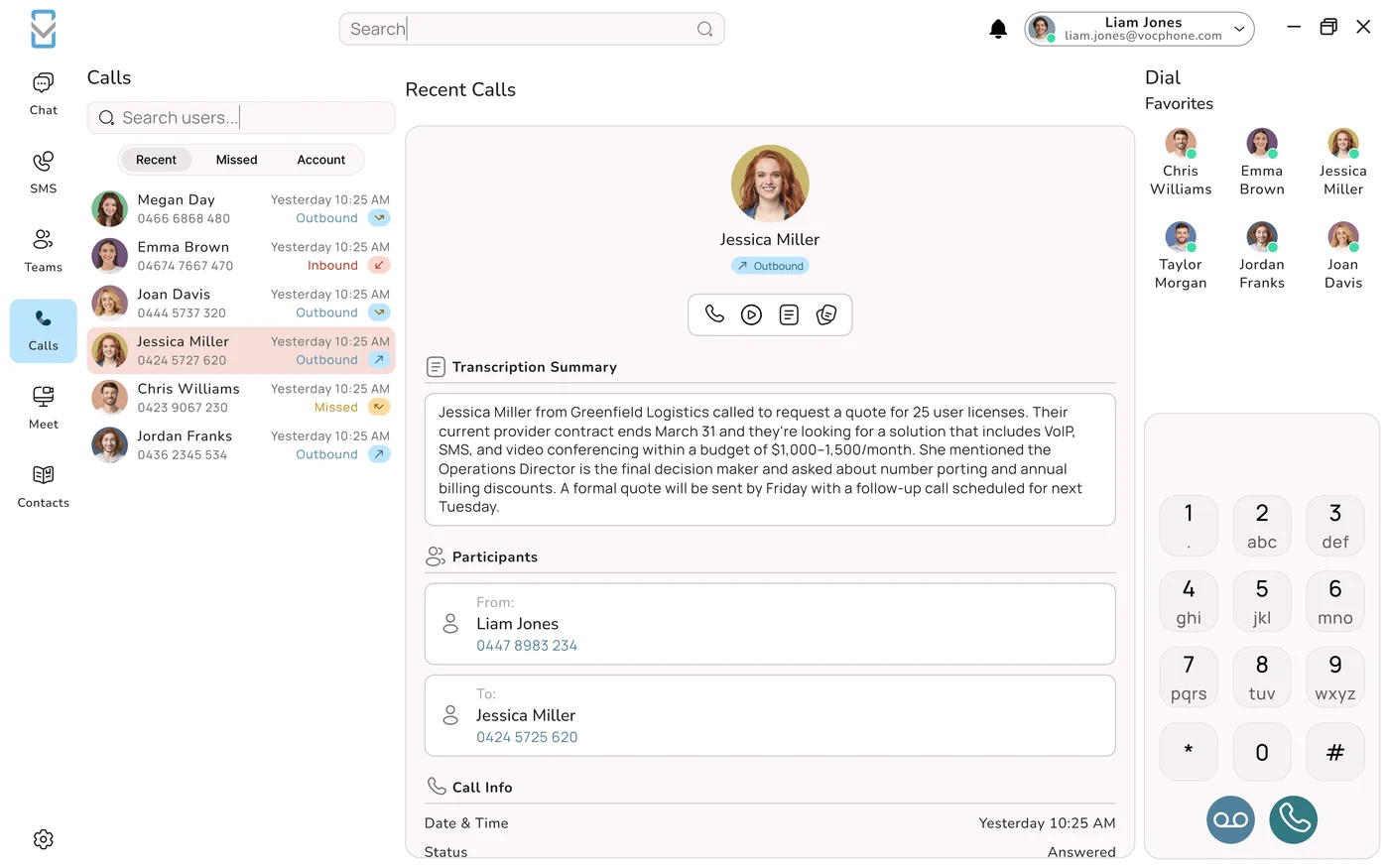
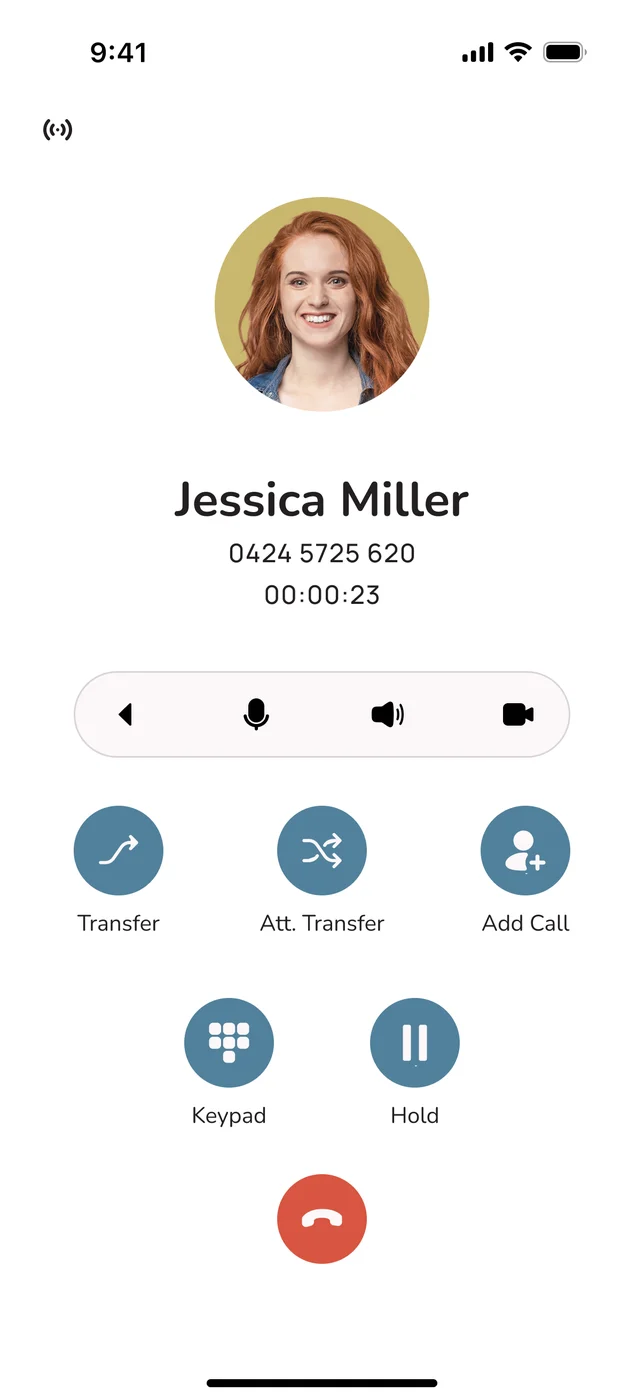
The consolidation play is straightforward: choose a platform where AI is part of the product, not an upcharge. VOCPhone includes AI Phone Agents that answer 24/7 in natural Australian accents, understanding local place names and the way people actually speak. They answer, qualify and route calls, book appointments and take messages, inside the same platform as your voice, video and messaging, with nothing extra on the invoice. When AI is included rather than added on, an entire line item disappears from your stack. For the full picture on how these systems work, see our complete guide to AI business phone systems in Australia.
Ask one blunt question
When any provider says "AI-powered", ask: "Is the AI included in the price you just quoted, or is it extra, and on which tier?" If the answer is anything but a clear "included", add the AI cost back into your comparison. A platform that advertises AI and bills it separately is not an all-in-one solution, it is another vendor in your stack wearing a friendlier logo.
What You Get Back When You Consolidate
Pulling it together, here is where the money actually comes back when you move from a stack of vendors to a single platform. Some savings are obvious, some are the soft costs above, but all of them are real.
One predictable per-seat bill
Instead of six or seven variable invoices on different cycles, you get one line per seat per month. Budgeting becomes trivial and there are no surprise per-minute or per-message overages hidden across portals. Predictability is itself a saving, it removes the reconciliation work and the end-of-quarter shocks.
No duplicate subscriptions
When calling, messaging, video, SMS and recording live in one product, you stop paying three vendors for the ability to send a message or place a call. The overlaps fragmentation created collapse into a single feature set you pay for once.
No integration or middleware fees
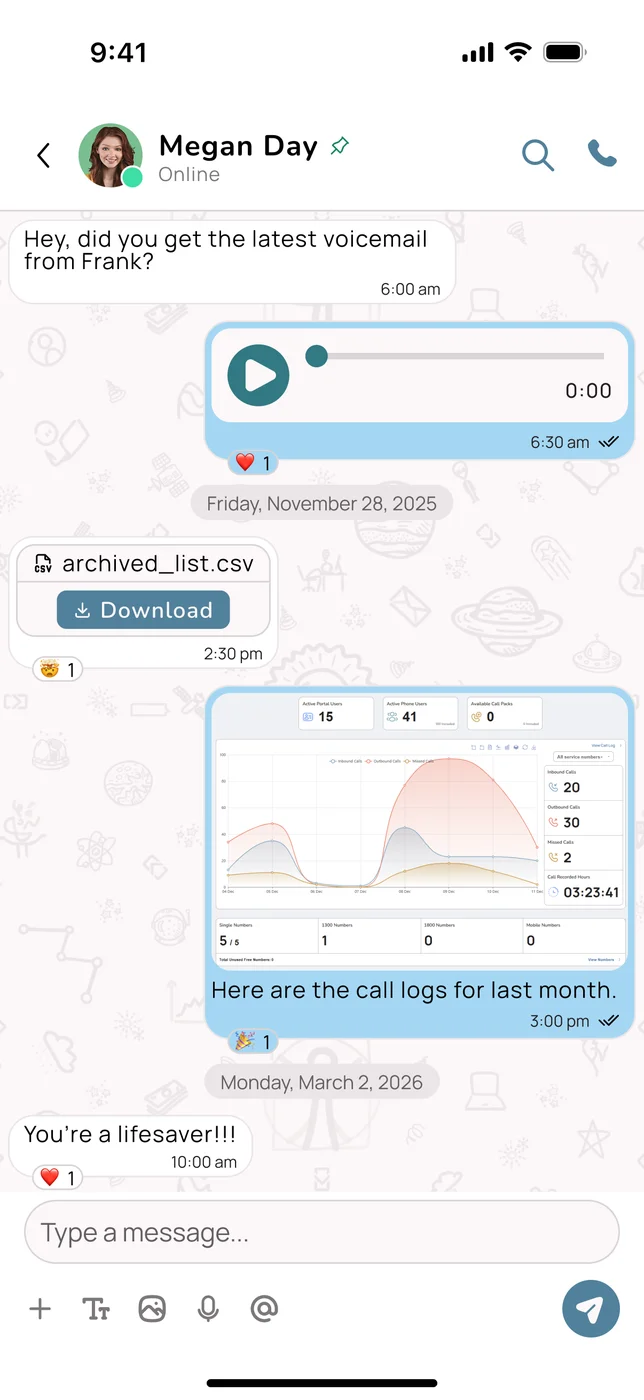
Because the channels share one directory and one data layer, the connectors that used to cost you monthly are built in. Native integrations with Salesforce, HubSpot, Zoho, Xero, Monday and 1000+ apps mean your call and message data reaches your CRM without a paid middleware layer in between.
Less admin, fewer renewals to chase
One vendor means one invoice, one set of accounts, one renewal and one relationship. The hours spent herding subscriptions go back into the business, and removing a departed staff member becomes a single action rather than a scavenger hunt across six portals.
Bundle and volume value
A provider that supplies your whole stack, and owns the network underneath it, can price the bundle far more keenly than seven vendors each protecting a margin. You capture the value of buying everything from one place instead of paying retail across the board, and VOCPhone's price guarantee puts a floor under it.
AI included, not billed twice
As covered above, folding AI into the platform deletes what is often the second-largest line in the stack. You get the capability without the separate invoice.
One accountable provider
When everything runs on one platform, one company owns the outcome. A fault is diagnosed and fixed by the people who run the whole system, not batted between three vendors. Because VOCPhone owns and operates its own network, that accountability is genuine, backed by 99.99% uptime and 24/7 Australian-based human support, not an offshore queue.
Consolidation is not about spending less on the phone line. It is about deleting entire categories of spend, and the admin behind them, by folding them into one platform on one network.
The VOCPhone take on cutting comms costsAudit Your Own Spend in an Hour
You cannot consolidate what you have not measured. This is the practical part: a checklist to build a true picture of your communications spend, so the comparison is honest and the saving is real. Set aside an hour, pull your last three months of invoices, and work through it.
-
List every tool you pay for
Write down every communications service, however small: phone, mobile, video, chat, SMS, recording, AI or answering service, CRM telephony add-ons, and any middleware. If it touches a call, a message or a meeting, it belongs on the list.
-
Capture the numbers for each
For every tool, note the true monthly cost (including usage and overages, not just the headline plan), licensed seats versus seats actually used, the contract end date, and any auto-renew or price-rise clauses. The gap between licensed and used seats is pure waste.
-
Add the hidden costs
Include every paid connector keeping tools in sync, an honest estimate of admin hours per month costed at a real hourly rate, and a rough figure for calls lost to fragmentation against what an average job or sale is worth.
-
Total it, then reduce to a per-seat figure
Add every subscription plus the hidden costs and divide by headcount to get a true per-seat monthly communications cost. This is the only number that lets you compare fairly against an all-in-one per-seat price.
-
Get one all-in-one quote and compare like for like
Ask a single provider to price the equivalent capability, confirming AI, recording, SMS, video and integrations are all included, not extras. Compare their per-seat figure against your audited per-seat total, whole stack against whole stack.
Quick audit checklist
✓ Every comms tool listed, including the small ones
✓ True monthly cost for each, with usage and overages
✓ Licensed seats vs actually-used seats noted
✓ Contract end dates and auto-renew clauses recorded
✓ Integration, middleware and CRM add-on fees added
✓ Admin hours estimated and costed
✓ Everything totalled and divided by headcount
✓ One all-in-one per-seat quote obtained for comparison
Consolidating With VOCPhone
There are plenty of ways to trim a single bill. Consolidation is different, it removes whole categories of spend at once, and it only works if the platform you move to genuinely replaces the stack. Here is why VOCPhone is built for exactly that, for Australian business.
One Bill, One Per-Seat Price
Calling, mobile and desktop apps, HD video, messaging, SMS, recording, presence, integrations and AI on a single predictable per-seat invoice, not six.
AI Included, Not an Add-On
AI Phone Agents answering 24/7 in natural Australian accents are part of the platform. The line item that often doubles a bill is simply gone.
Owns the Network Underneath
Not a reseller. VOCPhone owns and operates its own network, so it can price the whole bundle keenly and stand behind 99.99% uptime.
Native Integrations, No Middleware
Two-way links to Salesforce, HubSpot, Zoho, Xero, Monday and 1000+ apps, plus open APIs, so you drop the paid connectors between tools.
Number Portability & Price Guarantee
Keep your existing numbers, get unlimited calls on plan, and bring a genuine competitor quote, VOCPhone's price guarantee beats it.
One Local Support Line
24/7 Australian-based human support. One accountable provider, no overseas queues, no vendor finger-pointing when something needs fixing.
Because VOCPhone is Australian-owned, Australian-hosted and has spent 15+ years in the local market, you also get the benefits that matter beyond price: call quality and data that stay onshore, and a single team accountable for the lot. Consolidation should never mean sending your customer data offshore to save a dollar, and with VOCPhone it does not. The practical result is fewer bills, fewer logins, fewer renewals, no AI upcharge, and one company responsible for everything, usually at a lower total cost than the stack it replaces. It is the platform behind names like Harvey Norman, Ampol and Choices Flooring, as well as smaller operators such as Coco's Wealth of Health.
Switching Without the White-Knuckle Weekend
The biggest reason businesses stay in an expensive, fragmented stack is fear of the switch. In practice, consolidating is a guided, low-risk process, and you only retire the old subscriptions once the new platform is fully live.
-
Run your audit and get a review
Complete the checklist above, then book a free review via contact us or on 1300 663 222. Share your current bills and the team maps your stack onto one platform, showing you the equivalent and the saving before you commit.
-
Port your numbers with zero downtime
Keep every business number. VOCPhone handles the porting, and your old service stays active until the port completes, so there is no gap and customers never notice. No risky "cutover weekend".
-
Roll out the apps, retire the old tools
Staff install the free desktop and mobile apps and start calling, messaging and meeting immediately, no hardware purchase required. As each capability comes online, you cancel the matching standalone subscription, the video licence, the chat app, the SMS gateway, the recording add-on and the AI service switch off one by one.
-
Connect integrations, let AI go live
The onboarding team connects your CRM and accounting tools, trains the AI Phone Agents on your business and configures your call flows, replacing the paid middleware you were running. Within a short window you are on one platform, one bill, with a stack of cancelled subscriptions behind you.
Frequently Asked Questions
How does consolidating providers actually save money?
You replace a stack of separate subscriptions, a phone service, mobile plans, video conferencing, team chat, an SMS gateway, call recording and an AI or receptionist service, with one all-in-one platform on a single per-seat bill. That removes features you were paying for twice, the integration fees needed to make the tools talk, and the admin time spent reconciling several invoices. Because a single provider can price the whole bundle rather than protecting seven separate margins, consolidating almost always lowers your total cost. VOCPhone puts calling, video, SMS and AI on one bill and backs it with a price guarantee.
Which separate tools are Australian businesses usually paying for?
A typical fragmented stack includes a business phone or VoIP service, mobile plans, a video conferencing licence such as Zoom or Teams, a team chat app such as Slack, an SMS gateway, a call recording tool, and increasingly a standalone AI or virtual receptionist. Each has its own login, contract, renewal date and invoice. VOCPhone combines calling, mobile and desktop apps, HD video, messaging, SMS, call recording and AI Phone Agents into one platform on one bill.
Are the savings real, or just the headline price?
Both. The obvious saving is on subscriptions, one per-seat bill instead of six or seven, with no duplicate features. The larger, hidden saving is in soft costs: less admin time reconciling invoices and chasing renewals, no integration or middleware fees, no seats still being paid for after staff have left, and no productivity lost to vendors blaming each other when something breaks. Add both together and consolidating to one provider such as VOCPhone is almost always cheaper than a fragmented stack.
Why does paying for AI as an add-on cost so much more?
Many providers advertise AI but bill it separately, either as a per-user upgrade or as a standalone AI receptionist charged per minute or per call. On a team of ten, an AI add-on can quietly rival your core phone spend. VOCPhone includes AI Phone Agents that answer 24/7 in natural Australian accents as part of the platform, so you get the capability without a second invoice.
How do I audit my current communications spend?
List every communications tool you pay for, phone, mobile, video, chat, SMS, recording and AI, and note each one's true monthly cost, contract end date, licensed seats and how many are actually used. Add any integration or setup fees and estimate the admin hours spent managing multiple vendors. Total it, divide by headcount to get a per-seat figure, then compare that to a single all-in-one per-seat price. VOCPhone will review your current bills and, under its price guarantee, beat a genuine competitor quote.
Will moving to one provider mean losing features?
It should not. A genuine all-in-one platform replaces the capability of each separate tool, cloud calling, mobile and desktop apps, HD video, team messaging, SMS, call recording, presence, integrations and AI, inside one system. The point of consolidation is to keep the features while dropping the duplicate subscriptions and integration friction. Most businesses moving to VOCPhone gain capability rather than lose it, while paying less.
Is switching providers disruptive or risky?
Switching is lower-risk than most businesses expect. Your existing numbers are ported across, and with VOCPhone the old service stays live until the port completes, so there is no downtime and customers never notice. The Australian onboarding team maps your current setup, configures the platform and handles the migration, and you only retire the old subscriptions once the new platform is fully live.
What to Read Next
This guide is about cutting communications costs by consolidating to one provider. These related reads go deeper into pricing, the all-in-one model, and the specific tools you can fold into a single system.