











The Re-Explaining Tax
Nobody has ever rung a business and thought "I am now initiating a voice interaction." They think they are talking to you: the company, the brand, the people who did the install last March. Channels are an internal concept. Customers do not have them.
So here is what happens when your systems disagree. Tuesday: a customer sends a web chat message about a delivery. Nobody replies. Wednesday: they ring. The person answering has never heard of the chat, so the customer tells the story again: a little more briskly this time. Still unresolved, so Thursday they email, and explain it a third time.
From your side of the glass that is three interactions, possibly logged as three resolutions across three tools. From theirs it is one problem and three demonstrations that your business doesn't remember them. That difference has a name worth using internally, because it makes the cost visible: the re-explaining tax. You charge it to customers, in their time and patience, every time your channels can't see each other.
"We thought we had a response-time problem. We had a memory problem. The customers weren't waiting too long: they were starting again."
a realisation that arrives about twenty minutes into most VOCPhone onboarding callsThe Ten-Second Test
Skip the definitions. One question settles whether a business is genuinely omnichannel.
A customer sends an SMS at 9am and rings at 3pm. Does the person who answers already know about the SMS?
Three possible answers, and they map cleanly onto three architectures. Yes, it's on screen: you're omnichannel, however few channels you run. They could look it up if they thought to: you have adjacency, not integration, and under pressure adjacency behaves exactly like no integration at all. No idea: you're multichannel, and each additional channel is expanding the ways you can disappoint someone.
Everything else in this article sits downstream of that. Two channels in one queue beats six in six inboxes. Every time, without exception.
Every Channel, Assessed Honestly
Vendor material presents channels as equally important. They aren't. This is the assessment we'd give across a table.
| Channel | What it's genuinely for | Expected reply | Add it when |
|---|---|---|---|
| Voice | Urgency, complexity, emotion, negotiation, reassurance. Still where your highest-value intent lands. | Seconds | ✓ Always |
| SMS | Confirmations, reminders, missed-call recovery, quick facts, reaching people who can't talk. | Minutes | ✓ Almost always |
| Quotes, attachments, paperwork, anything either side wants written down. | Hours | ✓ You already have it | |
| Web chat | Catching intent while somebody is on your site and undecided. Genuinely converts. | Under a minute | ◐ Traffic justifies live staffing |
| RCS / rich messaging | Branded, verified confirmations with buttons and images. A trust signal as much as a channel. | Minutes | ◐ High transactional volume |
| Communities and trade partners who already live there; international customers. | Minutes to hours | ◐ Customers already trying it | |
| Social DMs | Early enquiries, and public complaints better moved private quickly. | Hours | ◐ Already arriving, already ignored |
For most Australian businesses: voice and SMS carry the intent, email carries the paperwork. That isn't a conservative opinion, it's what the traffic shows. Everything below the line is a considered addition. We go deeper on messaging in business SMS from your phone system and RCS vs SMS in Australia.
Offering a Channel Is a Promise
This is the section most omnichannel material omits, so we'll be direct. An unanswered channel is worse than an absent one.
Two businesses. The first offers a phone number and an email, answers both, nothing else. The second offers phone, email, chat, WhatsApp and Instagram, and staffs the first two. A customer who tries the chat at 4pm and gets silence has learned something precise and damaging: this business advertises responsiveness it doesn't have. The customer of the two-channel business never learned that, because no promise was made.
The gains attributed to omnichannel in industry reporting, figures around a third off first-resolution and wait times recur across sources, come from integration and adequate staffing. They are not a reward for the number of contact icons in your footer. An unstaffed sixth channel doesn't deliver a sixth of the benefit; it delivers negative benefit while consuming licence cost and management attention.
The question to ask before switching any channel on
Not "would customers like this?" they'd like everything. Ask: "who specifically answers this within the expected reply time, including on a short-staffed Thursday afternoon?" If you can't name the person and the cover arrangement, you're not ready, and no platform capability substitutes for that answer.
The Order That Works
Deliberately slow. A fortnight between steps minimum; a month is better.
Voice, properly, including after hours
Fix the channel carrying your highest-value intent before adding any other. Queues, sensible routing, and an AI Phone Agent covering after-hours and overflow so calls stop ringing out. Adding a chat widget while calls go unanswered is choosing paint over a roof.
SMS on the same numbers, into the same queue
Two-way messaging from the numbers customers already have. Missed-call auto-text alone frequently funds the whole project. The non-negotiable: it lands in the shared queue, not on someone's personal phone.
Email into the shared queue
You already have email; what you don't have is email sharing history with calls and texts. Bringing an existing channel into one queue is usually the cheapest genuine improvement available, because there's no new staffing to fund.
Web chat, only with real-time cover
High-converting when answered inside a minute, actively harmful when it isn't. AI on first contact with clean human escalation is how smaller teams run chat honestly rather than aspirationally.
Rich messaging for transactional volume
If you send a lot of confirmations and reminders, verified branded messaging is worth the setup: it buys trust, not just delivery.
WhatsApp and social: last, and on evidence only
Add these when you can point at customers already trying to reach you there. Not because a competitor has the icon.
The businesses that regret their omnichannel project almost always attempted steps four through six in a single quarter.
Start AI on Text, Not Voice
Something counterintuitive and genuinely useful: text is the easiest place for AI to work well, not the hardest.
On a voice call, an AI agent must handle speech recognition across accents and background noise, manage turn-taking, sound natural, and cope with being talked over. In a chat or SMS thread all of that vanishes. No accent. No transcription error. No awkward silence. The customer expects a short factual reply rather than conversational warmth. The same knowledge that powers an AI Phone Agent performs better in text.
Which yields a sequencing insight most businesses miss. If you're nervous about AI touching customers, start on chat and SMS. Lower stakes, gentler failure modes, and a customer can see and correct a misunderstanding immediately rather than hanging up in frustration. Build internal confidence on easy ground, then move to voice using the framework in which calls to automate with AI.
The Handover Decides Everything
One implementation detail determines whether your omnichannel project gets loved or quietly abandoned.
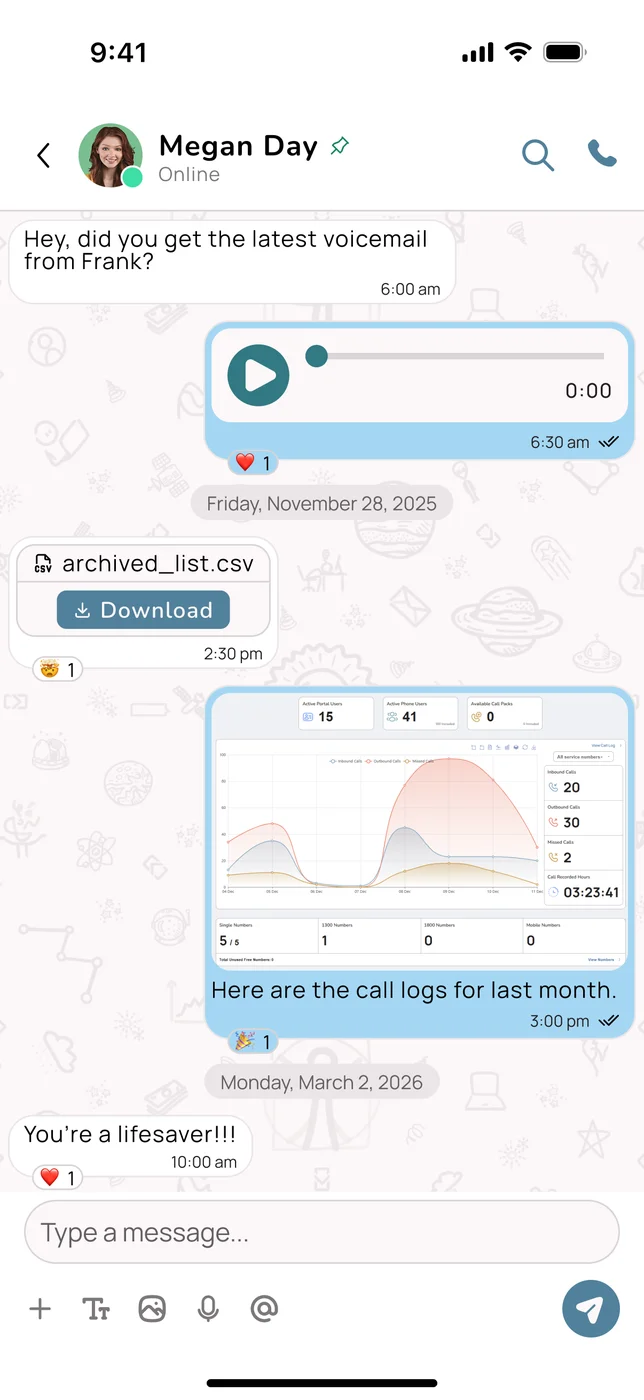
When a first-line responder, AI agent or triage team, passes a conversation to a person, it must continue in the same thread, with the context carried across. The person picking it up sees what's been said, who the customer is, and what they need. The customer should notice a change in tone, not a change in conversation.
What happens in a badly built system: the AI concludes it can't help and offers to have someone contact you. A new ticket appears. Four hours later somebody rings and opens with "Hi: I understand you had an enquiry?" And there it is: the re-explaining tax, reappearing at precisely the point the technology was bought to eliminate it.
Three things to demand in any demonstration
One: the human sees the full prior conversation without hunting for it. Two: the thread continues rather than restarting, no fresh "how can I help?". Three: a customer switching channels mid-issue keeps their history, chat to phone, phone to SMS, with nothing lost. Ask to see all three live. A vendor who demonstrates each channel separately but never demonstrates a switch between them is telling you something.
Rostering a Mixed Queue
Calls and messages consume attention in fundamentally different ways, and capacity planning that ignores this either overloads people or wastes them.
A voice call is one at a time and takes complete focus. A chat or messaging thread can run two or three concurrently for someone capable. Email is genuinely asynchronous and batchable.
The mechanism that makes a mixed queue work is per-channel concurrency: an agent is available for two chats or one call, never both at once. Two failure modes worth naming. Unlimited concurrent chats produces slow replies on all of them plus a demoralised agent who feels permanently behind. And treating a chat as equivalent to a call in capacity planning, in either direction, produces a roster that doesn't match reality.
Start conservative. Watch response times per channel. Adjust from the data, which will tell you within a fortnight.
Three Metrics You'll Have to Rethink
| Metric | What changes | What to do |
|---|---|---|
| First-contact resolution | Becomes meaningful and much harder to flatter: you can finally see the customer who came back on another channel | Expect the reported number to get worse while service gets better. Say so before the first report lands, or someone will panic. |
| Response time | A blended average across voice, chat, SMS and email is meaningless: expectations differ by an order of magnitude | Measure and target per channel: seconds, under a minute, minutes, hours. |
| Channel switching (new) | How often one issue crosses channels: invisible before one queue | The most diagnostic number you gain. A high rate means a channel isn't resolving what it receives. |
| Volume by channel | Now genuinely comparable, which regularly overturns assumptions about where demand actually is | Use it to set staffing, and, honestly, to decide which channel to switch off. |
Channel switching deserves particular attention: it's the number that tells you whether omnichannel is working as a system rather than channel by channel. If a fifth of your issues touch two or more channels, one of them isn't finishing the job.
Chats Are Business Records
An area where businesses are casual and probably shouldn't be. If a commitment made on a call matters in a dispute, the same commitment in a web chat matters identically, and is arguably stronger evidence, being already in writing.
Keep retention consistent across channels, rather than accidentally holding chat transcripts forever while recordings expire at ninety days. Make conversations searchable together, because a record split across four systems is complete in theory and useless in practice at the moment you need it. And treat messaging as personal information under the Privacy Act 1988 and the Australian Privacy Principles, exactly as you treat recordings.
Where VOCPhone Fits
Three things about our approach that are relevant specifically to running one queue.
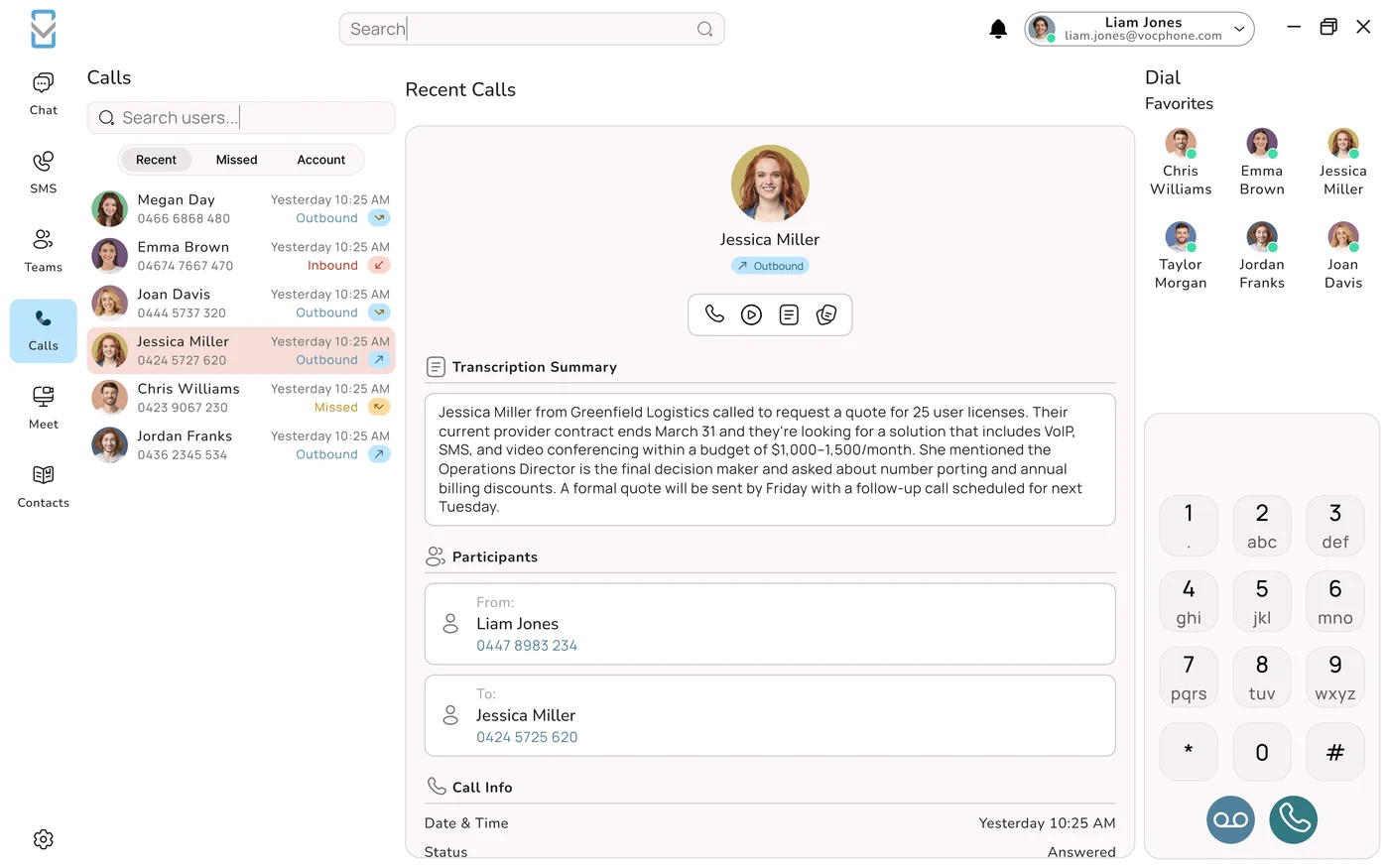
One platform, one queue, one bill. Voice, SMS, video, AI agents, queues, recording and reporting are a single system with one admin console. That matters more for omnichannel than for anything else, because omnichannel assembled from four acquired products is exactly how you end up with adjacency instead of integration.
We own and operate our own network. Not a reseller, which is how we hold 99.99% uptime on the voice path, and why a fault is ours to fix rather than ours to escalate to a wholesaler. In a shared queue, voice is still the channel where an outage is immediately visible to customers.
Australian data, Australian voices, Australian support. Calls, recordings, transcripts and messaging stay on Australian infrastructure. Our AI Phone Agents speak in natural Australian accents, which matters because Australian callers hang up on obvious offshore accents. And support is Australian and human, 15+ years into operating in this market. The wider platform case is in why VOCPhone leads contact centre software in Australia.
Frequently Asked Questions
What's the difference between multichannel and omnichannel, in one sentence?
Multichannel is how many doors you have; omnichannel is whether they open into the same room. The way to test it takes ten seconds and does not involve counting channels at all: a customer sends a text at nine in the morning and rings at three in the afternoon, and the question is whether the person who answers already knows about the text. If they do, you are omnichannel regardless of how few channels you run. If they could look it up but won't, you have adjacency rather than integration. And if they have no idea, you are multichannel, which is not neutral, because you have advertised joined-up service and then failed to provide it in front of the customer.
Which channels does an Australian business genuinely need?
Fewer than the vendor deck implies. For most Australian businesses, voice and SMS carry the genuine intent and email carries the paperwork, and that covers the substantial majority of real customer contact. Web chat earns its place once you have enough website traffic to justify staffing it inside a minute. Rich messaging such as RCS is increasingly worth it if you send high volumes of confirmations and reminders, because verified branding is a trust signal as much as a delivery method. WhatsApp matters when your customers or trade partners already live in it. Social direct messages matter when people are already messaging you there and being left unanswered. The correct number of channels is the number you can answer properly, which makes it a staffing decision rather than a technology one.
Is an unanswered channel really worse than not offering it?
Yes, and this is the mistake that costs Australian businesses the most in this area. Compare two businesses. One offers a phone number and an email, answers both, and nothing else. The other offers phone, email, chat, WhatsApp and Instagram but only staffs the first two. A customer who tries the chat at four in the afternoon and gets silence has learned something specific and damaging: that this business advertises responsiveness it does not actually have. The customer of the two-channel business never learned that. Offering a channel is a promise, and the customer hears the promise whether or not you intended to make it. The published gains attributed to omnichannel come from integration and adequate staffing, not from the number of icons in your footer.
Where should we start with AI: voice or text?
Text, and this surprises people. On a voice call an AI agent has to handle speech recognition across accents and background noise, manage turn-taking, sound natural and cope with being interrupted. In a chat or SMS thread every one of those problems disappears: no accent, no transcription errors, no awkward silences, and the customer expects a short factual answer rather than conversational warmth. The same knowledge base that powers an AI Phone Agent actually performs better in text. So if you are cautious about AI, start it on chat and SMS where the stakes are lower, the failure modes are gentler and a customer can see and correct a misunderstanding instantly. Build organisational confidence there, then move to voice with a clear view of which calls to automate.
What is the single most common omnichannel implementation failure?
The handover. When a first-line responder, whether that is an AI agent or a triage team, passes a conversation to a person, it has to continue inside the same thread with the context carried across. The customer should notice a change in tone, not a change in conversation. What happens in a badly built system is that the AI says it will have someone contact you, a new ticket appears, somebody rings back hours later and opens with a cheerful request for the customer to explain their enquiry. That is the re-explaining tax reappearing at the exact point the technology was supposed to eliminate it. Insist on seeing this in any demonstration: the human sees the full prior conversation without hunting for it, the thread continues rather than restarting, and a customer who switches channels mid-issue keeps their history.
How do you roster people across calls and messages?
By accepting that the channels consume attention very differently and configuring for it. A voice call is one at a time and takes complete focus. A chat or messaging thread can run two or three at once for a capable person. Email is genuinely asynchronous and can be batched. The mechanism that makes a mixed queue work is per-channel concurrency: somebody can be available for two chats or one call, never both simultaneously. Two failure modes to avoid. Unlimited concurrent chats produces slow replies on every one of them plus a demoralised agent. And treating a chat as equivalent to a call in capacity planning, in either direction, produces a roster that does not match reality. Start conservative, watch response times per channel, and adjust from the data after a fortnight.
Do we need to keep chat and SMS records the way we keep call recordings?
Treat them as business records, because functionally they are. If a commitment made on a phone call matters in a dispute, the same commitment made in a web chat matters just as much and is arguably stronger evidence because it is already written down. Three practical points. Keep retention consistent across channels rather than accidentally holding chat transcripts indefinitely while call recordings expire at ninety days. Make sure conversations are searchable together, because a record spread across four systems is complete in theory and useless in practice at the moment you need it. And treat messaging content as personal information under the Privacy Act 1988 and the Australian Privacy Principles, exactly as you treat recordings. VOCPhone keeps calls, recordings, transcripts and messaging on Australian infrastructure by default, which keeps the cross-border question off your risk register entirely.