











Why Feature Lists Will Not Help You Choose a Business Phone System
Put three provider websites side by side and the feature lists are close to identical. Call routing, ring groups, voicemail to email, call recording, an auto attendant, desktop and mobile apps, business SMS, integrations with the usual CRMs. That is not because providers are lazy with their marketing. It is because the core of a modern business phone system is a mature product, and the basic features have been solved for years.
So the question is not "can it do call queues?" Almost everything can. The question is what happens on the bad days: when you need help, when the bill arrives, when the internet drops, and when you want to leave. None of those appear in a demo, because a demo is a good day by design.
7
tests you can run from your own desk, no sales call needed.
1
afternoon for five providers, most of it spent on hold.
2
providers left, the right number to book a demo with.
Each test has a pass and a fail, and the fails are not subtle. For the wider market, see our comparison of business phone systems in Australia This guide is about cutting that list down.
Setting Up the Afternoon
You need your provider list, your mobile, a timer and a sheet with a column per provider. Write down three facts first:
- Your exact headcount, meaning everyone who needs to make or take business calls, including the part timer and the person who only answers on Mondays.
- Your numbers: the main line, any direct numbers, any 1300 or 1800 numbers, and who they are with today.
- Your devices: how many people want a desk phone, how many will live in the app, and whether anyone is mostly on the road.
Do the tests in order. The first two take ten minutes each and usually knock out a third of the list.
Test 1: The 4:45 Call
Ring each provider's support line, not the sales line, at about a quarter to five on a weekday. Start the timer when it connects. Stop it when a person who could actually help you is talking, not when an automated message thanks you for your patience. Then ask one real question, something like "if our main number stopped ringing through right now, what would you do first?"
Late afternoon matters. Support is easy to staff at 10am, but the crisis call usually comes at the end of the day.
| Pass | Fail |
|---|---|
| A person within a few minutes, based in Australia, who answers the question in plain English and can tell you what they would check. | A long hold, a ticket number and a promise of an email, a support line that closed at 4:30, or someone reading from a script who cannot answer the question. |
Write the time down. It is the most honest number you will get all afternoon.
Test 2: Who Owns the Network Your Business Phone System Runs On?
Ask directly: "Do you own and operate the network my calls will run on, or do you resell another company's platform?" Plenty of Australian providers are resellers, putting their brand on a platform run by somebody else, often overseas. That is legitimate, but it changes what happens when something breaks.
A reseller usually has to raise a ticket with the platform owner and wait. When the provider owns the network, the person you talk to works for the company that can fix it. More on why owning the network matters.
| Pass | Fail |
|---|---|
| A clear yes, with a name for the network and where it is hosted, or an honest "we resell X, and here is our escalation path and the response time we commit to". | A vague answer, "we partner with leading carriers", or no idea where the platform is run from. |
Test 3: The Headcount Quote
Email each provider your headcount, your numbers and your devices from the setup sheet, and ask for one figure: the total you would pay each month, in writing. Not "from" pricing, not per seat pricing that you have to multiply, and not a figure that leaves out the handsets.
The reply tells you the price, and whether the provider will commit to a number at all. Make sure it states the term, setup, porting, call charges, handsets, and any monthly add on such as recording storage or an AI answering service.
| Pass | Fail |
|---|---|
| One all-in monthly total for your exact headcount, with the term stated and the one off costs listed separately. | "It depends", a request to book a call before any price is given, or a quote that only covers the platform and leaves the rest for later. |
If the quote and your current bill do not line up, our guide on why the quote and the bill differ shows which lines to check first.
Test 4: The Way Out
Ask for the exit terms before you discuss anything else about the contract. Three questions: what does it cost to leave early, how much notice is required, and how do I port my numbers out to another provider? Then ask how long a port out usually takes.
A provider confident you will stay is relaxed about this. Your numbers belong to your business and you can take them with you. A provider that makes leaving hard is telling you how it plans to keep you. The detail of a move is in our article on what goes wrong when switching providers.
| Pass | Fail |
|---|---|
| Exit costs in writing, a month to month option if you want one, and a clear answer that you can port your numbers out. | Exit fees that are only explained after signing, automatic renewals into a new long term, or hesitation about releasing your numbers. |
Test 5: Hands on the Apps
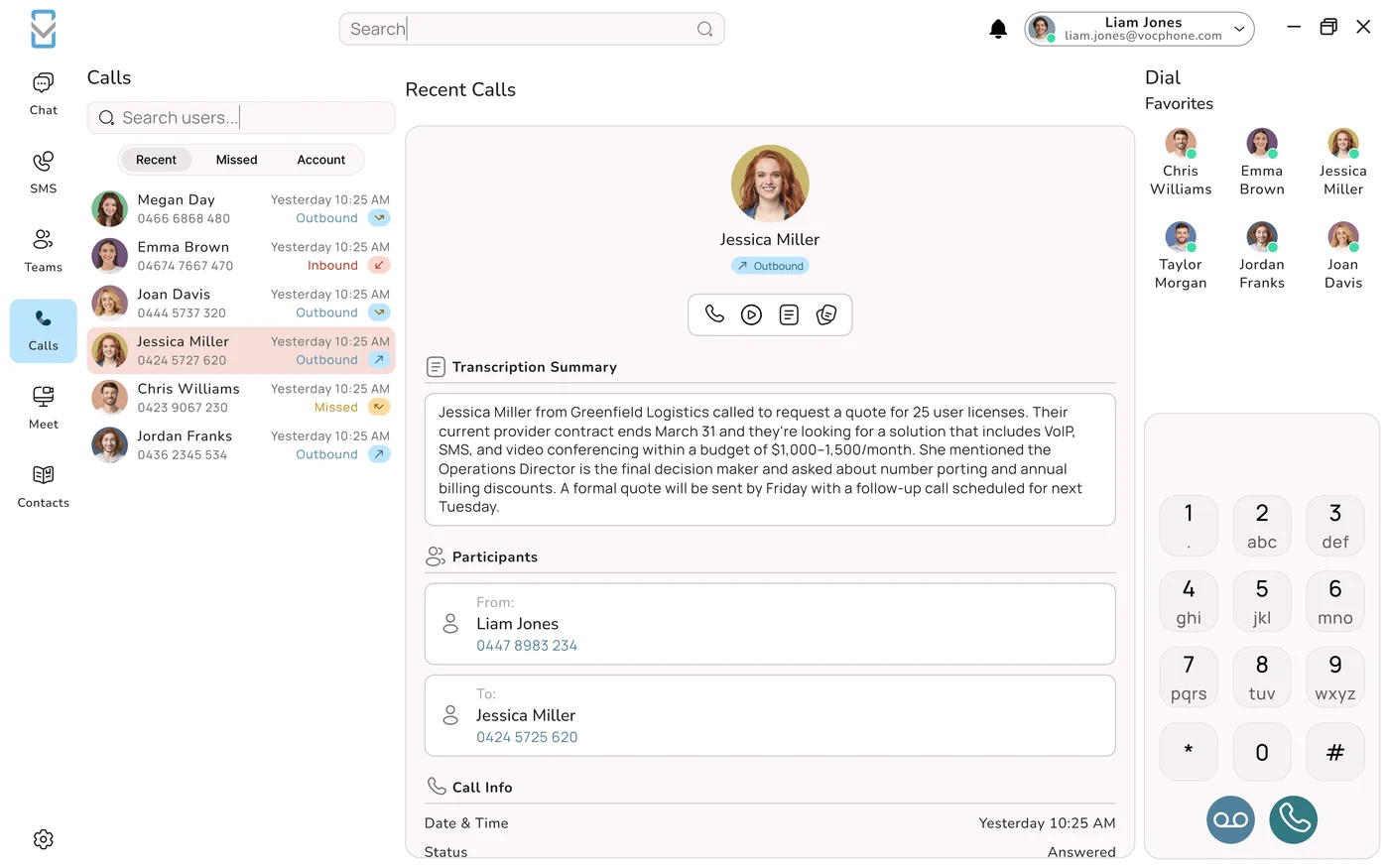
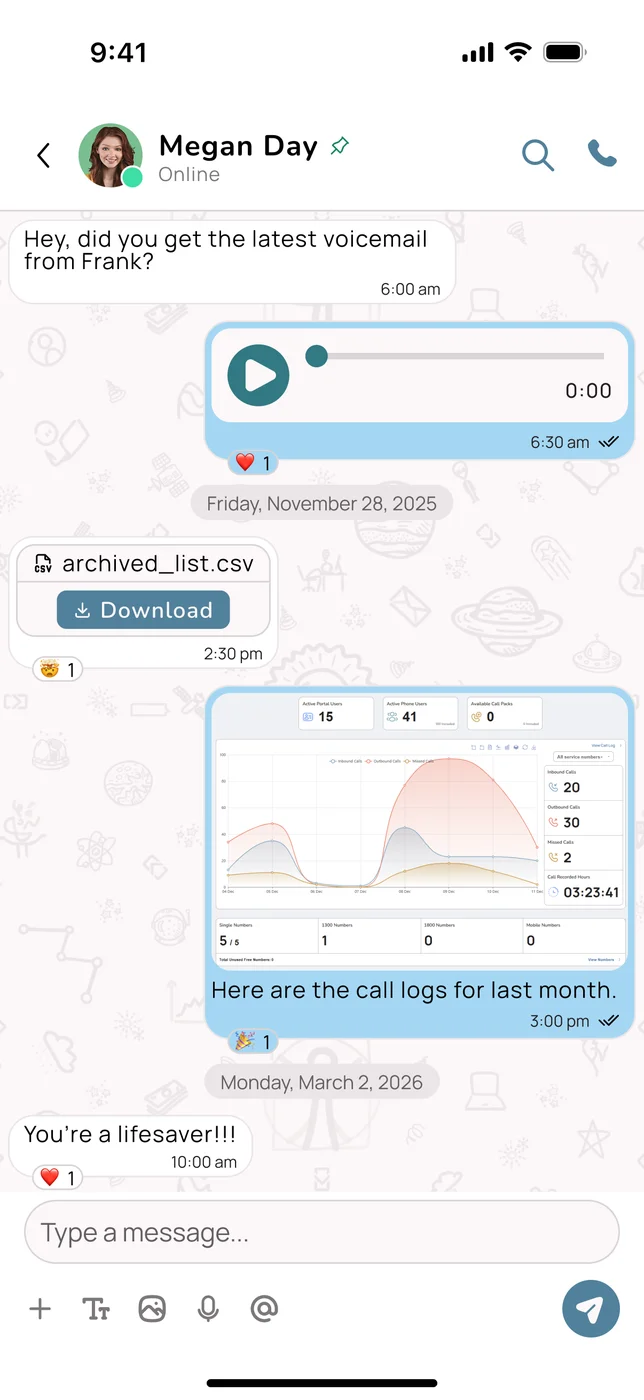
Your team will spend more time in the apps than anywhere else in the business phone system, so use them before anyone demonstrates them. A salesperson clicks the paths that work. Try a transfer, find yesterday's missed call, send an SMS from the business number, and check who is free. Note whether there is anything to try at all before a sales call.
| Pass | Fail |
|---|---|
| You can try the desktop and mobile apps without a sales call, and you can work out a transfer and a missed call without instructions. | Nothing to try until you book a meeting, or an app you need a manual to use. |
Test 6: Where It Lives
Ask where calls are processed and where recordings and voicemails are stored. If you run a clinic, a practice or a finance business, your clients will expect you to know the answer.
| Pass | Fail |
|---|---|
| A clear answer naming Australia, and a willingness to put it in writing for your account. | "In the cloud", "with our global partners", or a different answer from each person you ask. |
Test 7: The Drop Test
Ask: "Our office internet goes down on a Tuesday morning and a customer rings our main number. What happens to that call?" The right answer is not "the internet rarely goes down". It is a specific path, such as the mobile app ringing over mobile data or a failover number you choose. Ask whether that is set up as standard or only if you know to ask.
| Pass | Fail |
|---|---|
| A specific answer: calls keep ringing on the mobile app or fail over to a number you choose, set up from day one. | Silence, "the line will be engaged", or an answer that only applies if you buy a backup connection. |
The Tally: From a Long List of Business Phone System Providers to Two
Score each test 2 for a clear pass, 1 for a partial pass and 0 for a fail. That gives each provider a total out of 14. Anyone under 9 comes off the list. Book a proper conversation with the top two.
| Test | What you are scoring | Provider A | Provider B | Provider C |
|---|---|---|---|---|
| 1. The 4:45 call | Minutes to a person who could help | /2 | /2 | /2 |
| 2. The network | Owner or reseller, and a clear escalation path | /2 | /2 | /2 |
| 3. Headcount quote | One all-in monthly figure, in writing | /2 | /2 | /2 |
| 4. The way out | Exit costs and porting out, before signing | /2 | /2 | /2 |
| 5. Hands on | Apps you can try without a sales call | /2 | /2 | /2 |
| 6. Where it lives | Calls and recordings, named location | /2 | /2 | /2 |
| 7. The drop test | A specific plan when the internet fails | /2 | /2 | /2 |
| Total | Under 9 comes off the list | /14 | /14 | /14 |
Why not weight the features?
Providers that pass these tests almost always have the features too. A long feature list is easy to build. A support line that answers at 4:45 is not.
How VOCPhone Scores, Honestly
We would rather you ran the tests on us than took our word for it. Here is what you will find, and how to check it.
| Test | Our answer | How to check it |
|---|---|---|
| 1. The 4:45 call | Our local team in Australia takes your call, and our AI agent picks up after hours so nobody hits a dead end. | Ring 1300 663 222 at 4:45 and time us. |
| 2. The network | We own and operate our own network, hosted in Australia. We are not a reseller, and we have run it for more than 15 years with 99.99% uptime. | Ask us to name it, and ask any other provider the same question. |
| 3. Headcount quote | Published: $84.90 a month including 3 users on a 36 month term, then $30 a month per extra user. $0 setup and $0 porting. Price match if you find it cheaper. | The calculator on our pricing page gives your exact figure without a sales call. |
| 4. The way out | A month to month plan at $104.90 a month if you do not want a term, and your numbers are yours to take with you. | Ask for the exit terms in writing before you sign. We will send them. |
| 5. Hands on | Working demos of both apps run in your browser, no download and no sign up. | Try the desktop app and the mobile app now. |
| 6. Where it lives | Australian owned, with our network hosted in Australia. | Ask where recordings for your account are stored and get the answer in writing. |
| 7. The drop test | The mobile app keeps ringing on mobile data, and you choose where calls fail over to. | Ask us to show you the failover setting during your demo. |
If we make your top two, the next step is a free 30 minute demo built around your own calls. If we do not, the tally has still done its job.
Still deciding what you actually need before you test anyone? Start with business phone systems explained, or read what makes VOCPhone a market leading business phone system.
Frequently Asked Questions
How do I choose a business phone system provider?
Ignore the feature lists, because the core features of a business phone system are close to identical across Australian providers. Test what only shows up on a bad day instead: time each support line at about 4:45pm, ask whether they own the network or resell one, get an all-in monthly price for your exact headcount in writing, read the exit terms, try the apps yourself, find out where recordings are stored, and ask what happens to calls when your internet drops. Score each test out of two, remove anyone under nine out of fourteen, and book demos with the top two.
Does it matter if a phone provider is a reseller?
It matters when something breaks. A reseller puts its brand on a platform run by another company, so a platform fault usually means the reseller raises a ticket and waits like everyone else. A provider that owns and operates its own network can investigate and fix the problem directly. Reselling is a legitimate model, but you should know which one you are buying from and what response time they commit to.
What should a business phone system quote include?
One all-in monthly figure for your exact headcount, in writing, with the contract term shown. One off costs such as setup, number porting and handsets should be listed separately, and it should say whether calls are included. Check for easy to miss monthly add ons like recording storage, extra numbers, SMS or an AI answering service. A provider that will not give a total without a sales meeting has failed the test.
What happens to my business calls if the internet goes down?
It depends on how the provider has set up your business phone system, so ask before you sign. A good answer is specific: calls keep ringing on your team's mobile app over mobile data, or fail over to a number you choose, or reach a message and voicemail. A poor answer is an engaged tone, or failover that only works if you buy a backup connection.