











What the Coverage-Map Reset Actually Revealed
On 30 June 2026 a new industry standard for mobile coverage maps came into effect. Directed by the Minister for Communications, Anika Wells, and administered by the ACMA, it forces every carrier to describe coverage using the same four words: good, moderate, basic and no coverage. Telstra, Optus and TPG can no longer publish their own flavour of map making a different coverage claim: one legend, applied consistently, so Australians can see where they can actually expect a signal and, critically, where they can expect to make a Triple Zero call.
Alongside the maps came a second change with quieter but bigger implications. From 31 March 2026, telcos must publish information about every major outage and every significant local outage they resolve, in a consistent format on public registers. That data feeds the Triple Zero Custodian, emergency service organisations and consumer advocates, and it lets anyone, including you, analyse how often a given network actually falls over.
Both moves are good for consumers. But read them as a business owner and the takeaway is uncomfortable: a map tells you how good coverage should be on a normal day, and a register tells you, after the fact, how often it wasn't. Neither keeps a single call connected when the network you depend on goes down.
30 Jun 2026
new ACMA coverage-map standard in force for Telstra, Optus and TPG
4
labels every map must now use: good, moderate, basic, no coverage
31 Mar 2026
outages from this date on must appear on public registers
99.99%
uptime on VOCPhone's own Australian network
One Network Is a Single Point of Failure
Engineers have a phrase for any component that takes the whole system down when it fails on its own: a single point of failure. If your business phones (handsets, mobiles, after-hours diversions, the lot) all ride a single mobile carrier, that carrier is your single point of failure. It does not matter how green the coverage map is. When that one network has a bad day, so do you, and there is no second path for a call to take.
This is the part the transparency rules can't fix. What the new register data makes undeniable is that major outages are not freak, once-a-decade events: they happen often enough that regulators now require them to be logged and published. Planning as though your carrier will never fall over is planning to lose calls.
The single-network trap
If your desk phones, your staff mobiles and your after-hours diversions all sit on the same carrier, a coverage map showing "good" everywhere is cold comfort. One network fault takes out every path at once: inbound calls, outbound calls and the fallback you assumed would save you. A greener map does not add a second path; only redundancy does.
The Outages Your Business Already Lived Through
None of this is hypothetical. Australian businesses have already sat through the outages the new registers are designed to capture. The Telstra national outage knocked out service for hours across the country, and the businesses that stayed reachable were the ones whose calls weren't tied to a single path. The Optus Triple Zero outage was worse than lost revenue: it was lost emergency calls, and it is a large part of why the coverage and Triple Zero rules exist at all.
Internet and NBN faults do the same damage from a different direction. A cut at the exchange or a router that won't come back takes an office offline, and if your phone system is a box in the comms cupboard, the phones go with it. We covered the practical fixes in keeping your business phones connected during an internet or NBN outage. The common thread across all three is the same: the businesses that stayed open had somewhere else for a call to go.
The Layers of a Redundant Phone Setup
Redundancy isn't one feature you switch on. It's a stack of independent layers, each one ready to carry the call when the layer above it fails. A properly designed cloud phone setup gives you several at once, so no single fault (carrier, internet, power or premises) stops the phone from ringing.
Cloud-hosted call control
The brains of the system live in the cloud, not in a box at your office. If the site loses power or internet, the platform keeps answering, routing and recording: there's nothing on-premise to knock out.
Automatic failover to mobile apps
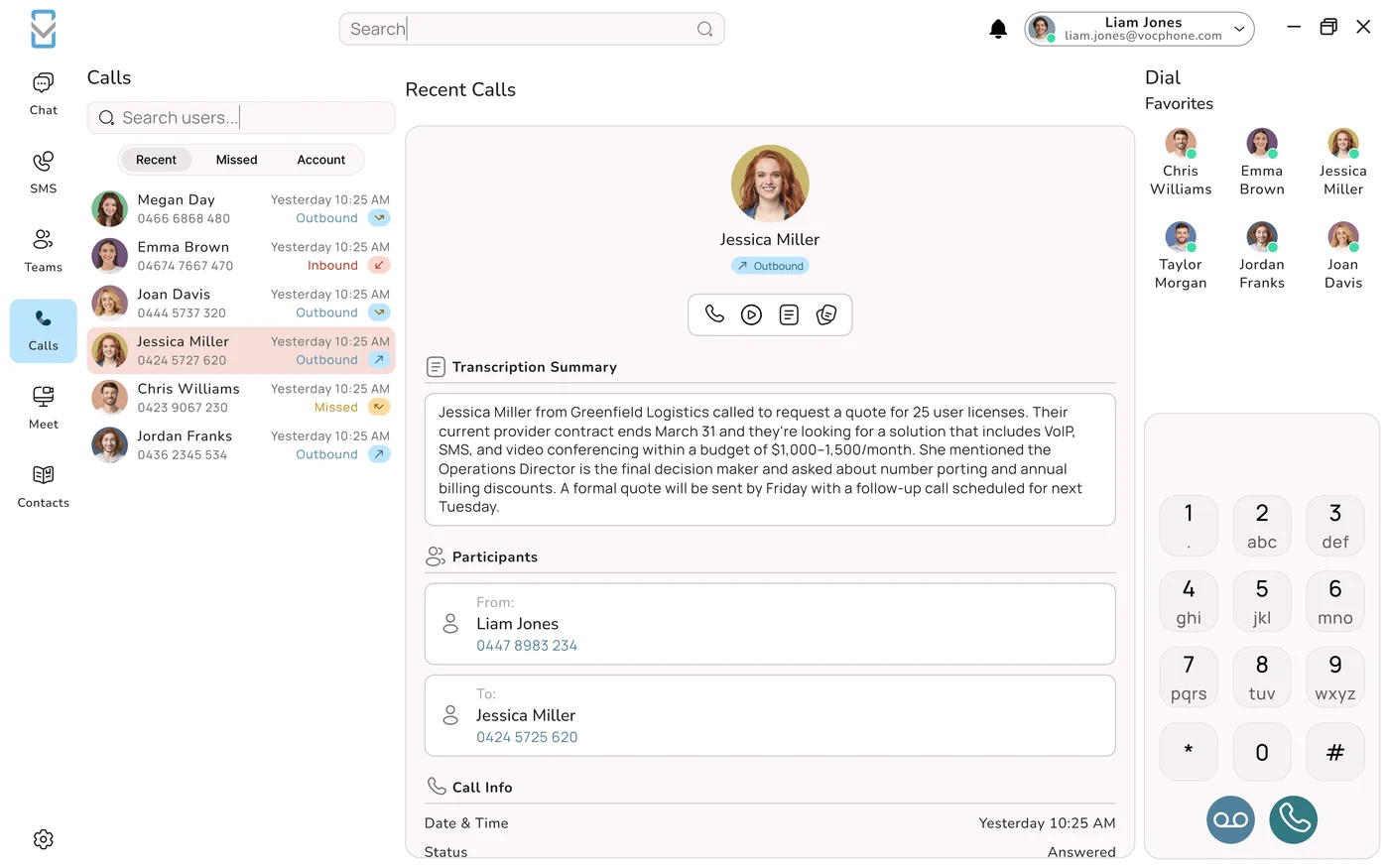
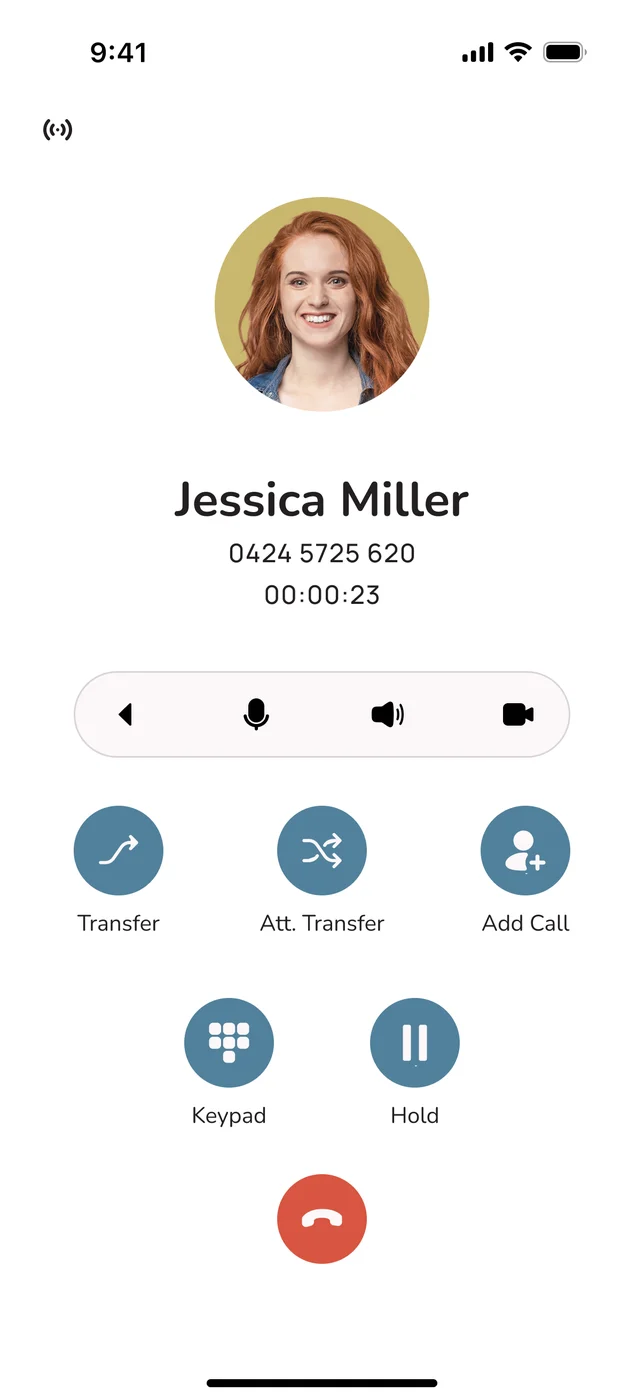
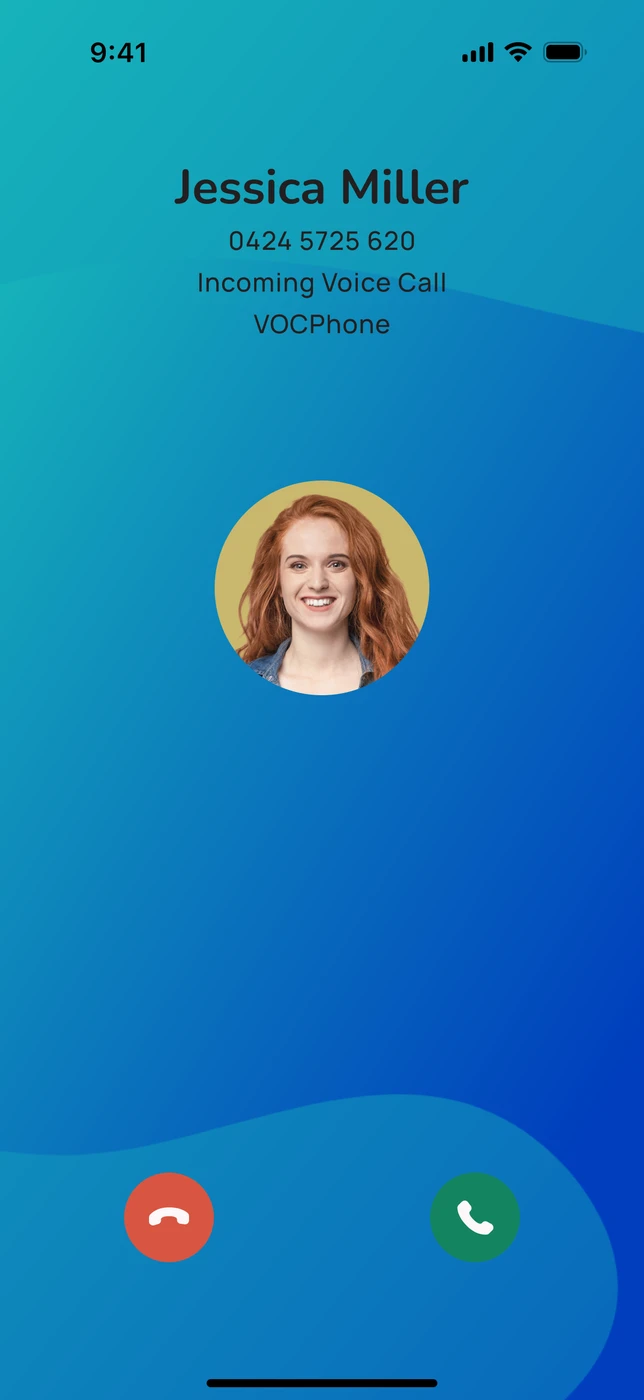
When a desk device or a site connection drops, calls follow your rules straight to the VOCPhone app on staff mobiles, over mobile data or any Wi‑Fi, so the same business number keeps ringing on a different network.
Alternate paths, not one pipe
Calls can be delivered over more than one route rather than a single carrier link. If one path degrades, traffic shifts to another instead of failing outright.
AI Phone Agent as a backstop
If nobody is reachable, the AI Phone Agent answers in a natural Australian accent, takes the details, books the job and logs it, so an outage becomes a captured lead, not a lost one.
Rule-based overflow
Ring groups, time-of-day flows and on-call rosters mean a call that isn't answered in one place cascades to the next: automatically, in seconds, without anyone touching a setting.
Voicemail-to-email & SMS
The last line of defence: if every live path is exhausted, the caller's message and number reach your team by email and text, so you can call straight back the moment you're able.
Single Network vs Cloud With Failover
The clearest way to see the difference is to line the two setups up against the failures that actually happen. A single-network setup has one answer to every outage: wait. A cloud setup with failover has a next step for each.
| When this happens… | Single mobile network | Cloud voice with failover |
|---|---|---|
| Carrier has a national outage | ✗ All calls fail: nothing to do but wait | ✓ Calls shift to apps and alternate paths |
| Office loses internet or NBN | ✗ On-premise phones go dead | ✓ Calls follow rules to mobile apps |
| Power cut at the premises | ✗ Handsets and PBX off | ✓ Cloud keeps answering; staff use mobiles |
| Nobody free to pick up | ~ Straight to voicemail | ✓ AI Phone Agent books and logs the call |
| After-hours call arrives | ~ Diverts to one personal mobile | ✓ On-call roster, AI agent or voicemail-to-email |
| Where the system lives | ✗ A box in the comms cupboard | ✓ Cloud, on an Australian network |
| Number of failure points | ✗ One: the whole thing | ✓ Several independent layers |
How Automatic Failover Actually Works
Failover isn't a person scrambling to divert a number when the phones go quiet. Done properly it's automatic, it's fast, and the caller never knows it happened. Here's the sequence when a fault hits a VOCPhone setup.
The platform notices the path is down
Because call control lives in the cloud, it can see the moment a device or site connection stops responding: it isn't waiting on the same link that just failed.
The call reroutes on the next path
Instead of one carrier link, the call can take an alternate route, so a problem on one path shifts traffic rather than dropping it.
It follows your rules to a live device
Your call flow cascades the call (desk, then mobile app, then the next person in the ring group) across whatever network each device is on, so the same business number keeps ringing.
The AI Phone Agent catches the overflow
If no human is reachable, the AI answers, handles the routine request, books or escalates, and writes the details to your CRM before the caller hangs up.
Nothing is lost
Worst case, the caller's number and message reach you by voicemail-to-email and SMS. There is no blinking light in an empty office that nobody sees until Monday.
The point most people miss
Redundancy isn't about surviving a once-a-decade disaster. Its everyday payoff is the ordinary failures (a dropped connection, a flat mobile, a power flicker, three calls at once) that quietly leak business every week. A setup with failover treats each of those as a rerouted call, not a lost one.
Why Owning the Network Backs the Promise
Plenty of providers will sell you "failover" as a feature. The question worth asking is what it fails over to. A reseller buys capacity from an upstream carrier and puts its logo on it, which means when that carrier has the kind of outage the new registers now record, the reseller is stuck in the same queue you are, with nothing else to route to.
VOCPhone owns and operates its own Australian network. That's what lets it stand behind 99.99% uptime rather than repeat a promise made upstream, keep your call data onshore under the Privacy Act 1988, and fix faults directly instead of lodging a ticket and waiting. After 15-plus years in the Australian market, that ownership is the foundation the redundancy layers stand on: automatic failover is only as good as the network underneath it, and the alternate path you reach for during an outage shouldn't belong to the carrier that just went down.
Building Redundancy Without the Disruption
The good news is that adding redundancy doesn't mean ripping anything out or risking downtime to get it. Your existing service keeps ringing until the moment you cut over. The path is short.
Map your single points of failure
We look at where your calls, mobiles and after-hours diversions all depend on one network: the gaps a coverage map won't show you.
Keep your numbers
VOCPhone ports your existing local, 1300 and 1800 numbers. Your old service stays live until the port completes, so there's zero downtime.
Design your failover flows
Decide how calls cascade (desk to mobile app, ring group, on-call roster, AI Phone Agent, then voicemail-to-email) so every fault has a next step.
Roll out the apps
Install the free desktop and mobile apps so the business number rides staff devices on any network, not just the office connection.
Test the outage, then go live
We prove the failover against real scenarios (pull the internet, drop a device) before you cut over in a quiet window. Then you're covered.
Frequently Asked Questions
What did the new ACMA coverage-map rules actually change?
From 30 June 2026, a new industry standard directed by the Minister for Communications requires every mobile carrier (Telstra, Optus and TPG) to publish coverage maps using one standard legend of four labels: good, moderate, basic and no coverage. Carriers are forbidden from publishing other maps that make different coverage claims. Separately, from 31 March 2026 telcos must log every major and significant local outage they resolve on public registers in a consistent format. The goal is to help Australians understand real coverage and where they can expect to make a Triple Zero call.
Why is relying on a single mobile network a single point of failure?
A single point of failure is any one component that takes the whole system down when it fails on its own. If your desk phones, staff mobiles and after-hours diversions all ride the same carrier, that carrier is your single point of failure: one network fault takes out every path for a call at once. A coverage map shows expected coverage on a normal day; it does nothing to add a second path when the network has a bad one. Only redundancy does that.
Does a published outage register keep my phones working?
No. The new outage registers are a valuable record: they let you see how often a network has fallen over and feed the Triple Zero Custodian and emergency services. But a register reports outages after they are resolved; it does not keep a single call connected while one is happening. Staying reachable during an outage is a matter of architecture, not reporting: you need cloud voice with automatic failover, not just better data about the failures.
What does automatic failover actually do during an outage?
When a device, site connection or path stops responding, the cloud platform reroutes the call rather than dropping it. It follows your call-flow rules to a live device (desk phone, then the mobile app on a different network, then the next person in the ring group) and if nobody is reachable, the AI Phone Agent answers, handles the request and logs it. As a last line, the caller's number and message reach you by voicemail-to-email and SMS. The caller generally never knows a fault occurred.
If my office internet or NBN goes down, do I still get calls?
Yes. Because the call control lives in the cloud on VOCPhone's own network rather than a box in your office, a local internet, NBN or power failure does not stop the phones. Calls follow your rules to the VOCPhone app on staff mobiles over mobile data or any Wi‑Fi, are handled by your AI Phone Agent, or fall through to your after-hours flow. A site outage becomes a rerouted call rather than a missed one.
Is VOCPhone dependent on a single carrier's network?
No. VOCPhone owns and operates its own Australian network rather than reselling someone else's. That matters for redundancy because the alternate path you fail over to during an outage should not belong to the same carrier that just went down. Owning the network is also why VOCPhone can stand behind 99.99% uptime, keep your data onshore under the Privacy Act 1988, and fix faults directly instead of raising a ticket with an upstream carrier.