











What a Telco Outage Register Actually Is
For years, when a mobile network fell over, the rest of us were left guessing. How widespread was it? How long did it really last? Was it just my street or half the state? Carriers held that information, and there was no consistent, public way to see the full picture. From 2026 that changes.
An outage register is, at its simplest, a public log of when a network broke and for how long. Under the new ACMA rules, telcos must publish information about every major outage and every significant local outage resolved on or after 31 March 2026, in a consistent format. Because the format is now standard across carriers, the registers turn scattered incident reports into something you can read across the whole industry, and over time.
This sits inside a broader transparency package that also standardised how carriers draw their mobile coverage maps. We cover both halves, registers and maps together, in our overview of the new telco transparency rules. This article zooms in on the registers specifically: what they show, and what they can't.
31 Mar 2026
outages resolved on or after this date must appear in the register
2
categories logged: major outages and significant local outages
1
consistent format, so carriers can be compared like for like
99.99%
uptime on VOCPhone's own Australian network
What the Registers Reveal About Your Provider
The registers publish two categories of event. Major outages are the large-scale failures that make the news: the ones where a whole network drops and half the country notices. Significant local outages are the smaller regional or suburb-level failures that never make headlines but still cut off businesses and households. Historically it was those local outages that vanished from public view. Now they have to be recorded and disclosed once resolved.
That second category is the quietly important one. A network can look rock-solid on the strength of avoiding a national headline while still dropping your particular suburb, business park or regional town on a semi-regular basis. For a business tied to one location, that is exactly the pattern worth knowing about.
Who the registers are really for
The rules are explicit about the audience. The registers exist to support the Triple Zero Custodian, emergency service organisations and consumer advocacy groups, and to let anyone analyse outage trends. That framing matters, because the most serious risk in any telecommunications failure isn't a missed sales call: it's someone unable to reach 000 in an emergency.
For a business owner, the register is a useful reality check. It confirms what many already suspected: outages are more common than the marketing suggests, they affect every carrier, and no single network is immune. If you lived through the Telstra national outage or the Optus Triple Zero outage, the register simply puts dates and durations to an experience you already know was painful.
What a register can and can't tell you
It can show you which networks have failed, roughly how often, and where, so you can make a more informed choice of carrier and stop taking coverage claims on faith.
It can't predict the next outage, shorten it, or keep your phones working while it happens. A register is a rear-view mirror. It's genuinely valuable for accountability and planning, but it is not a resilience strategy for your business.
How to Read a Provider by Its Register
A register is only useful if you know what to look for. Raw outage counts can mislead: a bigger network serving more sites will naturally log more events than a small one. Read for pattern and behaviour, not just the tally.
Frequency, not just headlines
Count the significant local outages, not only the famous national ones. A carrier that avoids big news but peppers the register with suburb-level drops may be less dependable where you actually operate.
Duration and recovery
How long did events take to resolve? A network that goes down briefly and recovers fast is a very different risk to one that stays dark for hours. Look at the time-to-restore, not just the count.
Geography that matches yours
An outage record concentrated in your region, or your type of area, matters far more than a clean sheet somewhere you'll never make a call.
The trend line over time
Because the format is consistent, you can watch whether a carrier is improving or drifting the wrong way across successive periods, rather than judging one bad month.
What the provider does about it
The register won't say this outright, but pair it with how a provider communicates and resolves faults. A network you can't influence when it breaks is the real problem.
Do all of that and you'll choose a mobile carrier more wisely than anyone could before 2026. But notice the ceiling on the exercise: even the best-reading register describes a network's past. The moment you bet your whole phone system on any single one of those networks, you've re-created the exact risk the register was documenting.
Why a Register Won't Keep Your Phones Up
Here's the honest bit, and it's the whole point of this article. The 2026 outage registers are a good thing. More disclosure, a consistent format and public accountability are all improvements the industry needed. But none of it changes the core problem for a business that lives and dies by its phones: when the network you rely on goes down, your phones go down with it.
A register does not add redundancy. It does not add a backup path. It makes outages more visible; it does not make your business more resilient. If your entire phone system rides on a single mobile network or a single fixed line, you are exactly as exposed the day after these rules take effect as you were the day before. The only difference is that afterwards you'll be able to look up, in a tidy public log, precisely how long you were unreachable.
Businesses that went through the big outages of recent years learned this in real time. When a network drops, the register faithfully records it, but that's cold comfort to the shop that couldn't take orders or the trades business whose calls rang out to nowhere. The lesson isn't “pick the carrier with the cleanest register.” It's “stop depending on any single carrier being up.” That's the argument we make in full in why one network is a single point of failure.
A simple test for your current setup
Ask yourself one question: if my main network went down for four hours this afternoon, what happens to my incoming calls? If the honest answer is “they ring out” or “they go to a voicemail nobody checks,” you don't have redundancy: you have a single point of failure. The 2026 registers will document that failure beautifully. They just won't prevent it.
What Real Phone Redundancy Looks Like
Resilience isn't a single feature you switch on; it's a design principle. A phone system built for outages assumes any one link can fail and makes sure calls still get through another way. Here's what that looks like in practice.
Cloud, not on-site
Your phone system lives on VOCPhone's own Australian network in redundant data centres, not a box in your building. A power cut, flood or internet drop at your office can't take the platform itself offline.
Automatic mobile failover
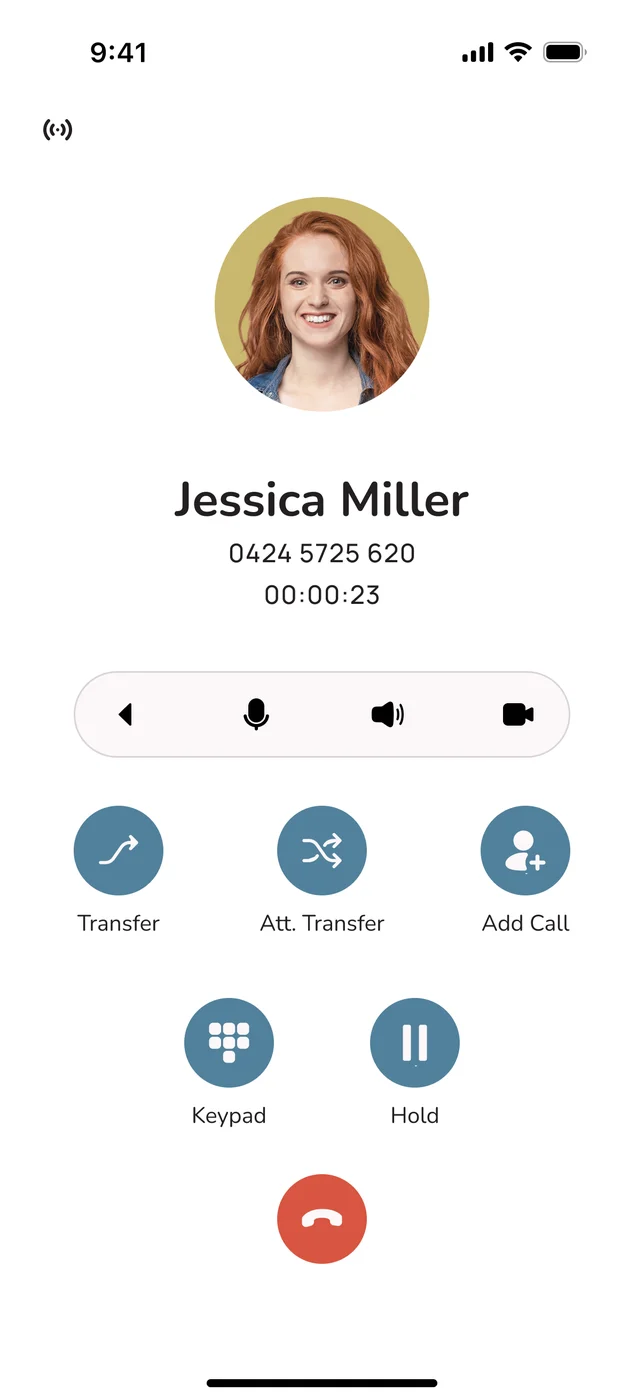
If your office internet fails, incoming calls reroute automatically to the mobile app on your phone, running on mobile data. Your business number keeps ringing on a different network entirely.
Alternate paths
Because calls are carried over the internet rather than one dedicated line, they aren't hostage to a single carrier. When one path degrades, traffic can route another way.
Anywhere answering
Staff can answer the business line from a laptop or mobile (at home, on a job site, or in another suburb entirely) so a local outage in one place never silences the whole business.
AI Phone Agent backstop
When everyone's unreachable, an included AI Phone Agent in a natural Australian accent still answers, takes details, qualifies and books callers in, so a spike or an outage never means a dead end.
Onshore and accountable
Australian-owned infrastructure means lower latency and local accountability: one company, here, responsible for keeping you connected, with data held onshore under the Privacy Act 1988.
The businesses that fared best through recent network failures weren't the ones on the “best” single carrier. They were the ones whose phones weren't tied to any single carrier in the first place. That's the practical takeaway from a decade of outages: now backed by a public register you can read for yourself.
The mindset shift the register should trigger
Use the register to choose a mobile carrier more honestly, then stop treating that choice as your safety net. Your safety net is the system layered on top: cloud voice that fails over automatically, so whichever network stumbles next, your business stays reachable.
How VOCPhone Keeps You Connected
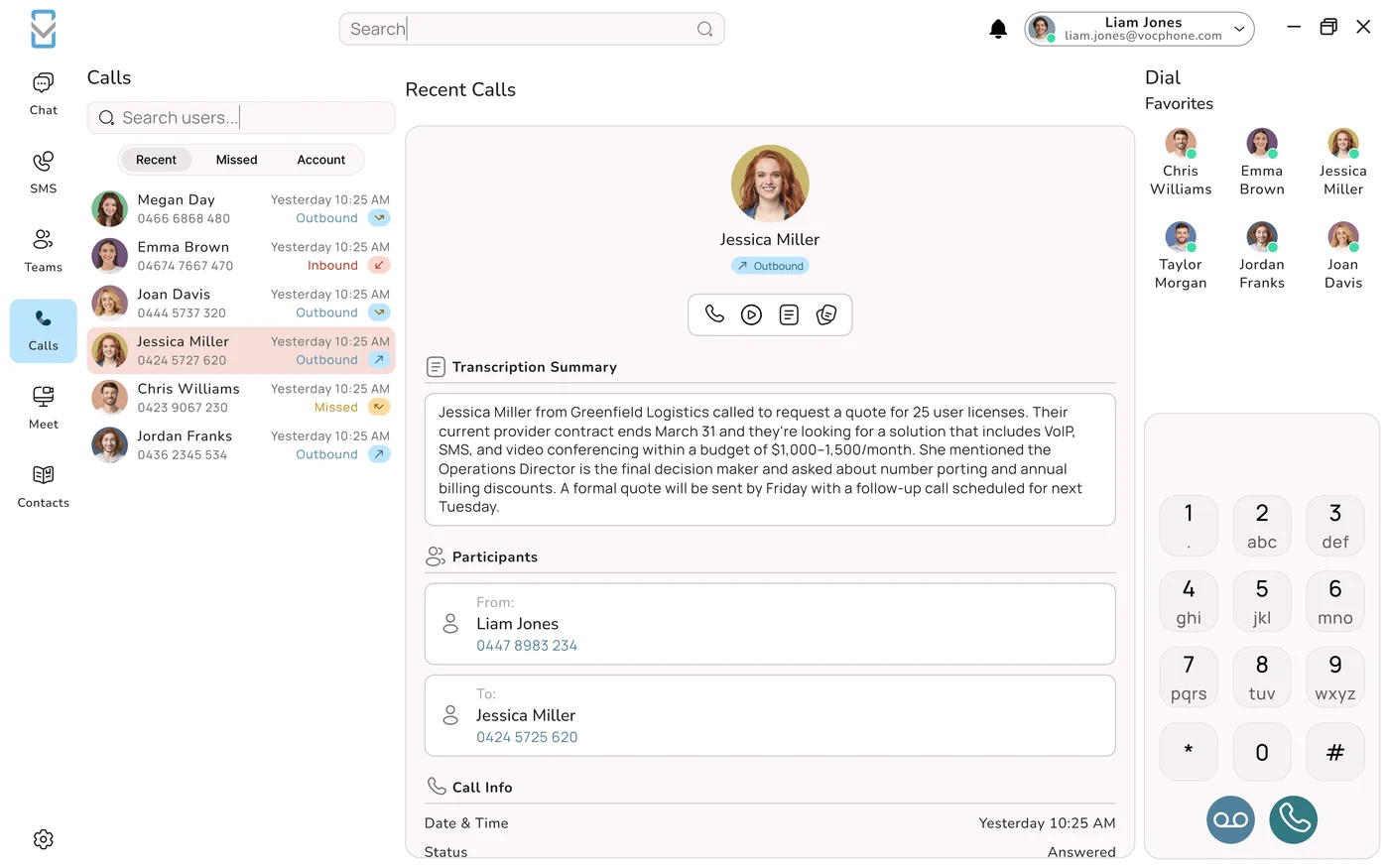
VOCPhone was designed around exactly the problem these new registers expose. It's an all-in-one Australian cloud phone platform that treats staying reachable as the whole point, not an afterthought.
It runs on its own Australian network with 99.99% uptime, and it's Australian-owned with 15+ years in the local market. Your business number works across desk phones, computers and mobile apps at the same time, so when one path fails, calls automatically reroute to another. If your office loses power or internet, incoming calls fail over to the mobile app on mobile data, and staff keep answering from anywhere. Included AI Phone Agents, in natural Australian accents, act as a backstop so callers are never met with silence.
On top of the resilience you get the things that make it easy to run: transparent per-seat pricing with unlimited calls and AI included as standard rather than an add-on, no minimum users, full number portability including 1300/1800, a price guarantee, 24/7 local support and onshore data under the Privacy Act 1988. Transparency rules are welcome. But the way you actually protect your business is to build it so no single outage can take you offline.
"Knowing our phones always connect customers with the right person has streamlined how we engage. Having features usually reserved for big companies, in a cost-effective way, is excellent, and I can stay connected from the mobile app when I'm out of the office."
Marie-Claire, Owner, Coco's Wealth of Health
Frequently Asked Questions
What is a telco outage register?
An outage register is a new ACMA requirement for telcos to publish information about their network outages in a consistent, public format. Carriers must publish every major outage and every significant local outage resolved on or after 31 March 2026. The registers are designed to support the Triple Zero Custodian, emergency service organisations and consumer advocacy groups, and to let anyone analyse outage trends across the industry. In short, they turn what used to be private incident data into a public log you can read and compare.
Which outages must appear in the register, and from when?
Two categories must be published: major outages, the large-scale events, and significant local outages, the smaller regional or suburb-level failures that previously stayed out of public view. The rule applies to any qualifying outage resolved on or after 31 March 2026, and everything must be presented in a consistent format so outages can be compared across carriers and over time.
What can an outage register actually tell me about a provider?
Read for pattern rather than raw totals. A register can show you how often a network has failed, how long events took to resolve, and where the failures were concentrated, so you can compare carriers on a like-for-like basis and judge the trend over time. What it can't do is predict the next outage, shorten it, or keep your phones working while it happens. It describes a network's past, which is useful for choosing a carrier but is not a resilience plan on its own.
Do the outage registers keep my business phones working during an outage?
No, and this is the key point. The registers make outages more visible and carriers more accountable, but they do nothing to keep your phones ringing when a network goes down. A register is a rear-view mirror: it records that an outage happened, after it is resolved. If your phone system relies on a single carrier or a single line, you are just as exposed as before, you will simply be able to look up how long you were unreachable. Real protection comes from redundancy, not disclosure.
How can my business stay connected when a network goes down?
By building redundancy into your phone system so no single network failure can take you offline. That means Australian-hosted cloud voice rather than an on-site box, automatic failover so incoming calls reroute to the mobile app on your phone when your office internet drops, the ability for staff to answer the business line from any device or location, and an AI Phone Agent as a backstop so callers are never met with silence. Because calls run over the internet rather than one dedicated line, they are not hostage to a single carrier. VOCPhone runs on its own Australian network and is built around exactly this approach.
Should I choose my provider based on the outage register?
The register is a useful reality check: it confirms that outages affect every carrier and that no single network is immune, so it is worth a look when weighing up options. But the real lesson is not to hunt for the carrier with the cleanest register; it is to stop depending on any single carrier being up. The businesses that came through recent outages best were not on the 'best' single network, they were the ones whose phones were not tied to any single network in the first place. Design for redundancy, and the register becomes background information rather than a source of anxiety.