

Business phone system
- Cloud featuresCall routing, IVR, queues, recording and voicemail to email
- Desktop and mobile appsCalls, SMS, team chat and video meetings in one app
- AI phone agents Built inAnswer every call, book jobs and take messages 24/7
- 90s is callingStill on an old PBX? Here is what you are missing
- International call ratesPer-minute rates to every country we call
Apps and internet
- Desktop app Live demoCalls, chat, SMS and AI summaries in one window
- Mobile app Live demoYour business number on your iPhone or Android
- Why our internetBuilt for voice, so calls stay clear when the line is busy
- NBN for businessBusiness NBN set up alongside your phones
- SUPA InternetFast fibre for buildings on the SUPA network
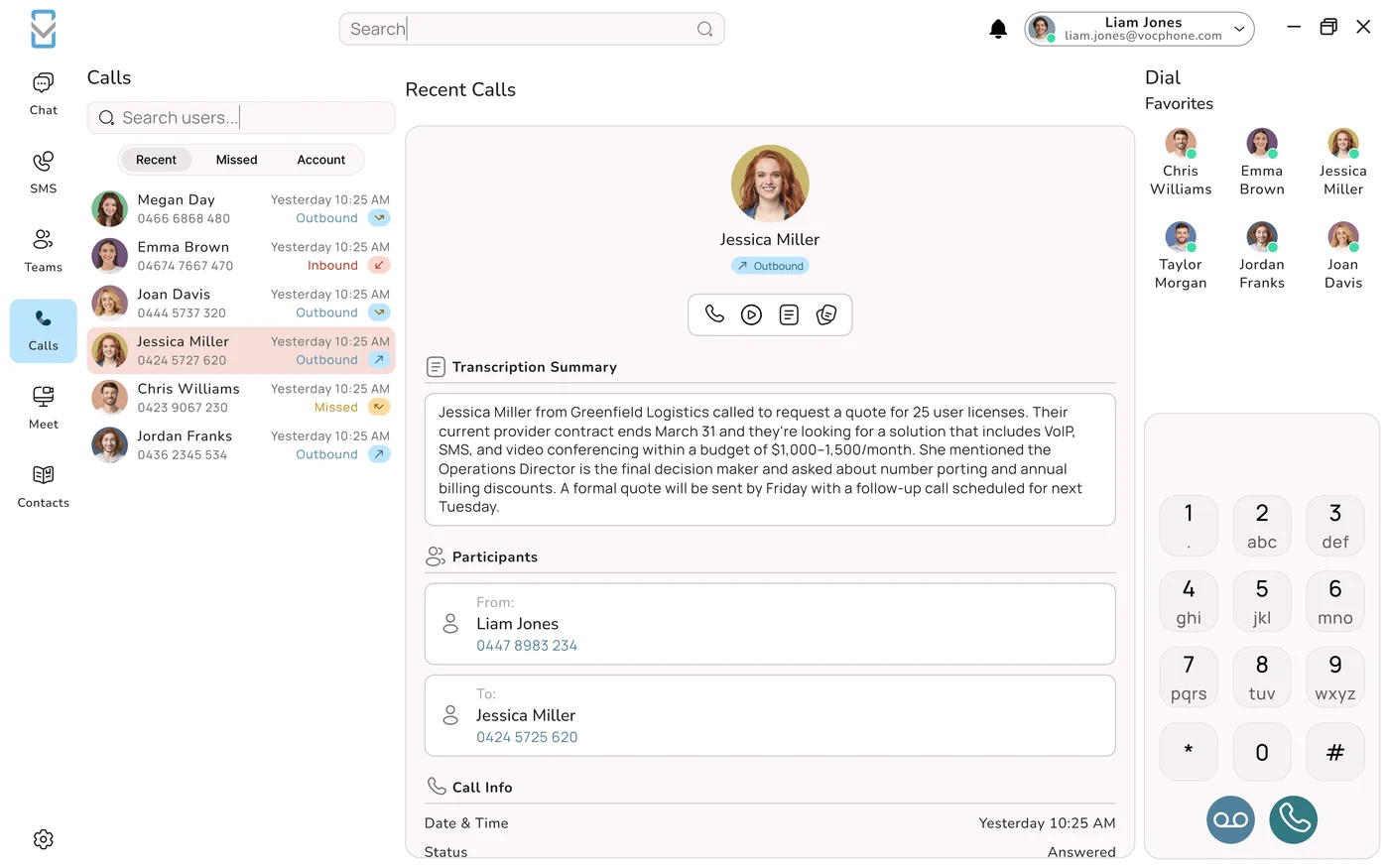
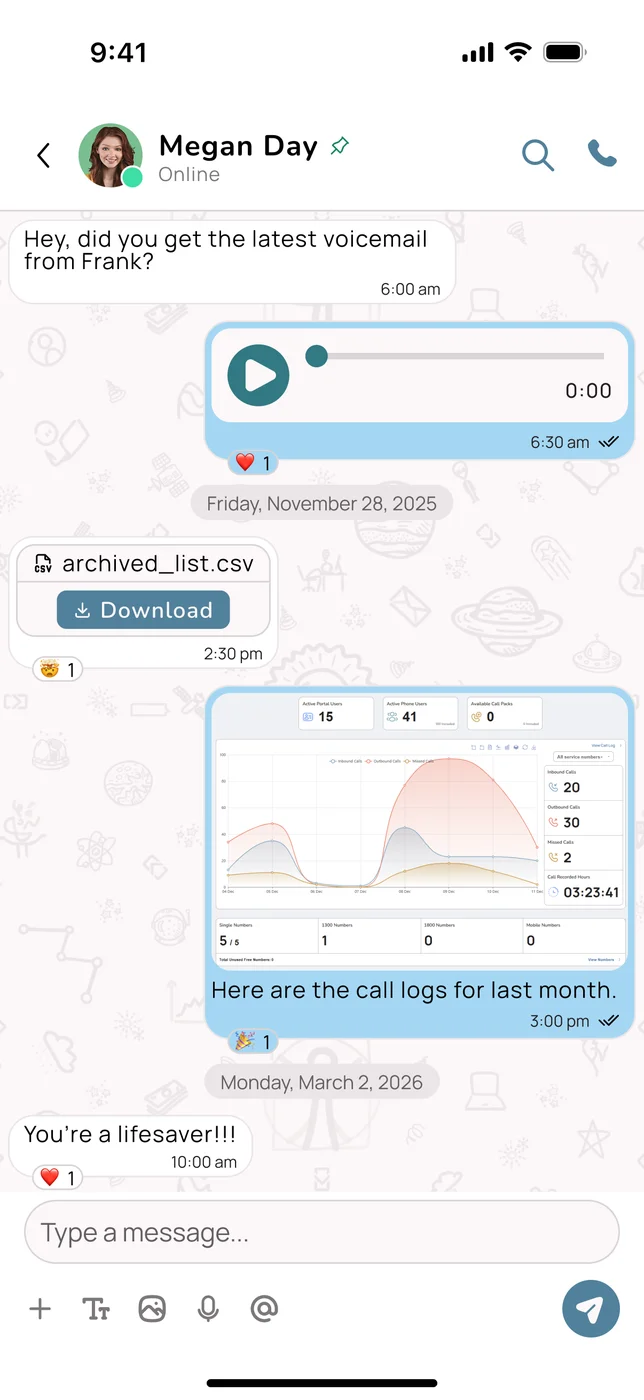
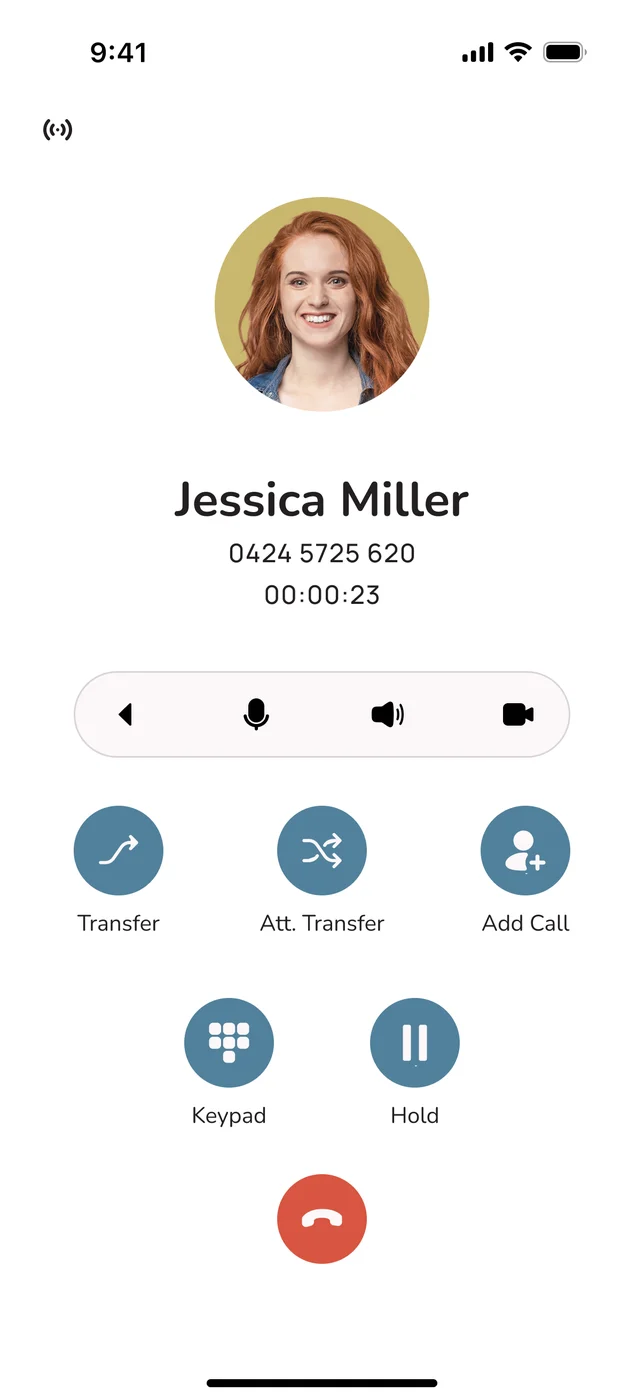
New Try it liveTake the VOCPhone apps for a spin, right here
Click through working demos of the desktop and mobile apps: calls with AI summaries, team chat, SMS and more. No download, no sign up.
Desktop app demoMobile app demoOur own network, not a reseller's. 99.99% uptime and support from our team in Australia.Book a demoAll features
AI on your phone line
VOCPhone vs AI receptionists
See every comparisonAI AgentsEvery call answered, day or night
It picks up with a natural Aussie accent, answers questions, books the job and sends you the summary.
Meet your AI agentBuilt into your phone system, not bolted on. No extra number, no call forwarding.Book a demo
Professional services
Trades, retail and hospitality
Browse all industries





Our customersFrom one-person shops to national brands
See how businesses like yours set up their phones.
Find your industryWorking on your own? We have plans made for sole traders and freelancers too.Self-employedStartups
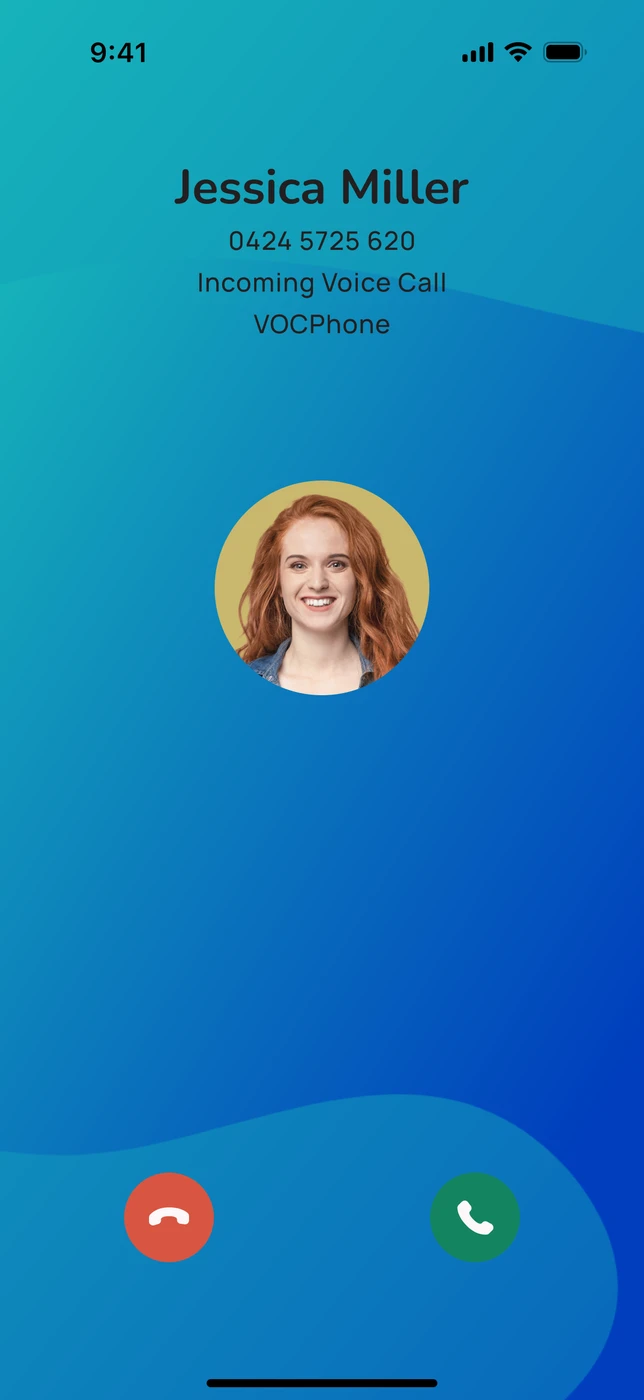
Voice plansBusiness phone planfrom$84.90/month3 users included on a 36-month term, then $30 per extra user.Free setup and free number portingDesktop and mobile apps includedAI Agents built inSee voice plans![Incoming call in the VOCPhone mobile app]()
![Friends watching a sunset]()
Internet and more

Bundle and savePhones and internet from one Aussie team
One provider to call when something needs fixing. No finger pointing.
Compare all plansMonth-to-month plans available. Keep your existing numbers when you move across.Sign up online1300 663 222
Learn and get set up
The library at a glanceBrowse all
141business
guides526kreads
so far
guides526kreads
so far
Guides by topic
- Phone systems54
- AI22
- NBN12
- Industries8
- Costs5
- Security4
- News2
- Other guides34


Need a hand? Our support team is based in Australia, with AI agents answering after hours.Contact support

Call us on 1300 663 222 or send a message and the team will get back to you.Send a message
Industries › Transportation
VOCPhone for Transportation
Your dispatcher is on the phone, so the fleet is not moving.
Dispatch is the most leveraged role in a transport business. Every minute a dispatcher spends on a routine call is a minute the fleet is not being optimised, and routine calls are most of what they get.
Drivers and incidents bypass every other queue
Keep every number you already advertise
We own and run the network, so uptime is ours to fix
Australian owned, hosted and supported, 15+ years in market
Charter quoted · coach held
Tue 8:05am
Your dispatch desk08:05
Dispatcher on a booking callThe most leveraged person in the business, tied up.engaged
New charter booking enquiryWorth thousands, ringing out.10s22s34s47slost
Driver reporting a breakdownVehicle and passengers stranded.05s12s20s28slost
One booking taken. One charter lost, one breakdown unreported.
Said out loud on every dispatch desk
You have said at least four of these this month
These are fleet productivity problems that arrive down a phone line.
01
Dispatch is doing reception work
Your most leveraged person spends most of the day on booking confirmations and timetable questions.
The agent handles routine calls so dispatch dispatches.
02
Incidents must never queue
A breakdown, an accident or an incident with passengers on board is the highest priority call in the business.
Incident calls bypass every queue, absolutely.
03
Timetable and fare questions repeat endlessly
What time, how much, where do I get on, do you go to the airport. Constant and fully answerable.
Answered instantly and consistently without a human.
04
Charter enquiries arrive at the worst time
The morning peak is when dispatch is busiest and when a charter enquiry is most likely to ring out.
Charter calls routed to someone who can quote, immediately.
05
Drivers need to reach dispatch instantly
A driver waiting on hold is a vehicle not moving and passengers not being served.
Drivers recognised by number and prioritised automatically.
06
Incidents need an evidence trail
When something goes wrong, who was told what and when becomes a serious question.
Every call recorded, transcribed and logged on our own network.
Watch one get handled
8:10am peak. Dispatch stays on the fleet.
This is the call that used to tie up your dispatcher. Here it is answered by a VOCPhone AI phone agent, from what you told it about your operation.
It sounds like it is from here. Genuine Australian accents, which matters to passengers and drivers.
It knows your routes and fares. Timetables, fares, stops, charter capacity and what you can and cannot do.
It prioritises drivers and incidents. Absolutely, above every other call in the system.
It quotes charters properly. Vehicle type, capacity, duration and your rate structure.
VPVOCPhone AI Agent Inbound · 00:46LIVE
AgentGood morning, thanks for calling. How can I help?
CallerI need to organise a coach for a school group. About fifty students, day trip, next month.
AgentWe can do that. Fifty students plus supervisors would be a fifty seven seat coach. Which date, and roughly what pickup and destination?
CallerThe fourteenth, from Ashwood, going to the zoo and back.
AgentThank you. For a day charter of that length in a fifty seven seater the rate is one thousand four hundred and eighty dollars, including the driver for the full day.
CallerWithin budget. It is Rebecca Hall from Ashwood College.
AgentI have provisionally held a coach for the fourteenth, Rebecca, and texted the quote, inclusions and our accreditation details for your school's paperwork.
What happened during the morning peak
- Charter enquiry answered without touching your dispatcher
- Correct vehicle matched to the group size automatically
- Quoted from your rate structure, with inclusions specified
- Coach provisionally held and accreditation documents sent
The number nobody tracks
Dispatch time is the most valuable time in the business
A dispatcher optimising a fleet creates far more value than a dispatcher taking a booking. Yet routine calls consume most of the role, and the important calls queue behind them.
1Fleet optimisation beats call handling. Every minute on a routine call is a minute not spent making the fleet more efficient, which is where the margin is.
2Breakdowns and incidents cannot queue. A driver reporting a breakdown with passengers on board is the most urgent call you will receive today.
3Charter and contract enquiries are large. One charter can be worth more than a week of ordinary work, and it rings during the morning peak.
Dispatch time lost, per weekIllustrative. Put your own numbers in.
Inbound calls700
Answered by dispatch430
Rang out or abandoned270
Share that were purely routinex 0.60
Routine calls that reached dispatch162
Value of dispatch time per call$22
Lost per week$3,564
Lost per year$185,328
Change the two highlighted lines to your own figures. The arithmetic is the point, not our example. The charters lost while dispatch was tied up are on top of this.
One number, sorted by urgency
A driver reporting an incident should never hear hold music
Publish one number. Behind it, drivers and incidents bypass everything, charter enquiries reach someone who can quote, and timetable questions never reach dispatch.
Live call being routedOverflow and after hours to the AI agent
Operational peaks
School terms and event seasons drive your phone
Transport call volume follows school terms, event seasons and holiday travel. Volume arrives in blocks, and the blocks land on a dispatch desk you cannot scale up for a fortnight.
An AI agent gives dispatch elastic capacity. Timetable and fare questions handled entirely, charters quoted, and drivers and incidents always at the front of the queue.
Inbound calls across a transport yearshape, not scale
What dispatch can realistically answer Overflow the AI agent picks up
Illustrative shape based on typical Australian school and event calendars. Your own curve depends on your contracts.
It plugs into what you already run
Your phone should know which vehicle is calling
VOCPhone connects to more than a thousand apps and offers open APIs, so a call arrives with a customer attached to it rather than just a number.
SalesforceHubSpotZohoXeroMondayGoogle WorkspaceMicrosoft 365SlackOpen APIs for the rest
Screen pops before you say hello
The caller's name, their history and their open booking appear as it rings, so you open with their name instead of asking who is calling.
Click to call from the record
Ring a customer straight from your dispatch or fleet system without typing a number, and every call logs itself against the right file.
Notes that write themselves
Recording, transcript, AI summary and next action land in your CRM. Untimed HD video for up to 30 people is included when a call needs faces.
Why VOCPhone
One provider, one network, one bill
Most providers sell you a phone system that runs on infrastructure they rent. We built ours, which changes what we can promise.
We own the network
Not a reseller reselling somebody else's switch. VOCPhone owns and operates its own Australian network, which is why we can guarantee 99.99% uptime and fix things ourselves.
AI phone agents that sound Australian
Inbound and outbound agents trained on your business. They answer, qualify, book and escalate, in a genuine Australian accent, at any hour.
Desk, desktop and pocket
Apps for Windows, Mac, iOS and Android, plus certified desk and cordless handsets. Untimed HD video for up to 30 people comes with it.
Australian, and answerable
Australian owned, Australian hosted, 24/7 human support, 15+ years in this market, and a price-match guarantee if you find better.
Straight answers
The questions transport operators ask us first
Can drivers and incidents always jump the queue?
Yes, and it should be set up that way. Driver numbers can be recognised automatically and routed straight through, and incident calls can attempt multiple destinations in sequence until a person answers.
That is fundamentally different behaviour from an ordinary business queue, and it is what a passenger carrying operation needs.
Can it quote a charter?
Yes, from your own rate structure. Vehicle type by passenger numbers, duration, distance bands and inclusions. It can also provisionally hold a vehicle and send your accreditation documents, which schools always ask for.
Anything unusual gets escalated with the full brief already captured.
Will it reduce load on dispatch?
Substantially, because the majority of inbound calls are timetable, fare and general enquiries needing no operational knowledge. Removing those is usually the biggest productivity gain available.
Your dispatcher then spends the day on the fleet, which is what they are actually valuable for.
What happens when the AI cannot help?
It hands over, and you decide where. Any incident, any complaint and anything contractual can go to a person, a queue, or a manager's mobile.
The caller does not repeat themselves either. Whoever picks up gets the context the agent already gathered. Outside hours it takes the details, texts a confirmation and queues the callback.
What difference does owning the network actually make?
Most providers resell somebody else's switch, which means when something breaks they raise a ticket with a wholesaler and wait, exactly like you would. VOCPhone built and runs its own Australian network, so we fix it ourselves.
It is also why we can put a number on uptime and offer a price match. There is no reseller margin stacked in the middle of your bill.
We run more than one depot. Does that work?
That is where it earns its keep. Advertise one number and we route behind it by depot, by time of day and by queue, with overflow so a call at a flat out depot rings somewhere quieter.
Each depot can keep its own greeting and direct number. Reporting rolls up across all of them.
Do we have to change our phone number?
No. Number portability is standard, including 1300 and 1800, so the number on your published timetable and booking numbers stays exactly as it is.
We port it across and plan the cutover around your hours, not ours.
Voice over Cloud
Give dispatch back to the fleet
Book fifteen minutes. Show us how calls reach dispatch today, and we will show you the version where routine never blocks urgent.
1300 663 222 · vocphone.com · Australian owned and operated