











Why Australian teams start shopping around
Global cloud phone brands win a lot of business on reputation, and fairly so: they've spent years building deep feature sets and slick marketing. But once an Australian company has lived with one of these platforms for a while, the same handful of frustrations tend to surface. They rarely have anything to do with call quality. They're about the experience around the phone system: who picks up when something breaks, where your customer data lives, and how the bill behaves over time.
We hear the same drivers again and again from businesses evaluating a change. Offshore support that means logging a ticket and waiting for a timezone to wake up. Data hosted overseas, which raises awkward questions under the Privacy Act 1988 and the Australian Privacy Principles (APPs). Per-feature upsells where the thing you assumed was included turns out to be a paid add-on. AI capabilities gated to the most expensive tier. Minimum-seat rules that make small teams overpay. And pricing quoted in US dollars, so every currency swing quietly changes what you pay.
None of that makes these providers bad. It just means the fit isn't automatic, and for an Australian business, a locally owned platform can remove several of these pain points at once.
3 users
Aircall's typical minimum before your first call
$0 public
8x8 standard pricing published online: you start with a sales call
99.99%
VOCPhone network uptime, on infrastructure we own
The players: RingCentral, 8x8, Aircall, Dialpad
Before the table, a quick and fair characterisation of each. These are broad strokes: plans and policies change, so always confirm current details directly with each vendor.
RingCentral
US-headquartered and feature-heavy: arguably the most complete unified communications suite of the four. The trade-off is complexity, and for Australian customers support and data hosting frequently sit offshore. Strong if you want a big-brand global platform and have the resources to administer it.
8x8
A mature UCaaS and contact-centre player with solid international calling. Its standout quirk in 2026 is that it no longer publishes standard public pricing: evaluations start with a sales conversation and a custom quote. Great capability, less transparency at the top of the funnel.
Aircall
A clean, sales-and-support-focused phone system with excellent CRM integrations. It typically requires a three-user minimum at around US$30 per user per month, so roughly US$90 a month is the entry point. Lovely product; the minimum and USD pricing suit growing teams more than lean ones.
Dialpad
Known for built-in AI and a lower entry point: around US$15 per user with a one-user minimum. A genuinely good option for AI-curious small teams, though core data and support again originate overseas for Australian customers.
Side-by-side comparison table
Here's how the four global options compare against a locally owned alternative on the factors Australian buyers raise most. Figures are illustrative starting points drawn from each vendor's typical public positioning in 2026 and should be confirmed with the provider; the aim is a fair snapshot, not a price guarantee.
| Factor | RingCentral | 8x8 | Aircall | Dialpad | VOCPhone |
|---|---|---|---|---|---|
| Australian-based support | Often offshore | Often offshore | Often offshore | Often offshore | 24/7 Australian humans |
| Australian data hosting | Commonly overseas | Commonly overseas | Commonly overseas | Commonly overseas | Hosted in Australia |
| Minimum users | Low | Quote-dependent | ~3 users | 1 user | No/low minimum |
| AI included | Higher tiers / add-on | Higher tiers | Add-on | Included (entry AI) | AI Phone Agents included |
| Pricing transparency | Public, USD, tiered | Sales call required | Public, USD, min seats | Public, USD | Public AUD + price match |
| Owns its network | Global carrier stack | Global carrier stack | Rides third-party carriers | Rides third-party carriers | Owns & operates its own |
| Currency | USD (FX applies) | Quote-dependent | USD (FX applies) | USD (FX applies) | Australian dollars |
Reading the table fairly
"Often offshore" doesn't mean a provider gives bad service: plenty of global platforms deliver excellent uptime and slick software. It means that for an Australian business, the people and servers behind your phone system may not be in Australia. Whether that matters depends on your compliance posture, your customers and how much you value a local voice on the line at 2am.
Five factors that actually decide it
Feature checklists blur together fast: every serious provider has IVR, call recording, apps and integrations. In practice, five things tend to decide the outcome.
✔
Where support sits. When a call queue drops during your busiest hour, the difference between a local team that answers now and an offshore ticket that resolves tomorrow is the whole game. Local support isn't a luxury; it's risk management.
✔
Where your data lives. Call recordings, transcripts and contact records are personal information. Hosting them in Australia keeps your obligations under the Privacy Act and APPs simpler to reason about, and it's an easier story to tell your own customers.
◑
How pricing behaves. USD pricing means foreign exchange quietly moves your bill, and quote-only pricing makes budgeting slow. Transparent Australian-dollar pricing, ideally with a price-match guarantee, removes both surprises.
◑
Whether AI is included. AI that answers calls, transcribes and summarises is quickly becoming table stakes. If it's locked to the top tier or sold separately, the sticker price and the real price drift apart.
✘
Minimum-seat and lock-in traps. A three-user minimum or a long contract can force you to buy capacity you don't need yet. Look for low minimums and clean number portability so you're never trapped.
The local alternative: what changes when you own the network
Most cloud phone brands, including some of the four above, are, at the infrastructure layer, resellers. They package software on top of carrier networks they don't control. That's a perfectly valid model, but it means when something goes wrong deep in the call path, your provider is raising a ticket with their supplier just like you'd raise one with them.
VOCPhone is built differently. We own and operate our own network rather than reselling someone else's, which is the single biggest reason the rest of the list is even possible. When you control the network, you control the support experience, the hosting location, the porting timeline and the price: end to end.
Australian owned & hosted
Data stays in Australia and support comes from Australian humans, 24/7, which keeps your Privacy Act obligations cleaner and your help desk in your timezone.
AI Phone Agents included
AI agents that answer in natural Australian accents, capture the enquiry and route or book it: part of the platform, not a top-tier upsell.
Transparent AUD pricing
Clear Australian-dollar plans with a price-match guarantee. No sales-call requirement to see numbers, no foreign-exchange drift on your monthly bill.
Keep your numbers
Full number portability for local and 1300/1800 numbers, handled by our team on our network, usually a faster, cleaner cutover than a multi-party chain.
The full toolkit
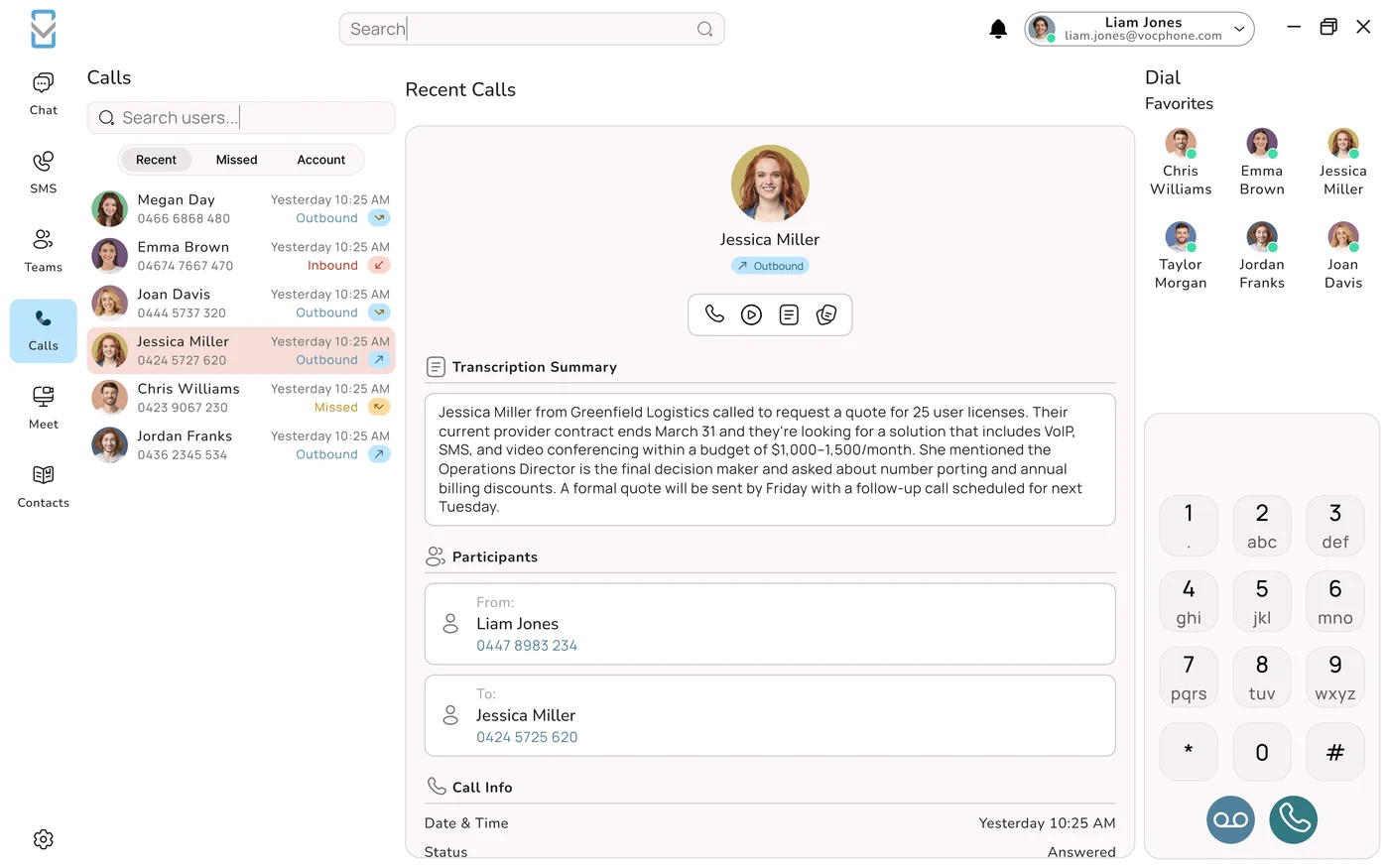
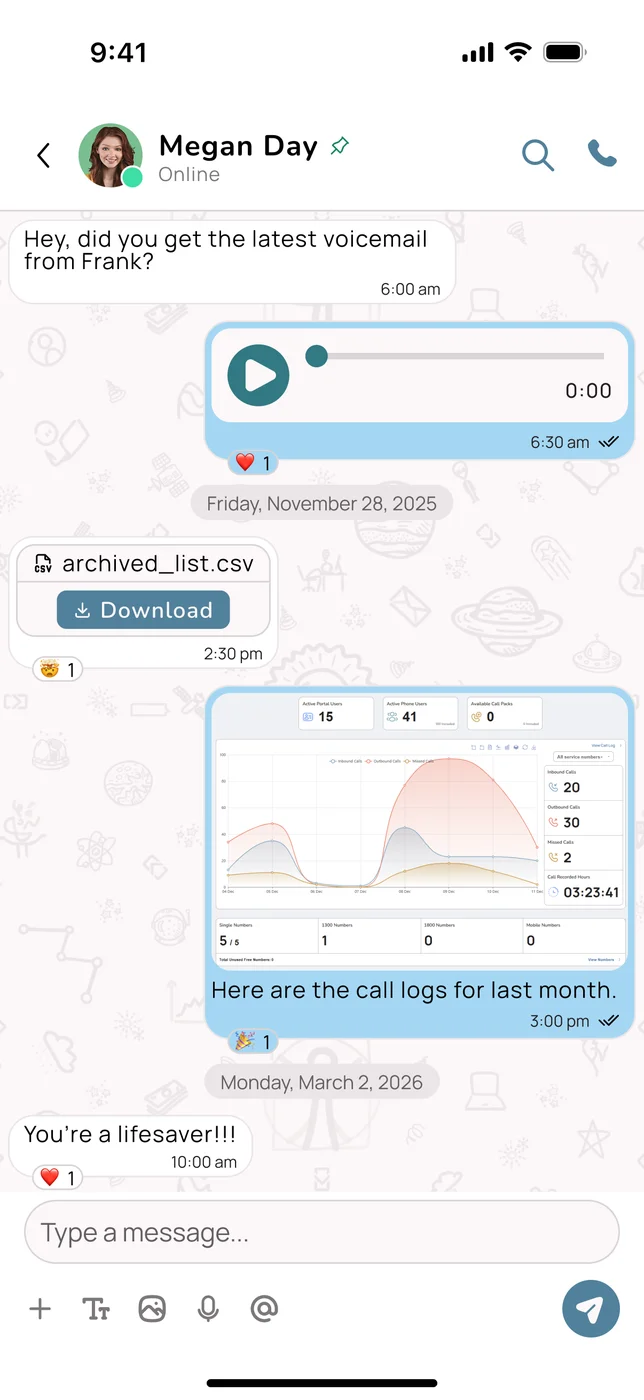
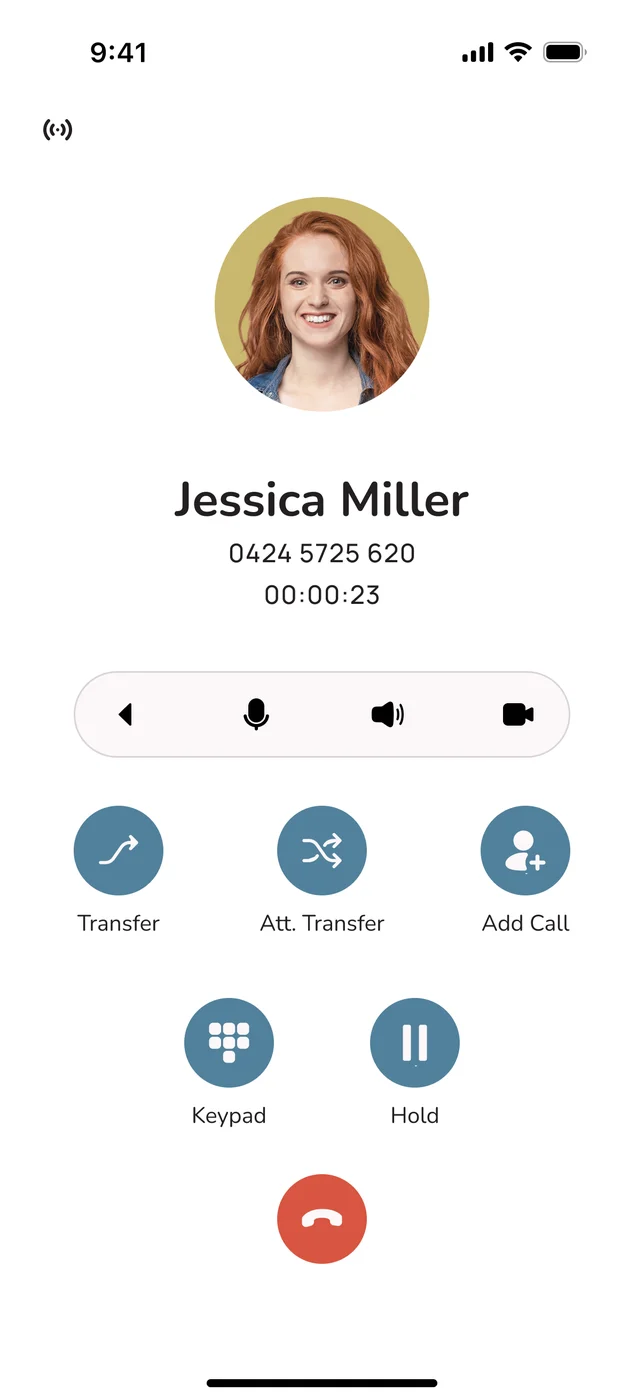
HD video for up to 30 people (untimed), business SMS, IVR, auto-attendant, call queues and call recording: the everyday features, all in.
Integrations that matter
Salesforce, HubSpot, Zoho, Xero, Monday and over 1,000 apps, plus Windows, Mac, iOS and Android apps so the office travels with your team.
15+ years, proven at scale
VOCPhone has run its own network for more than 15 years at 99.99% uptime, serving businesses from local trades to national names. Because we're the carrier and the software vendor in one, there's a single accountable team when it counts, not a finger-pointing chain.
Who suits which provider
To keep this honest: the global platforms are the right pick for some businesses, and pretending otherwise wouldn't help you.
Choose a global suite if…
You're a large multinational with offices across many countries, dedicated telecom admins, and a need for niche modules or a specific global contact-centre stack. Scale and breadth are where the big brands shine.
Choose Aircall or Dialpad if…
You want a tightly focused sales/support dialler with deep CRM hooks, you're comfortable with USD pricing, and any minimum-seat rule fits your team size. Both are polished at what they do.
Choose VOCPhone if…
You're an Australian business that values local 24/7 support, Australian data hosting, included AI, transparent AUD pricing and a provider that owns its network, without minimum-seat traps or a sales-call to see a number.
What switching actually involves
The fear of migration keeps a lot of businesses on a platform they've outgrown. In reality, moving to a provider that owns its network is usually faster than expected, because fewer third parties are involved.
- Map what you have. List your numbers, users, IVR flows, call queues and the integrations you can't live without. This becomes the migration checklist.
- Get a transparent quote. Confirm Australian-dollar pricing and how it compares to your current bill, including any AI or add-ons you're currently paying extra for.
- Port your numbers. Start the portability process early. With numbers ported on-network, the cutover is coordinated by one Australian team rather than passed between carriers.
- Configure and test. Rebuild your call flows, connect your CRM, and run test calls before go-live so nothing surprises you on day one.
- Go live with support on standby. Switch over with a local team watching the first day of live traffic, ready to tune queues and routing as real calls come in.
One thing to check before you sign anything
Read the exit terms of your current contract and confirm number portability in writing. A great new provider can't help if your old one drags out releasing your numbers, so lock the porting commitment down early, whichever direction you go.
"We didn't move because the old system was broken. We moved because when it hiccuped, we were talking to someone offshore about our own customers' data. Having support and hosting back in Australia was the whole point."
A common sentiment from businesses evaluating a switch
Frequently Asked Questions
Is there an Australian alternative to RingCentral, 8x8 and Aircall?
Yes. VOCPhone is an Australian-owned cloud phone platform that runs on a network we own and operate, not a reseller layer on top of someone else's carrier. You get Australian 24/7 human support, Australian hosting, AI Phone Agents included, transparent pricing and number portability, which are the exact points most businesses cite when leaving a large overseas provider.
Why is 8x8 pricing so hard to find online?
8x8 no longer publishes standard public pricing, so most evaluations begin with a sales call and a custom quote. That is not necessarily a problem, but it does make quick apples-to-apples comparison harder and can slow down smaller buyers. VOCPhone publishes clear Australian-dollar pricing and offers a price-match guarantee so you know where you stand upfront.
Does Aircall have a minimum number of users?
Aircall typically enforces a three-user minimum at around US$30 per user per month, so you commit to roughly US$90 a month before you make a single call. Dialpad is usually around US$15 per user with a one-user minimum. If you are a small team or want to start lean, minimum-seat rules and USD pricing can add up quickly once foreign exchange is applied.
Where is my call data stored with overseas providers?
Large US-headquartered providers often host Australian customer data offshore and route support through overseas teams. Under the Privacy Act 1988 and the Australian Privacy Principles you remain accountable for how personal information is handled, so data sovereignty matters. VOCPhone hosts in Australia and supports from Australia, which keeps your data and your help desk on local ground.
Is AI included or is it an expensive add-on?
With many overseas platforms the best AI features (transcription, summaries and virtual agents) are gated to the top pricing tiers or sold as separate add-ons. VOCPhone includes AI Phone Agents with natural Australian accents as part of the platform, so you are not forced to jump to an enterprise plan just to answer calls automatically.
Can I keep my existing phone numbers if I switch?
Yes. VOCPhone supports full number portability, so you can bring your existing local and 1300/1800 numbers across when you migrate. Because we own our network, porting and provisioning are handled by our Australian team rather than passed through a chain of third parties, which usually makes cutover faster and cleaner.
Will I lose features by choosing a local provider over a global brand?
Not for the things most businesses actually use. VOCPhone covers HD video for up to 30 people, business SMS, IVR and call queues, call recording, mobile and desktop apps, and integrations with Salesforce, HubSpot, Zoho, Xero, Monday and over 1,000 apps. Global suites can offer more edge-case modules, but the day-to-day toolkit is all here, with local support behind it.