











1300 and 1800 Numbers: What You're Actually Buying
When you buy a 1300 or 1800 number, you are not buying a phone line. That single idea is the key to everything else in this guide, and it is the thing most business owners get wrong on day one. There is no handset that "is" your 1300 number, no cable in the wall it depends on, and no exchange it is tied to. What you are buying is a national inbound number plus a set of rules that decide where calls to it go.
A caller in Karratha, a caller in Hobart, and a caller sitting in traffic on the M4 all dial the same ten digits and all reach your business. The number belongs to no particular city because it carries no area code. Behind the scenes the network simply looks up the routing plan attached to your number and forwards each call to an answer point you have chosen: a mobile in your pocket, a fixed line at the office, or a cloud phone system that spreads the call across your whole team.
Because the number and the answer point are separate things, you get a kind of flexibility a normal line can never offer. You can move where the number rings in minutes without changing a digit of what you advertise. You can send morning calls to the office and evening calls to a mobile or an AI agent. You can add menus, queues, and overflow rules that the caller never sees. The number printed on your van, your website, and your business cards stays fixed for the life of the business while everything behind it changes freely.
Two things every 1300/1800 number gives you
A single national front door. One memorable number that works from any state, on any device, for as long as your business trades.
Total control over what happens next. The number is the entrance; you decide which room every caller lands in, and you can rearrange the rooms whenever you like.
10
digits in every 1300 and 1800 number
$0
cost to the caller on an 1800 number
100%
portable: you keep the number if you switch providers
0
new phone lines required to get one
The Only Real Difference: Who Pays for the Call
Strip away the marketing and the 1300-versus-1800 question has one honest answer: who pays for the call. Get that straight and the rest of the decision falls into place quickly.
An 1800 number is free to the caller. Whoever dials pays nothing at all, and your business absorbs the entire cost of every inbound call. That removes the last shred of hesitation a customer might feel about picking up the phone, which is exactly why 1800 numbers are the traditional home of support desks, complaints lines, warranty hotlines, and campaigns built around the words "call us free".
A 1300 number shares the cost. The caller pays the price of a local call from a fixed line, or whatever their own plan charges from a mobile, and your business picks up the balance. To the caller it feels like an ordinary, low-cost call. To you it means the running cost sits lower than the equivalent 1800 line, because you are not footing the whole bill.
Everything else about the two is effectively identical. Both are national and non-geographic, both are inbound numbers that route to a service you nominate, both are fully portable between providers, and both can carry the complete suite of routing features covered later in this guide.
| Factor | 1300 Number | 1800 Number |
|---|---|---|
| Who pays for the call | Shared: caller pays a local-call rate, business pays the rest | Business pays 100%; free to the caller |
| Cost to caller (fixed line) | Untimed local-call rate | Free |
| Cost to caller (mobile) | Charged per the caller's mobile plan | Free |
| Best-fit use case | Sales, general enquiries, main business line | Support, complaints, warranty, "call free" campaigns |
| Ongoing cost to business | Lower: the cost is shared | Higher: you pay all inbound charges |
| National, non-geographic | ✓ | ✓ |
| Routes to any line, mobile or cloud | ✓ | ✓ |
| Phraseword available | ✓ e.g. 1300 PLUMBER | ✓ e.g. 1800 FLOWERS |
| Fully portable between providers | ✓ | ✓ |
A one-line rule of thumb
If you want callers to feel there is zero friction and zero cost in reaching you, and you are prepared to pay for that goodwill, choose 1800. If you want a polished national number while sharing the call cost with the caller, choose 1300. Most Australian small businesses land on 1300 for their main line, because it strikes the cleanest balance between the image it projects and the bill it generates.
Why a National Number Beats a Local Line
Plenty of one and two-person operations invest in a 1300 or 1800 number long before they have the call volume to justify one on capacity grounds. They do it because of what the number does to perception. A bare mobile or a geographic landline (an 02, 03, 07, or 08) quietly tells every caller how small and how local you are. A 1300 or 1800 number says the opposite: national, established, properly resourced, the sort of business with a real support line. It is one of the cheapest and fastest credibility upgrades available to a small operator.
The practical wins
- You read as national. A customer interstate is more likely to ring a national number than a landline they see as belonging to another city.
- Your marketing stays consistent. One number across your website, Google Business Profile, vehicle wraps, and print, with no area code tying you to a single town.
- You keep it for good. Move house, change offices, switch providers, expand interstate: the number never changes, so your advertising equity never resets to zero.
- It hides the machinery. Whether one person or fifty answer the phone, every caller meets the same calm, national front door.
The number is the one part of your business you never want to change. Everything behind it can move, grow, or be rebuilt: the number on the van stays put for a decade.
On why an inbound number is a long-term business asset
Standard, Pattern or Phraseword: Choosing Your Number
Not every 1300 or 1800 number is equal. Beyond the plain, randomly assigned numbers your provider can hand you, there is a premium tier known as smartnumbers, and choosing well here can shape how much of your marketing actually converts into calls.
The three flavours of number
- Standard numbers are assigned by your provider at no premium. They work perfectly and cost the least; the only downside is that seven random digits are hard to remember.
- Pattern numbers such as 1300 111 222 or 1300 40 40 40 are easy to recall without spelling anything. They sit between standard and phraseword numbers on both memorability and price.
- Phrasewords spell a word on the keypad, like 1300 PLUMBER or 1800 FLOWERS, using the letters printed on the dial (2 = ABC, 3 = DEF, and so on). "PLUMBER" typed on the keypad resolves to a specific, dialable sequence of digits.
How smartnumbers are allocated
Phrasewords and other premium numbers are managed through the national numbering system's rights-of-use and auction process. The most sought-after phrasewords can be genuinely valuable and are held by whoever won or acquired the rights. That said, a great many strong, industry-relevant phrasewords are still available, and there is a deep pool of pattern numbers that are memorable without spelling a word at all.
Is a smartnumber worth paying for?
If a real slice of your marketing is offline (radio spots, billboards, vehicle wraps, letterbox drops) a memorable phraseword can lift call volumes measurably, because people can recall it without stopping to write it down. If most of your customers find you online and simply tap "call", a standard number is usually plenty and costs less. Either way, the number is portable: you can lease a smartnumber and point it at whichever provider you prefer.
What It Really Costs (and the Trap to Avoid)
Pricing is where people get caught out, because the headline monthly figure is only one of three cost components. Understand all three and you will never be blindsided by a bill after a busy month.
The three parts of the price
- Setup fee (one-off). A once-only charge to establish the number. Many providers waive it, particularly for standard numbers.
- Monthly service fee (recurring). The flat cost to keep the number active and pointed at your service. Across the market this illustratively runs from around $20 to $50 or more per month, depending on the provider and whether the number is standard or premium.
- Inbound call charges (usage). What you pay for the calls you actually receive. This is the part that varies most, and it turns heavily on where the caller is dialling from.
Why the caller's origin changes the cost
On both 1300 and 1800 numbers, calls from a fixed line are typically cheaper for your business than calls from a mobile. Mobile-origin calls carry a higher wholesale cost, so most rate cards charge more for them, and some providers add a small per-call connection fee (flagfall) on top of the per-minute rate. Since the majority of callers now dial from mobiles, the mobile rate is the figure that matters most, so always check it specifically rather than reading the fixed-line rate and assuming.
The cheap-monthly-fee trap
The classic trap is a provider that advertises a rock-bottom monthly fee and then charges high per-minute inbound rates, especially for mobile-origin calls, plus separate flagfall or answer fees. On a quiet month the bill looks brilliant. During a marketing push or a genuinely busy month, the usage charges can quietly overtake the monthly fee several times over.
Before you commit, ask for the full rate card: the per-minute rate for fixed-line calls, the per-minute rate for mobile calls, any flagfall, and any included minutes. A slightly higher monthly fee with transparent, predictable call rates almost always works out cheaper than a cheap-looking plan with punishing usage charges hidden underneath.
VOCPhone's approach to pricing
VOCPhone folds your 1300 or 1800 number into a transparent, per-user cloud phone plan rather than treating it as a standalone forwarding service. Because VOCPhone owns and operates its own network instead of reselling someone else's, the pricing has fewer middle margins baked in, and it is backed by a price guarantee, so if you find a genuine cheaper quote you can bring it and have it matched. See current plans at vocphone.com/pricing.
Where the Value Lives: Smart Inbound Routing
The number itself is not where the value sits. The value is in what happens to a call once it arrives. Because the number lives in the network and points at a system you control, you can build a routing plan that makes a two-person business behave like a twenty-person one. These are the capabilities worth looking for.
Time-of-Day Routing
Send calls to the office in business hours, then to a mobile, voicemail, or an AI agent after hours, on weekends, and on public holidays. Set it once and it runs itself.
Location-Based Routing
Route callers to the nearest branch or the right regional team based on where they dial from, so a Perth caller reaches Perth and a Brisbane caller reaches Brisbane.
Overflow & Failover
If the first destination is busy or unanswered, calls cascade to the next person, the next team, or a mobile, so nothing ever rings out into the void.
IVR & Auto-Attendant
A simple "press 1 for sales, 2 for accounts" menu, or a natural AI agent that understands what the caller wants and routes them without a single keypress.
Missed-Call Handling
Capture voicemail, fire off an SMS or email alert, or ping your team the instant a call is missed, so every enquiry gets a follow-up.
AI Phone Agent
An AI receptionist in a natural Australian accent answers on the first ring, qualifies the caller, books appointments, and routes the conversation 24/7: no menu required.
The gap between a 1300 number that simply bounces to one mobile and a 1300 number sitting in front of a full cloud phone system is enormous. The first is a redirect. The second is a genuine reception, routing, and answering layer that catches every call and delivers it to exactly the right place, which is the whole point of paying for a national number in the first place.
Getting Your Number Live: A Six-Step Path
Setting up a 1300 or 1800 number is far less involved than most people fear. Here is the complete path, from decision to a live, ringing number.
-
Choose 1300 or 1800
Decide who should carry the call cost. Choose 1800 when free-to-caller genuinely matters (support, complaints, campaigns) and you will absorb the cost. Choose 1300 for a professional national line where the cost is shared: the popular default for a main business number.
-
Pick your number
Decide between a standard number, a memorable pattern number, or a phraseword. Offline-heavy marketing justifies a phraseword; if customers mostly tap to call online, a standard number does the job for less.
-
Choose a provider
This is the decision that matters most, because your provider sets your pricing, your routing features, and your support experience. Compare the full rate card, the routing features included, whether AI answering is available, whether the number can point at a real phone system rather than just forwarding to a mobile, and the quality of local support. Favour transparent pricing and an Australian-based team you can actually reach.
-
Point it at your phone system
Nominate the answer point. You can route the number to a mobile, a landline, or, ideally, a cloud phone system that gives you desktop and mobile apps, queues, and AI answering, so the number becomes the front door to a full platform. If you already have a number, this is where you port it across and keep everything you advertise.
-
Build your routing
Set your business-hours destination, after-hours handling, overflow rules, an IVR or AI menu, location routing if you run multiple sites, and missed-call alerts. A good provider configures this for you rather than leaving you to work it out alone.
-
Test it, then publish it everywhere
Call the number from a fixed line and a mobile, confirm it lands where it should inside and outside business hours, then put it on your website, Google Business Profile, email signatures, signage, and ads. From here it is a permanent asset you keep for good.
Why Point Your Number at VOCPhone
You can buy a bare 1300 or 1800 number from a reseller and forward it to your mobile, but that leaves you with a redirect and nothing more. No routing intelligence, no queues, no AI, and often no one local to call when you want to change something. The smarter move is to get the number as part of a full cloud phone platform, so it does real work from the first day.
That is what VOCPhone provides. As an Australian-owned provider that owns and runs its own network, rather than reselling another carrier's, VOCPhone points your 1300 or 1800 number at a cloud phone system that has been serving Australian businesses for 15-plus years, on infrastructure built for 99.99% uptime and backed by round-the-clock human support based here in Australia.
Our Own Network
VOCPhone owns and operates the network your number rides on, not a reseller layer. Fewer middle margins, tighter control over quality, and one accountable provider.
AI Answering Included
Your number can ring an AI Phone Agent in a natural Australian accent that answers, qualifies, and books 24/7, so no call goes unanswered day or night.
Smart Routing Built In
Time-of-day, location, overflow, IVR, ring groups, and missed-call handling: configured for you, not left as a DIY project.
Transparent, Guaranteed Pricing
Clear per-user pricing with a price guarantee. Find a genuine cheaper quote and VOCPhone will match it.
24/7 Australian Support
Real people in your timezone. When you want to change where your number rings, you reach a human, not an overseas ticket queue.
Keep Your Number
Already have a 1300 or 1800 number? Bring it across. VOCPhone supports full number portability with no loss of your advertised number.
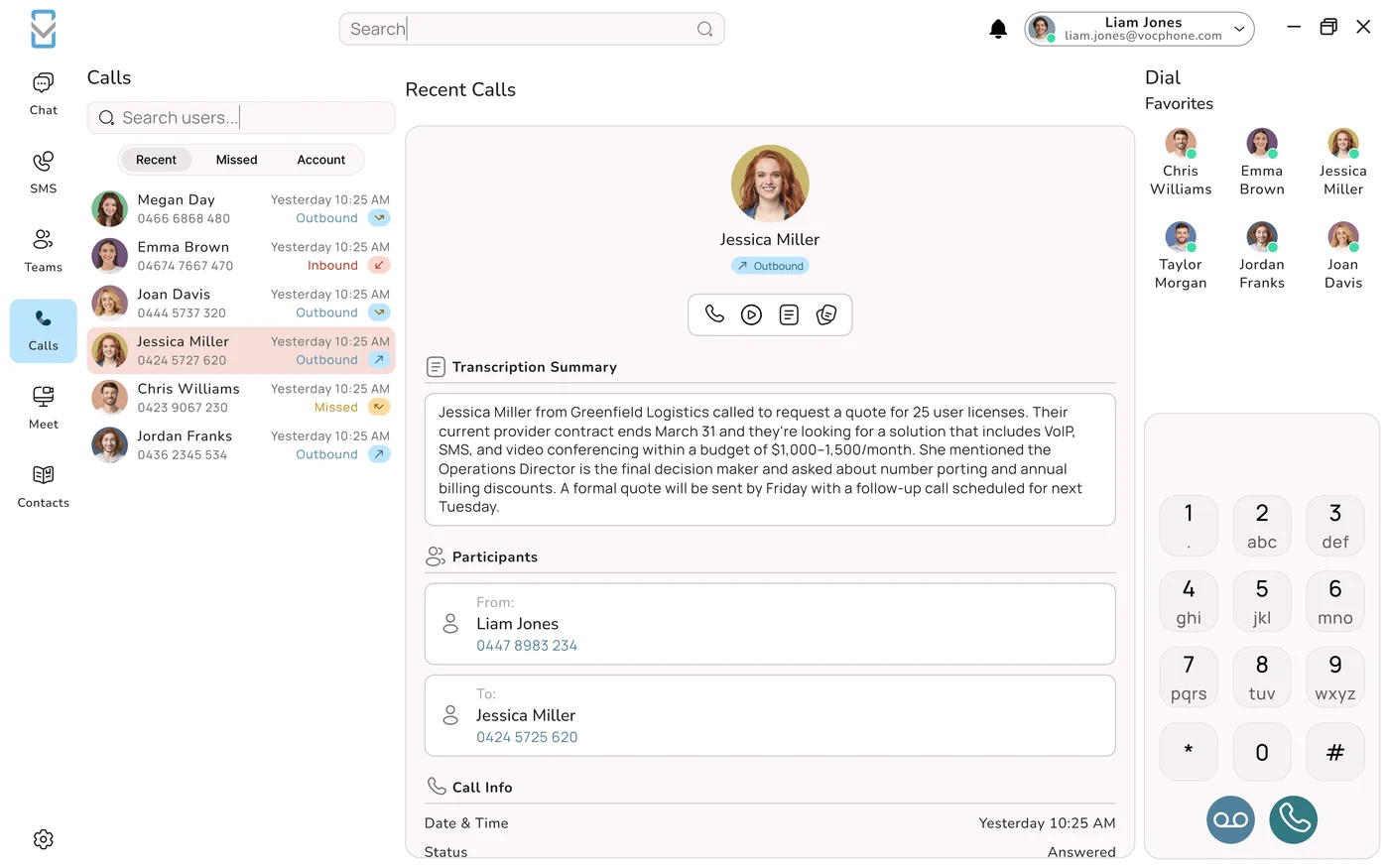
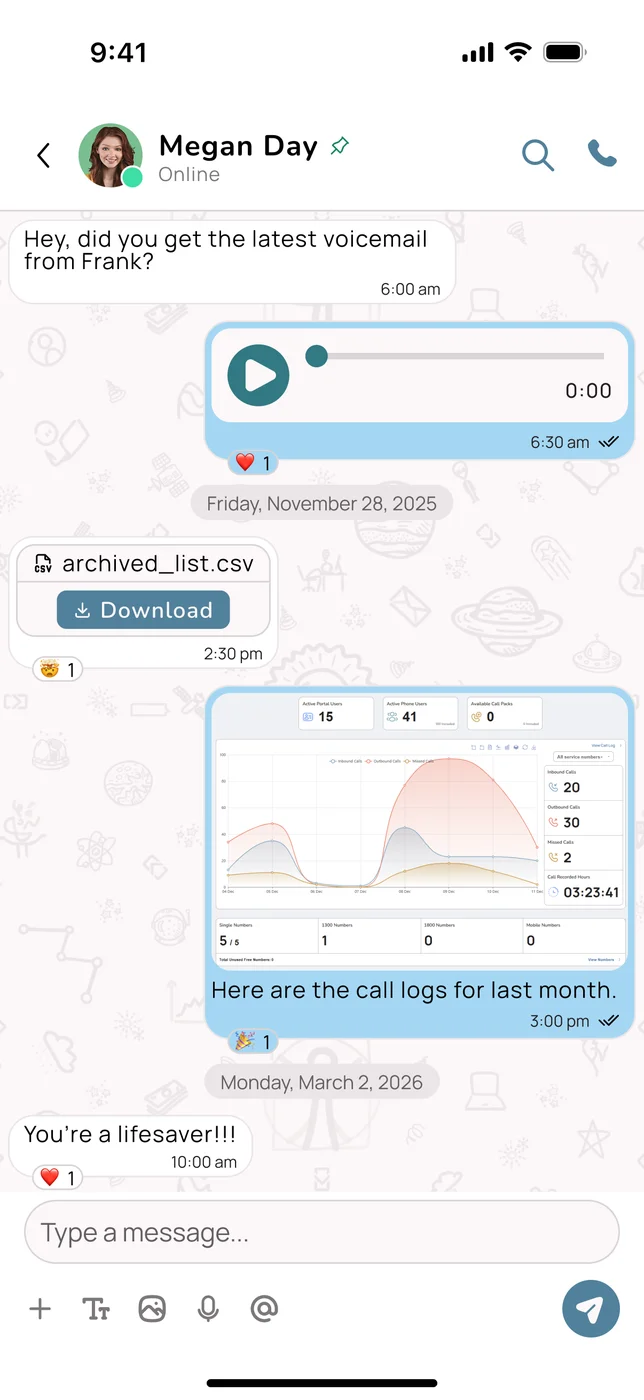
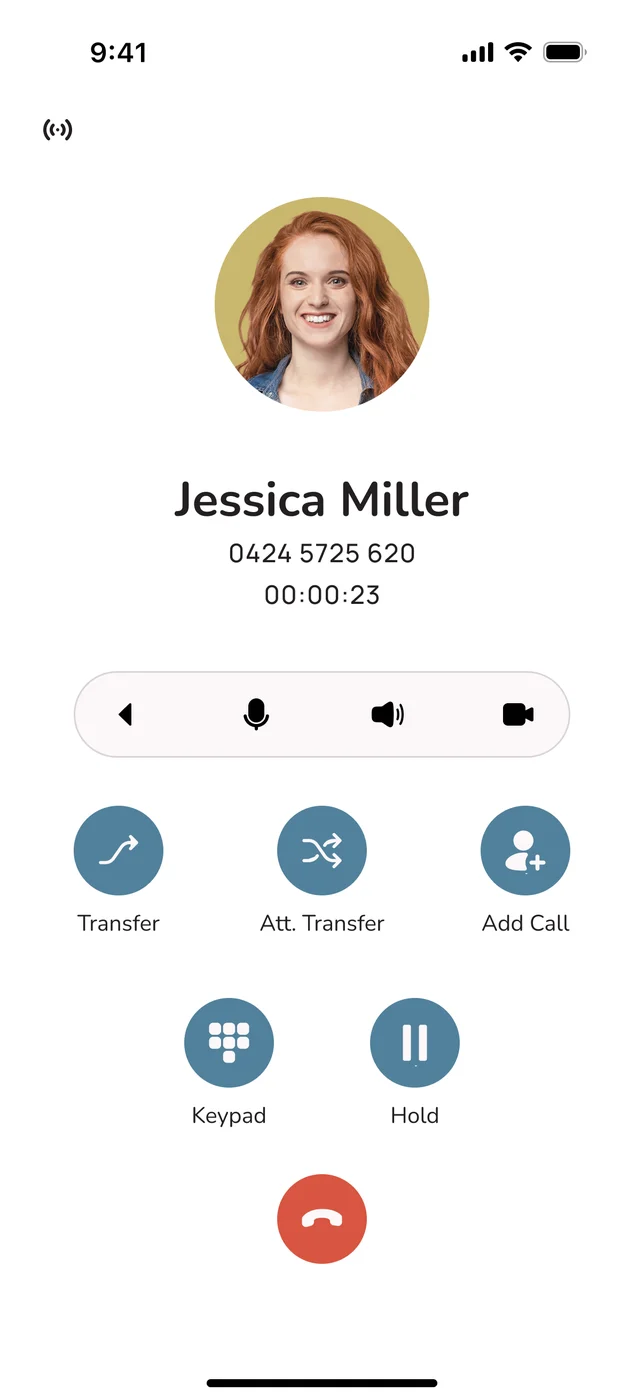
You also get the rest of the platform along with it: desktop apps for Windows and Mac, mobile apps for iOS and Android, HD video meetings, two-way business SMS, call recording, and integrations with Salesforce, HubSpot, Zoho, Xero, Monday and more than a thousand other apps. Businesses from Harvey Norman to Coco's Wealth of Health rely on it. Your 1300 or 1800 number is simply the front door to all of it.
Frequently Asked Questions
What is the difference between a 1300 and an 1800 number?
It comes down to who wears the cost of the call. An 1800 number is free to the caller, so your business pays for every inbound minute. A 1300 number splits the bill: the caller pays a local-call rate from a fixed line (or their own plan rate from a mobile) and your business covers the rest. Everything else is the same. Both are national, non-geographic numbers, both are portable, and both can point at a mobile, a landline, or a cloud phone system like VOCPhone.
Do I need a phone line or new hardware to get a 1300 or 1800 number?
No. A 1300 or 1800 number is an inbound number that sits on top of whatever you already have, or on top of nothing at all. It can ring a mobile, an existing landline, or a cloud phone system. With VOCPhone you can go from no system to a live 1300 number answering on the desktop and mobile apps, with an AI Phone Agent picking up, without buying a single handset.
How much does a 1300 or 1800 number cost in Australia?
Pricing has three moving parts: a one-off setup fee, a recurring monthly service fee, and inbound call charges. Monthly fees across the market illustratively range from around $20 to $50 or more depending on the provider and the number, and call charges depend on where the caller is dialling from, with mobile-origin calls usually costing more than fixed-line calls. VOCPhone bundles the number into a transparent per-user cloud phone plan and backs it with a price guarantee, so you can bring a cheaper quote and have it matched.
What is a smartnumber or phraseword like 1300 PLUMBER?
Smartnumbers are the memorable, premium 1300 and 1800 numbers, including phrasewords that spell a word on the phone keypad, such as 1300 PLUMBER or 1800 FLOWERS. They are allocated through the national numbering system's rights-of-use and auction process. A phraseword is far easier to remember and advertise, which can lift call volumes from radio, signage, and vehicle wraps. You can lease a smartnumber and point it at any provider you choose, including VOCPhone.
Can I keep my 1300 or 1800 number if I switch providers?
Yes. 1300 and 1800 numbers are fully portable in Australia. You hold the right to use the number rather than owning it outright, and that right moves with you between providers without you losing the number. VOCPhone supports full number portability, so you can bring your existing 1300 or 1800 number across and keep every piece of advertising equity you have built around it.
Should my small business choose a 1300 or an 1800 number?
It depends on the job the number does. Pick 1800 if removing every barrier to calling matters more than the cost, which suits support lines, complaints lines, helplines, and campaigns where free-to-caller is part of the pitch. Pick 1300 if you want a professional national presence while sharing the call cost with the caller, which suits most sales and general enquiry lines. Most Australian small businesses use a 1300 number as their main line because it balances image and running cost.
What is the catch with cheap 1300 and 1800 number deals?
The catch is usually in the call rates, not the headline monthly fee. Some providers advertise a very low monthly price and then charge high per-minute inbound rates, especially for mobile-origin calls, plus flagfall or answer fees. On a quiet month the bill looks great; on a busy month or during a campaign the usage charges can dwarf the monthly fee. Always ask for the full rate card covering both fixed-line and mobile-origin calls, and favour a provider with transparent, predictable pricing.
What to Read Next
A 1300 or 1800 number works hardest as part of a modern cloud phone system. These guides go deeper into choosing and running the system your number points at.